


The Human Rights Writers Association of Nigeria (HURIWA) has challenged the Nigerian Army to translate its renewed emphasis on professionalism and discipline into strict respect for constitutional rights during internal security operations.
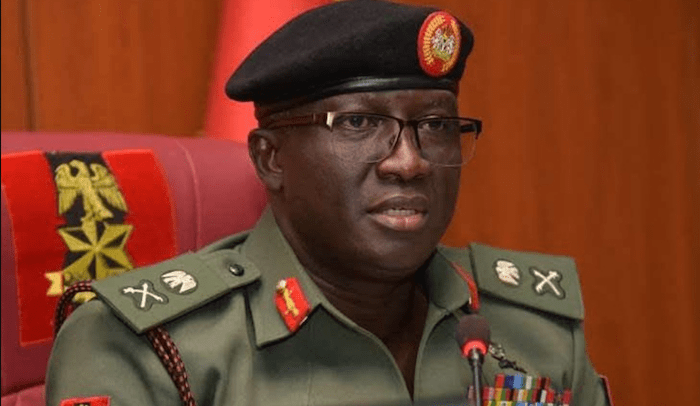
The rights group, while commending the Chief of Army Staff, Lt. Gen. Waidi Shaibu, for unveiling a new operational direction centred on professionalism, troop welfare, discipline and public confidence, said the success of the doctrine would ultimately be measured by how soldiers conduct themselves in communities where they are deployed.
In a statement signed by its National Coordinator, Comrade Emmanuel Nnadozie Onwubiko, on Sunday, HURIWA said the Army’s expanding role in combating terrorism, insurgency, banditry, kidnapping, communal violence and oil theft made adherence to human rights standards more important.
According to the organisation, military effectiveness cannot be separated from the constitutional limits governing the exercise of state power.
It urged the Army leadership to make Chapter IV of the 1999 Constitution, which guarantees fundamental rights, a central operational reference point for troops involved in internal security duties.
HURIWA specifically cited constitutional protections covering the right to life, dignity of the human person, personal liberty and fair hearing, stressing that the deployment of soldiers for internal security operations does not automatically suspend citizens’ fundamental rights.
The group said the Army’s “Soldier First” initiative was equally important, arguing that properly trained, equipped, housed and motivated personnel would be better positioned to carry out their duties with professionalism and restraint.
However, it warned that professionalism must go beyond military discipline and obedience to superior officers.
“Professionalism must become more than a slogan and discipline must extend beyond obedience to superior orders to include disciplined respect for the Constitution, the rule of law and internationally recognised human rights standards,” HURIWA said.
The organisation called for human-rights compliance to become a compulsory component of military training and operational certification for personnel deployed on internal security assignments.
It urged the Army to provide troops with continuous, scenario-based training on lawful arrest and detention, civilian protection, treatment of suspects, proportionality, necessity and the responsible use of force.
HURIWA also called for clearer and publicly accountable rules of engagement, saying troops operating in volatile environments must have unambiguous guidance on when and how force may legally be deployed.
The group further demanded stronger command accountability in cases involving allegations of unlawful killings, torture, arbitrary detention, extortion, destruction of civilian property and other abuses.
It said investigations into such allegations should be prompt and independent, adding that accountability should extend to commanders where evidence points to failures of supervision or operational control.
Beyond the battlefield, HURIWA urged the Army to deepen engagement with traditional rulers, community leaders, civil society organisations and human-rights groups in areas experiencing prolonged military operations.
It argued that regular civilian-military engagement could reduce mistrust, improve intelligence gathering and prevent avoidable confrontations between troops and local communities.
The organisation also proposed accessible complaint mechanisms for civilians who allege abuses by military personnel, as well as stronger links between the Army and civilian oversight and human-rights institutions.
HURIWA said the Army should broaden its definition of operational success beyond arrests, weapons recovered and the number of criminal elements neutralised.
According to the group, protection of civilians, prevention of avoidable casualties, safe evacuation of endangered persons, humane treatment of detainees and restoration of normal community life should equally form part of military performance assessments.
It also recommended mandatory after-action reviews of major internal security operations, covering civilian casualties, arrests, detention practices, complaints and use-of-force incidents.
HURIWA urged the Army to strengthen its legal and human-rights advisory capacity by integrating legal officers and specialists into operational planning and post-operation reviews.
The group said such measures would help prevent violations by ensuring commanders and troops understood the legal boundaries of their powers before operations commenced.
HURIWA welcomed the COAS’s focus on troop welfare, arguing that the wellbeing of soldiers was directly connected to professional conduct.
It identified poor accommodation, inadequate medical care, exhaustion, insufficient equipment, delayed benefits and prolonged deployments without adequate support as factors that could undermine morale and operational judgment.
The organisation therefore called for the sustained expansion of the “Soldier First” initiative.
It also urged the Army to improve public communication about major operations, arrests, civilian casualties and allegations of misconduct, subject to legitimate national security considerations.
HURIWA referenced the recent case involving Operation Hadin Kai, in which a Nigerien national previously arrested over alleged terrorist links was cleared, as an example of why due process and proper investigation remain essential to professional security operations.
The group said the ability of the security system to correct mistakes should be viewed as a strength rather than a weakness.
HURIWA said military professionalism should not be defined solely by tactical competence, battlefield success or obedience.
It argued that a professional military must also demonstrate restraint, protect civilians, respect detainees, obey lawful orders and reject unlawful instructions.
“The fight against insecurity must not become a contest in which the State defeats criminality by weakening the constitutional protections that distinguish a constitutional democracy from the lawlessness it seeks to defeat,” the group warned.
HURIWA consequently urged Lt. Gen. Shaibu to ensure that the new doctrine becomes an operational culture across all Army formations, particularly units deployed for internal security operations.
It also called on the Federal Government to provide the Army with adequate equipment, training, legal support, welfare packages and institutional backing.
The National Assembly, National Human Rights Commission, civil society organisations and the media, it added, must play their respective roles in strengthening oversight and accountability within Nigeria’s evolving security architecture.
HURIWA maintained that national security and human rights should not be treated as competing priorities.
It said a military capable of defeating terrorists and other armed threats while protecting civilians, respecting the law and earning public confidence would enjoy legitimacy beyond the fear generated by its firepower.
The organisation urged the COAS to make constitutionalism, civilian protection, accountability and respect for human dignity measurable and enforceable elements of the Army’s new doctrine.
“The Nigerian Army must be strong enough to defeat those who threaten the Republic and disciplined enough to remain within the law while doing so,” HURIWA said, describing this as the highest expression of military professionalism.