
 EricChelle

By Douglas Baye-Osagie
Nigeria missing the World Cup is painful, but it also creates a rare window. This is a sober time for fans as the biggest sporting event on earth is just days away. With the talent at our disposal, the next three years give us time to stop fire-fighting and start building for 2030. The U23 team, aimed at the Olympics in Los Angeles 2028, is the perfect project to reset our football identity with purpose and direction.
The Olympics football tournament is unique. It’s U23 with 3 overage players, so it forces investment in youth. Countries like Spain, Brazil, Argentina, Morocco and France have used it as a springboard. Nigeria won gold in 1996 and we can do it again with the right coaching and preparation.

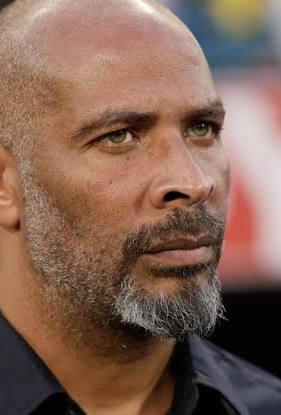
Eric Chelle has shown in the last year with the Super Eagles that he is not afraid of bold decisions. He has dropped big names, trusted younger legs, and demanded tactical discipline. That mindset is exactly what a U23 project needs — merit over reputation. We can achieve a lot if he is given the responsibility to coach both the Super Eagles and the U23 team.
A proper U23 setup gives Nigeria continuity. Instead of assembling players two weeks before a tournament, Chelle can work with the same core for three years. Some players already in the Super Eagles can also qualify for the U23. That’s time to install a playing philosophy, build chemistry, and correct mistakes without World Cup pressure.
The talent pool is already there. Our U20 and U17 teams keep producing top players who stall at club level because there’s no bridge to senior football. A structured U23 program becomes that bridge and keeps them in the Nigerian system longer.
*Benjamin Federick and Zadok Yohanna are the type of players this project should be built around.*
*Zadok Yohanna* brings a new phase of talent discovery to our football. Though he was overlooked by our U17 and U20 teams in the past, his performances in the Swedish league drew global attention. _Good news: Yohanna has now signed for Brighton & Hove Albion in the English Premier League._ That move instantly raises the quality of our U23 pool. He will train daily under top coaches, play against elite competition, and return to the Olympic Eagles with Premier League sharpness, decision-making, and intensity. His energy from midfield stands out — he covers ground, wins second balls, and has the engine to play Chelle’s high-intensity style. With two years of tactical coaching at Brighton, he can develop into one of the best midfielders in the world and be the heartbeat of our U23 team.
Players from the local league have also shown great prospects, and not everyone can go straight to the Super Eagles. Some have to come through the ranks before stardom. *Kenneth Igboke and Oputa Chibueze* of Rangers cannot be overlooked. Their performance in winning the Unity Cup in London with the Super Eagles showed composure and big-game mentality. The Olympic Eagles can be their launch pad to cementing permanent Super Eagles spots.
We also have emerging superstars in Europe like *Abdullahi Biffo and Suleiman Sani* of RB Leipzig. Sani’s technical quality and Biffo’s explosiveness are exactly the future profile the Super Eagles need. The U23 team must attract them now, not wait until they’re cap-tied elsewhere.
Naming and investing in players like Federick, Yohanna, Biffo, Igboke, Chibueze, and Sani early builds confidence. When young players know the coach trusts them for a long-term plan, they play with freedom. Chelle’s boldness means he won’t hesitate to hand them responsibility.
The Olympics carry less political pressure than the World Cup. That gives Chelle space to experiment, fail, and learn. By 2028, those lessons will translate into a senior team that’s tactically mature, not just individually talented.
Grassroots clubs and academies will benefit too. When the NFF signals that U23 is a serious pathway, more clubs will invest in player development knowing there’s a clear route to national team football and international exposure.
Financially, it makes sense for the NFF if Chelle is given the responsibility. Preparing one U23 team for three years is cheaper than constantly rebuilding the Super Eagles every AFCON cycle. Sponsors also buy into Olympic projects because of the global visibility and “future stars” narrative.
Nigeria’s 1996 gold team was built on trust in young players like Kanu, Okocha, Babayaro, and Amuneke. None were “finished products” then. Chelle can recreate that culture by telling Federick, Yohanna, Biffo, Igboke, Chibueze, Sani and others: “This team is yours to build.”
Tactically, Chelle’s preference for compactness and quick transitions suits Olympic football. The tournament is short, played in heat, with tight turnarounds. A fit, well-drilled U23 team can outrun and outthink opponents who rely on individual brilliance.
The mental side matters. Three years together builds brotherhood and strengthens team chemistry. Players learn to fight for each other. Olympic football is won by teams, not collections of stars. That unity is what made Nigeria 1996 special, and Chelle can instill it again.
We must also use the U23 to reintegrate home-based players. It’s good that Eric Chelle has come to watch the league and I hope it continues. The NPFL has talent that gets ignored because there’s no consistent scouting. A standing U23 team forces the technical crew to watch our league weekly and reward form.
We don’t need a U23 coach who can’t attract our best players in this age category. The future of the Super Eagles depends on the performance of the youth teams. A strong showing at the Olympics will be a plus. Give Chelle the U23 job, back him for three years, and let him take Benjamin Federick, Zadok Yohanna, Abdullahi Biffo, Kenneth Igboke, Oputa Chibueze, Suleiman Sani and the next generation to Los Angeles. That’s how we build forward with purpose.