


By Douglas Baye-Osagie
dbayeosagie@yahoo.com
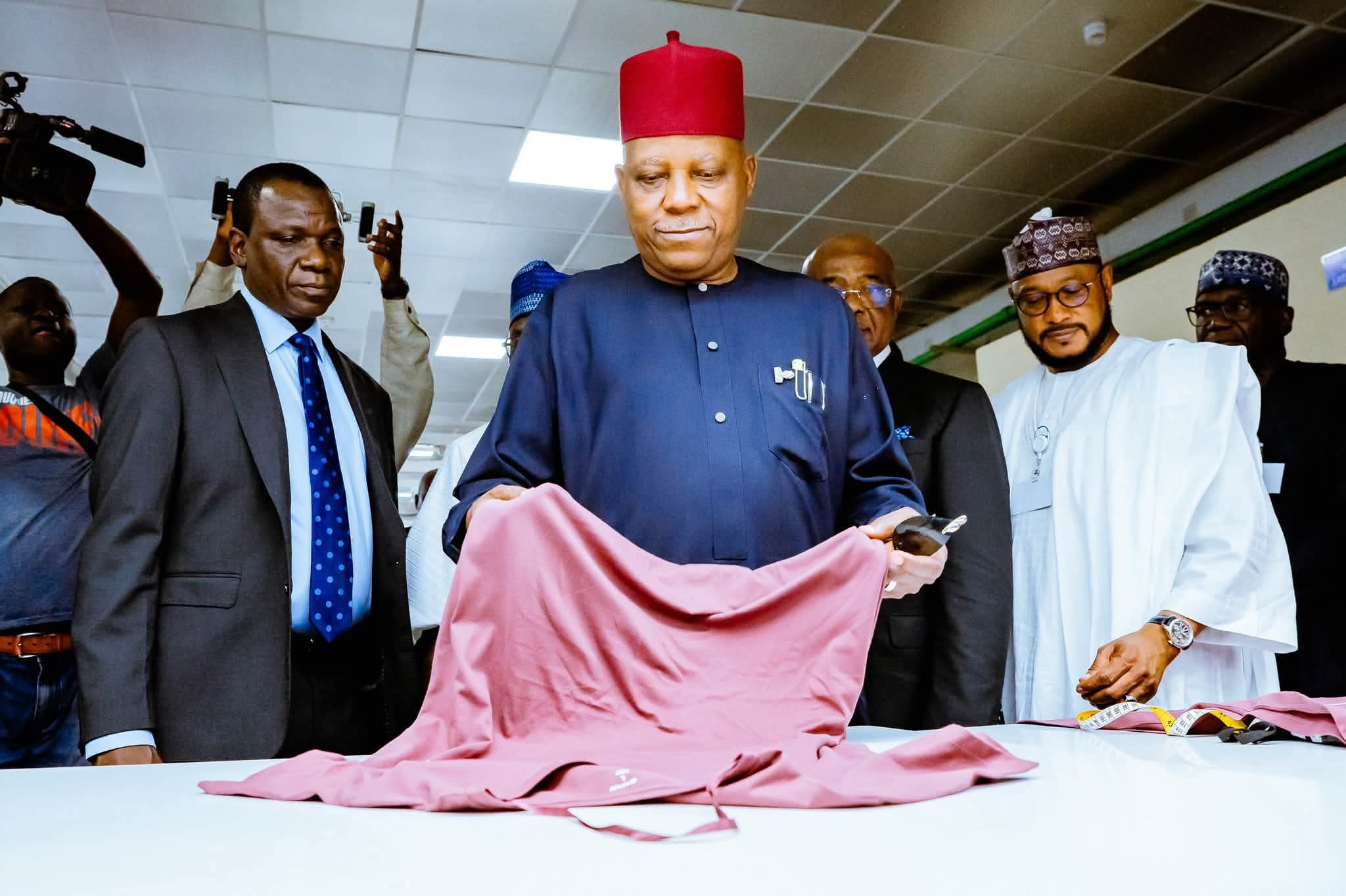
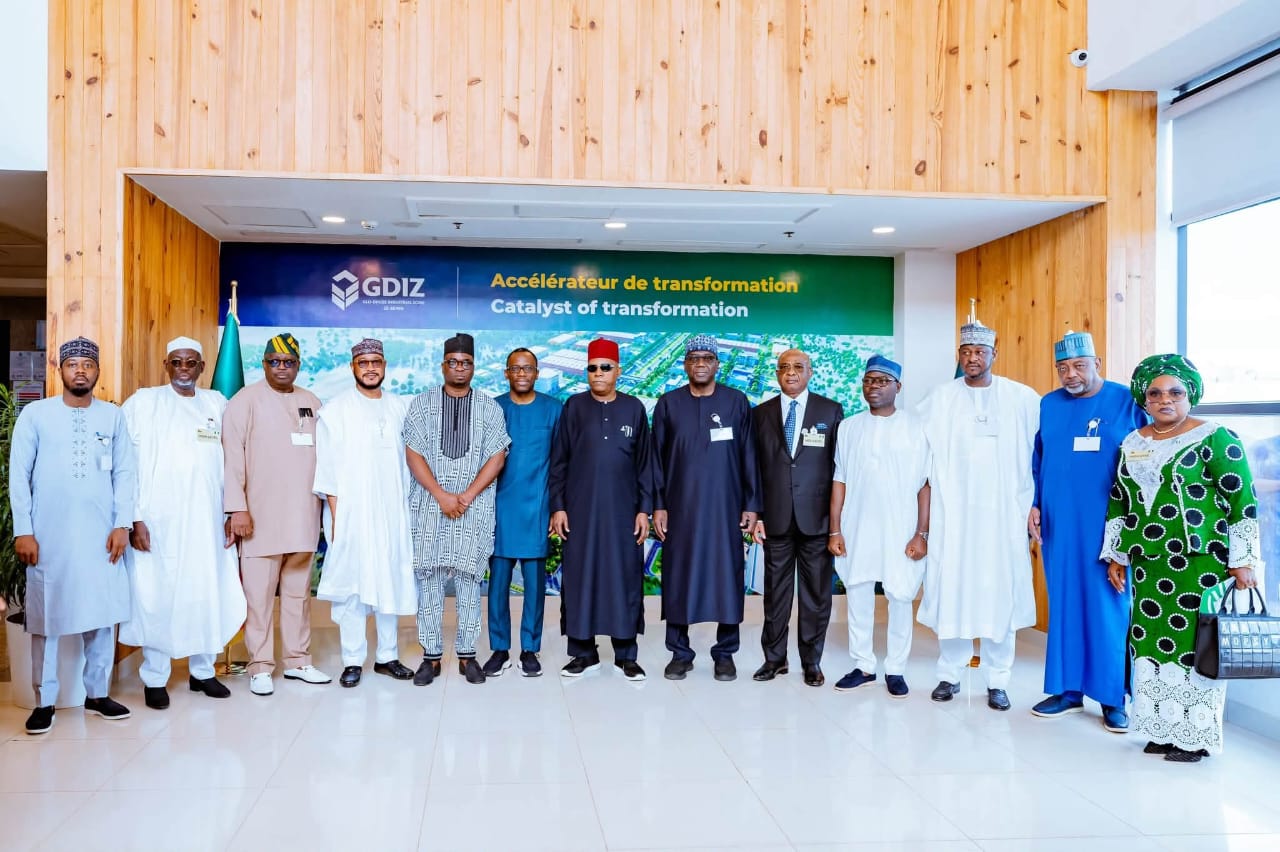
It is sobering to see the Vice President of Nigeria lead a team of Governors to the Benin Republic to study the operations of a textile mill. Vice President Shettima flew into Cotonou, and pictures from his official verified Facebook page, _Kashim Shettima_, on 24th July 2026 carried a sentence: “drawing practical lessons from Benin’s approach to agricultural value chain.” The images tell a story we should not be telling in 2026.
Not long ago, the story was reversed. People came to Nigeria. Buyers came. Investors came. Technicians came. They came to learn how we did it. The textile industry provided millions of jobs for Nigerians across different classes.
There was a time in the 70s, 80s and 90s when the world came to Nigeria for textiles. Our mills ran 24 hours. Our markets were full of “Made in Nigeria” fabrics.

We had functional textile mills across the country. That was not a projection. That was reality. Spindles turned. Looms moved. Paychecks were issued every month.
At its peak, the industry was the largest employer of labour after government. It provided jobs for hundreds of thousands of Nigerians directly.
It also supported hundreds of thousands of cotton farmers across many states. From the farm, to the ginnery, to the mill, to the tailor, to the market. One value chain. Millions of livelihoods.
Kaduna was once called the “Textile City” of Africa. If you lived there, you could hear the hum of machines in the morning. Entire neighbourhoods grew around the factories. The convergence of Nigerians in Kaduna was largely because of the booming cotton factories. Young men left their states to seek a start to life.
Great men like Sen. Adams Oshiomhole began their humble rise in the textile industry back then in Kaduna State. He was a factory worker before he became a union leader, then Governor, then Senator. That ladder existed because the factories existed.
Writing for the _Daily Trust_ Newspaper on 7 April 2026, Hassan Husaini wrote:
“But the textile industry was never solely a Northern phenomenon. Chief Obafemi Awolowo established textile industries in the West, including Western Nigeria Textile Mills in Ikeja, drawing on cotton grown by Yoruba farmers in Abeokuta—cotton with the highest staple length and finest fibres among Nigerian varieties. Dr. Nnamdi Azikiwe pursued industrial development with equal vigour, establishing textile mills in Aba and other eastern cities, drawing on northern cotton and local cultivation. By the 1970s, Nigeria had achieved what few African nations could boast: a truly national textile industry.”
Read about Arewa Textiles. Read about United Nigerian Textiles. Read about Aba Textiles, Supertex, Nortex, Finetex, Gaskiya, Afprint.

These were not just company names. They were institutions. They trained engineers. They funded schools. They sponsored football clubs. They built cities.
Across the country, the textile trade was booming. Kano, Lagos, Aba, Funtua, Asaba, Benin. Every region had a hub. Nigeria was one of the largest textile producers in Africa.
So what happened? The decline did not happen in one day. It was death by a thousand cuts.
First, we abandoned cotton. The oil boom made us lazy. We stopped prioritizing agriculture, and cotton production collapsed.
Then came trade liberalisation under WTO agreements without safeguards. Our markets were flooded with cheap imports and smuggled fabrics. Local goods could not compete.
The Structural Adjustment Program removed subsidies and protections that the mills needed to survive. Electricity became unreliable. Interest rates went up.
Later, massive imports finished what policy failures had started. The number of operating mills dropped drastically. Today, only a handful remain and employment in the sector is a shadow of what it used to be.
Then finally came insecurity and banditry, which drove farmers away from their farms. The Vice President may be genuinely concerned about learning from the Benin Republic, but we must fix our problems at home first before going to Cotonou.
And that is why the current picture hurts. We can’t put politics above governance and expect development. Governance is about systems, not slogans.
We keep appointing lobbyists, poorly educated career politicians instead of professionals to head technical positions. We reward noise over knowledge. We put people who “know people” in charge of things that require people who “know the work.”
The result is what we see: the gradual collapse of critical sectors of the economy. When technical institutions fail, the whole country goes to the Benin Republic to take notes.
We must look inwards before it is too late. Reviving textiles is not about motions in the Senate. It is about funding industry banks, protecting local production, reviving cotton, fixing power, and putting professionals in charge. The blueprint is in our history. The “Textile City” is still in Kaduna. We just have to decide to turn the machines on again.