
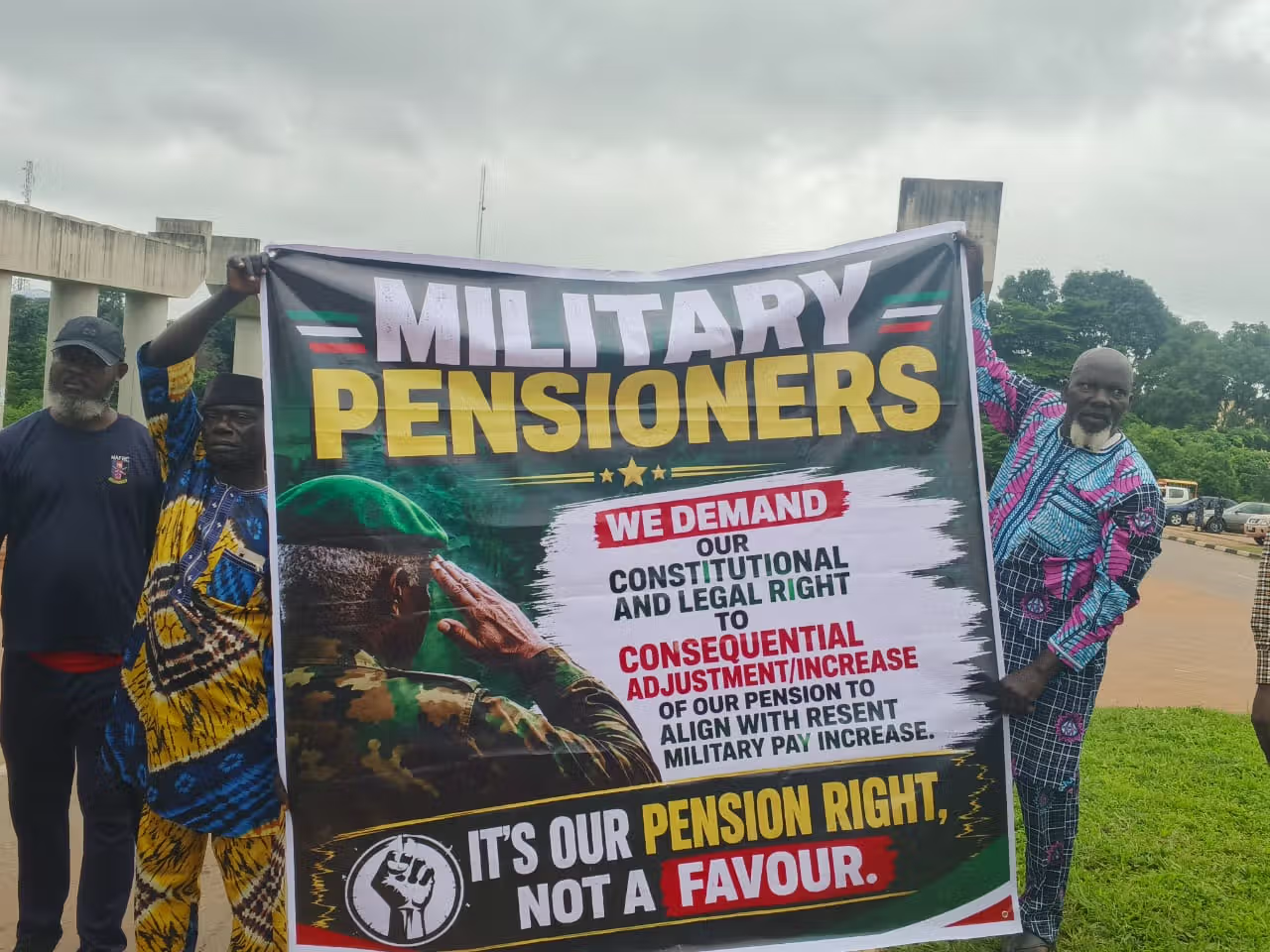


A fresh dispute over the welfare of retired military personnel erupted in Abuja on Wednesday as pensioners demanding long-delayed pension adjustments were stopped from reaching the Ministry of Defence, with security operatives deployed to block their protest.
The retirees had gathered near the ministry carrying placards and banners before attempting to proceed to the main gate to present their grievances. Soldiers, police officers and personnel of the Nigeria Security and Civil Defence Corps (NSCDC), however, cordoned off the area and restricted their movement.
With access to the ministry blocked, the pensioners moved to a road median where they addressed journalists and demanded that the government resolve what they described as an unresolved injustice in the treatment of military retirees.

Speaking for the protesters, retired Lieutenant-Colonel Innocent Anas said the central issue was the failure to apply consequential pension adjustments whenever the salaries of serving military personnel were reviewed upwards.
“We have paid our dues in patriotic service to this nation,” Anas said, arguing that retirees should not be left behind whenever government improves the remuneration of serving personnel.
He said the delay had produced what he described as an unusual disparity in the military pension system, where some recently retired lower-ranking personnel could receive pensions higher than those of officers who retired years earlier.
Anas said the retirees were particularly aggrieved that a salary increase approved for military and paramilitary personnel in November 2025 had yet to translate into corresponding pension adjustments.
“November last year, this is August this year; they have not implemented it,” he said.

The retirees are now demanding that the government factor them into the latest salary review and bring their pensions in line with the revised remuneration structure for serving personnel.
Anas also alleged that pensioners were left out of the financial calculations for implementing the latest salary adjustment, warning that such an approach would deepen inequalities within the military pension system.
The controversy comes against the backdrop of President Bola Tinubu’s approval of a new salary package for personnel of the Armed Forces.
Under the approved structure, officers above the rank of colonel are to receive a 30 per cent increase, personnel from colonel to warrant officer 50 per cent, while those from private to staff sergeant are to receive an 80 per cent increase.
For the protesting retirees, however, the question is not simply about a new salary structure but whether those who served under previous structures will receive corresponding adjustments to prevent their pensions from falling progressively behind.
The pensioners have warned that Wednesday’s confrontation at the Defence Ministry may not be the end of the matter.
Anas said they could take their protest to the Presidential Villa in the coming days if the government fails to address their demands.
The development has placed renewed attention on the long-running question of how pension adjustments for retired military personnel are handled whenever serving personnel receive salary increases.
For the retirees, the immediate demand is straightforward: recognition of their claim to consequential adjustments and a clear government response on when the outstanding payments will be implemented.