
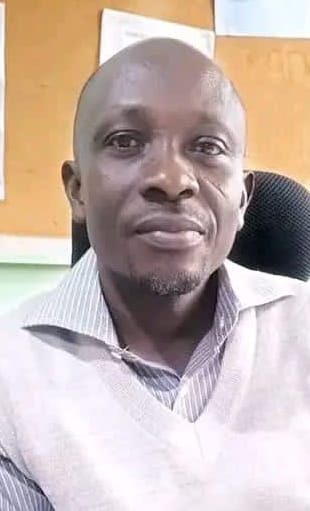


By Adamu Muhd Usman
Kafin-Hausa is more than just a town in Jigawa State. It is the hometown of the state governor, Malam Umar Namadi (FCA), popularly known as Dan Modi. It is also my birthplace and local government area.
My love for Kafin-Hausa, my respect for Governor Namadi and my concern for the development of Hadejia Zone, Jigawa State, Nigeria and humanity generally compel me to speak whenever I witness something worthy of commendation.

As a Nigerian, I believe I have a constitutional right to express my views, whether positive or negative, based on what I see, hear and experience in my community.
I am particularly moved by the dedication of a medical doctor at Kafin-Hausa General Hospital, Dr Muhammad Suleiman Adam, whose commitment to his patients deserves recognition.
Last month, my stepmother, Iya Halima, the wife of my late father, Malam Usman Manu, fell ill. We took her from the outskirts of Kafin-Hausa to the General Hospital for treatment.
Since our father’s death about 20 years ago, we have continued to care for her and fulfil our family, religious and humanitarian responsibilities towards her.
After receiving treatment and recovering, Alhamdulillah, she was given an appointment to return for a medical review four weeks later, on Tuesday, November 3, 2026.
We arrived at the hospital shortly after 10am, but unfortunately, we were late. The doctor had reportedly arrived as early as 7am and instructed that patients who came after 10am should not submit their files for routine consultations, except in emergencies.
The decision was intended to give him enough time to attend to patients who had arrived early, as their number was overwhelming.
At the records office, I met a staff member, Hajia Jummai Isah, popularly known as Abun Yayende.
She was cheerful, gentle, respectful and accommodating. After I presented my card to facilitate the retrieval of my stepmother’s file, she politely explained that she could not assist me because she had been instructed not to process late arrivals.
I was impressed by her honesty, discipline, professionalism and loyalty to her duties. Rather than bend the rules because of my request, she respectfully stood by the instruction she had received.
Her conduct deserves commendation.
I also commend the records officer, Aunty Abu, and the hospital’s Medical Director, Dr Muhammad Suleiman Adam, for maintaining order and discipline in the facility.
I proceeded to the doctor’s consultation office, where I was confronted by a sight that left me emotional. Hundreds of patients were waiting to receive medical attention.
After meeting Dr Muhammad, I explained my stepmother’s situation and the reason for our late arrival.
I expected him to turn us away, but his response was different.
With a smile and remarkable calmness, he agreed to attend to her because she was due for a follow-up examination after discharge and our delay had resulted from a mechanical breakdown.
However, he insisted that he would first attend to everyone who had arrived before us, describing that as a lesson to ensure we respected appointment times in the future.
I appreciated his response and thanked him.
What followed further convinced me that this doctor deserved public recognition.
Dr Muhammad had been attending to patients from the morning until about 1:30pm, when he took a short break for the Zuhr prayer and lunch.
He returned to continue attending to patients, while my stepmother and I also went home briefly for prayers and lunch.
When we returned at about 3pm, we were informed that he had gone on ward rounds.
I followed his movements and discovered that he was attending to patients across different wards.
He visited the male ward, where I counted six patients, before proceeding to the female ward, which had four patients.

He also visited the maternity ward, where he attended to 19 women.
After observing his Asr prayer in his office, he assured patients waiting outside that he would return to attend to them.
He then proceeded to the emergency ward, where I counted another 19 patients.
At about 6pm, my stepmother finally received attention. Even then, more than 30 patients were still waiting to see him.
I also learnt that he intended to visit the paediatric ward before the end of the day’s work.
As a journalist and someone interested in documenting events, I made efforts to establish the scale of his workload that day.
From the patients’ files and the consultations I observed, I counted more than 250 patients attended to during the morning session alone, excluding those seen during ward rounds and other consultations.
Based on my observations, I estimated that he attended to more than 500 patients on that Tuesday, November 3, 2026.
One particularly touching aspect of my experience was learning that Dr Muhammad sometimes uses his personal money to assist patients who cannot afford basic medical needs.
On the day in question, he mobilised people to donate blood to help an elderly, poor woman whose baby needed it. I also personally offered the woman some financial assistance.
As Medical Director, Dr Muhammad has demonstrated commitment to punctuality, discipline, cleanliness, staff unity and the welfare of patients.
I was also informed that admitted patients receive nutritious meals and that drugs are now provided free to patients through the hospital pharmacy.
Previously, free drugs were mainly available to children under five, pregnant women and inmates. The reported extension of the provision to all patients is a commendable initiative by the Jigawa State Government.
Governor Namadi deserves commendation for supporting measures that improve access to healthcare.
My appreciation also goes to Dr Roy, a Bangladeshi medical doctor, Nurse Habiba Abdullahi, popularly known as Tafeesu, and other members of staff in the female ward who attended to my stepmother during her admission.
I must also acknowledge Malam Ibrahim, popularly called Kad’as, and a staff member at the Outpatient Department near the card purchase centre, whose surname I cannot recall but who has Jahun in his name. His guidance helped me understand the hospital’s procedures.
However, amid the commendable efforts, I observed an important challenge that requires urgent government attention.
I overheard a patient who needed an X-ray examination saying she would have to seek the service elsewhere because the hospital’s X-ray machine was faulty.
This is a serious concern. A hospital serving hundreds of patients daily should have functional diagnostic equipment to ensure timely and effective treatment.
I therefore appeal to the Jigawa State Government to urgently repair or replace the faulty X-ray machine at Kafin-Hausa General Hospital.
Beyond infrastructure, the government should identify, recognise, encourage and reward hardworking medical personnel like Dr Muhammad Suleiman Adam.
Such recognition should not be restricted to the health sector alone. Dedicated and selfless workers across ministries, departments, agencies and parastatals deserve encouragement.
However, education and healthcare should receive special attention because of their direct impact on the well-being and future of the people.
Dr Muhammad Suleiman Adam represents the kind of public servant whose dedication should not go unnoticed. His humility, generosity, compassion, discipline and commitment to duty are worthy of emulation.
Governor Namadi must hear this story and ensure that such exceptional service receives the recognition it deserves.
Dr Muhammad, thank you for your sacrifice and service. May Almighty Allah reward you abundantly and strengthen you to continue serving humanity.
I am proud of you, Doc.
Adamu Muhd Usman writes from Kafin-Hausa, Jigawa State.