


By Richard Elesho
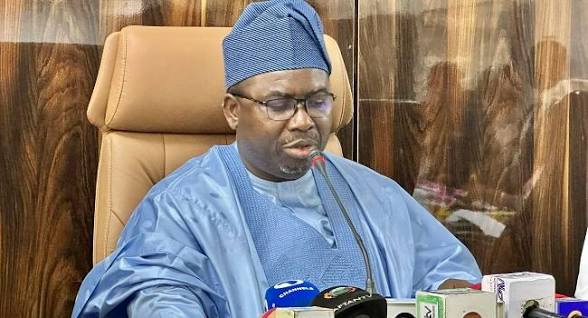
Since his assumption of office in October 2025 as the Chairman of the Independent National Electoral Commission (INEC) following his appointment by President Bola Ahmed Tinubu, Prof. Joash Ojo Amupitan, SAN, has superintended over the conduct of two off-cycle gubernatorial elections as well as some National Assembly and State Assembly elections. Those elections served as the first litmust tests of his preparedness for the office and, perhaps, of his competence as the new chief election manager in the country.
The two guber elections – Anambra State in November 2025, and Ekiti State in June 2026 – generated huge public interest and triggered massive conversations around the sanctity of the ballot, seamless logistic arrangements, conduct of election officials, and the need for effective security architecture during the elections. Concerns about election results collation and the need for real-time electronic transmission of results also dominated conversations. Many public commentators called for a paradigm shift and a new election template from the rancorous, opaque, and violence-prone system of the immediate past era.

Indeed, some public affairs analysts and political watchers who have witnessed many electoral seasons and the social cataclysms often associated with them have made a general characterisation of election cycles in the country as chaotic, fraud prone, and falling below the threshold of internationally acceptable contests. Nigeria’s electoral activities have often been characterized by irregularities, including vote rigging, violence, voter intimidation, vote buying, logistical shortcomings, delayed deployment of election materials, and allegations of bias by the electoral commission. These issues have continued to cast doubt on the credibility and transparency of the nation’s democratic process.
A political researcher, Shankyula T. Samuel, in his work titled *Political Thuggery in Nigeria and Elections and The Law,* notes that Nigeria’s political journey in the past two decades has been fraught with objectionable patterns which consign its democracy to a repugnant state. “The relevance of an election in a democratic setting cannot be overemphasized. An electoral process, depending on how free, fair, and credible it is, will either make or mar a democratic system… There is no gainsaying the fact that in the past series of elections held in Nigerian between 1999, 2003 and 2007, activities of thugs have taken a centre stage thereby breeding a feeling of resentment among members of the public,” he observes.
Similarly, the Nigeria Civil Society Situation Room, a coalition of civil society organisations in the country, made a forceful point for democratic growth and consolidation in the country. In a piece titled “The Challenge of Finding an Independent Umpire,” the group stresses the importance of having an electoral institution that is above board, non-partisan, and transparent.
“The Independent National Electoral Commission (INEC) is created under Section 153 of the 1999 Nigerian Constitution (as amended). INEC is charged with the responsibility of conducting credible elections in the country. In recent times, there has been a huge challenge of partisan elements finding their way into the different levels of INEC, either through nomination by politicians or turning partisan upon appointment.The challenge for Nigeria at this time is to achieve a truly unbiased and non-
partisan election management body,” the group said.
However, post-election assessments by political analysts, election observers, and other stakeholders since November 2025 when Prof. Amupitan mounted the saddle at INEC, have largely awarded the election refree an impressive scorecard, reflecting significant improvements in the conduct of elections across the country. The reports commended the Commission for its enhanced election management, marked by the timely deployment of electoral materials, effective handling of logistical challenges, and the seamless coordination of polling activities.
The reviews also highlighted greater transparency in the collation and transmission of election results, which contributed to increased public confidence in the electoral process. Furthermore, INEC was widely praised for demonstrating a high level of impartiality and professionalism, with observers noting the Commission’s non-partisan disposition in the discharge of its constitutional responsibilities.
Overall, the favourable assessments portray a noticeable departure from the shortcomings that had characterised previous electoral cycles, suggesting meaningful progress towards more credible, transparent, and efficiently conducted elections in Nigeria.
YIAGA Africa, a non-profit, civic organisation dedicated to democratic governance and civic participation in Nigeria and in Africa, awarded INEC under Prof. Amupitan, an excellent assessment in all the elections conducted since November 2025, while also recommending areas for improvements.

On the June 2026 Ekiti State gubernatorial election, the NGO averred that the official results announced by the commission accurately reflected votes cast at polling units across the state. The INEC Chief Returning Officer and Vice Chancellor of Federal University of Technology, Akure(FUTA), Professor Adenike Oladiji, declared incumbent Governor Biodun Oyebanji of the All Progressives’ Congress (APC) winner after polling 319,224 votes to defeat the candidate of the People’s Democratic Party(PDP), Dr. Wole Oluyede, who came a distant second with 40,543 votes.
In its final assessment of the poll, Yiaga Africa stated that its Watching The Vote (WTV) Parallel Vote Tabulation (PVT) findings showed that the results declared by INEC fell within its estimated range, indicating that the outcome announced by the electoral umpire was consistent with ballots counted at polling units. Its Chair of the 2026 Ekiti Election Observation Mission, Dr. Aisha Abdullahi, and the Executive Director of the organisation, Samson Itodo, while presenting the report, noted that the alignment between INEC’s official figures and its independent verification exercise demonstrated that the election results were not manipulated during collation at the ward, local government or state levels.
“INEC’s official results for the 2026 Ekiti State Governorship Election are consistent with Yiaga Africa’s WTV estimate, as they fall within Yiaga Africa’s estimated range. This indicates that the official results, as announced, reflect the ballots counted at polling units”, the CSO said. It explained that if the results had been substantially altered during the collation process, the final figures would have fallen outside the statistical ranges generated through its PVT methodology. It stressed that the consistency of the results specifically confirmed the accuracy of polling-unit result tabulation.
Similarly, the Situation Room gave its verdict on the Ekiti guber election, affirming a credible election and passing a satisfactory assessment of the poll. Situation Room noted that the Ekiti State Governorship Election was conducted in a largely peaceful atmosphere across the State.
“Reports received from accredited observers and citizen observers through the SEAT App indicated that election officials and materials arrived on time in a majority of polling units observed between 7:00am and 8:00am. Following deployment, polls commenced early in approximately 92 percent of polling,” the Situation Room said. It added that the Bimodal Voter Accreditation System (BVAS) functioned satisfactorily in most observed locations.
Observers’ reports on the November 2025 Anambra State guber election also revealed remarkable progress in the nation’s electoral process. The observer groups were unanimous that the election was in line with international best practice. Incumbent Governor Chukwuma Soludo polled over 400,000 votes to defeat his opponents at the poll.
Yiaga Africa also affirmed that the official results of the Anambra State governorship election, as announced by the Independent National Electoral Commission (INEC), aligned with findings from its Process and Results Verification for Transparency (PRVT) exercise.
In its post-election assessment, the group said the election outcomes were independently verified by the Anambra Election Observation Hub, a coalition of civil society organisations that monitored the poll across the state. In a statement signed by the Chair of the 2025 Anambra Election Mission, Dr Asmau Maikudi, and Executive Director of Yiaga Africa, Samson Itodo, the group stated that the consistency between its PRVT estimates and INEC’s official figures reinforces confidence in the credibility and transparency of the electoral process.
These findings were corroborated by the United Nations election observer, Jim Oko, who described the Anambra State governorship election as being “in line with international best practices.”” Oko, who is the National Coordinator of Nouvel Perspective International, a UN-accredited election observation organisation, stated this in Awka in an interview with newsmen after the election result was announced.
With the positive and progress-affirming reports and assessments of credible independent electoral process and the confidence building election management by INEC under Prof. Amupitan, Nigeria may have finally turned the corner and put behind her incidents of electoral heist, irregularities, rigging, and manipulation of election results. Nigeria may have entered a new electoral era of due process, better organisation and coordination of polling activities, and a regime of an unbiased umpire..
That is not all. A credible poll is a recipe, if not the foundation of good governance. When polls are credible, elected officials will no longer use quality time and public resources to defend their mandates in the courts. INEC under Amupitan is set to see Nigeria through to that desirable era.