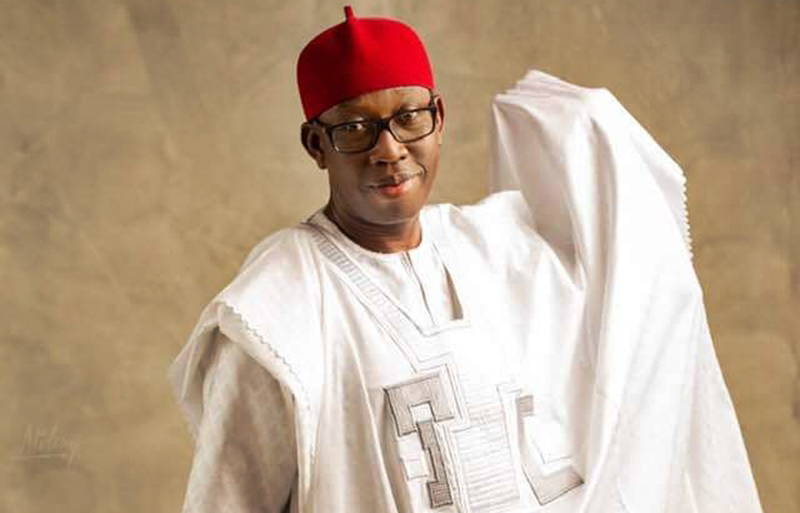

Former Delta State Governor, Senator Ifeanyi Okowa, has warned that declining public trust, poor service delivery and social exclusion are widening the gap between Nigeria’s leaders and citizens, urging political officeholders to embrace transparent and inclusive governance.
Okowa spoke on Tuesday at the fifth national conference of the Forum of Former Deputy Governors of Nigeria (FFDGN) in Abuja, where he called for stronger accountability, policy continuity and greater citizen participation in decision-making.
He said many Nigerians increasingly felt disconnected from government because their needs and aspirations were not adequately reflected in public policies and governance.
The former governor identified limited public participation in policymaking, inadequate public services and the marginalisation of youths, women, persons with disabilities and disadvantaged communities as factors weakening the country’s social contract.
He also expressed concern that ethnic, religious and political divisions had eroded national unity, turning Nigeria’s diversity into a source of exclusion and perceived injustice.
Okowa urged leaders to strengthen public institutions, promote civic education and ensure greater transparency in government spending and policy decisions.
He said rebuilding public confidence required leaders to communicate effectively with citizens and maintain regular engagement with communities rather than waiting for political crises to emerge.
The former governor also criticised the abandonment of development programmes by successive administrations, warning that discontinuity undermined long-term planning, wasted public resources and disrupted national development.
He called for policies that would survive changes in government, insisting that sustainable development required consistency in implementing programmes designed to improve citizens’ welfare.
On youth development, Okowa advocated greater participation of young Nigerians in decision-making, innovation and enterprise, saying they must be empowered to contribute meaningfully to national growth.
He also highlighted the role of traditional rulers in peacebuilding, community security and social cohesion, urging them to support efforts to strengthen relationships between government and the people.
While stressing the responsibilities of public officeholders, Okowa said citizens also had a role to play in nation-building through the protection of public assets, payment of lawful taxes and constructive participation in democratic processes.
“Nation-building is the collective responsibility of everyone who calls this country home, and not the exclusive responsibility of those who occupy public office,” he said.
He described the FFDGN as a repository of institutional experience whose members could contribute practical recommendations on governance, intergovernmental relations and peacebuilding.
Okowa maintained that restoring trust between leaders and citizens was as important as strengthening the economy, improving infrastructure and making government more efficient.
“Leaders and citizens must see themselves as partners, accountable one to another with a shared purpose,” he said.
The two-day conference, which began on October 20, is themed, “Rethinking Nation-Building: Bridging the Leadership-Citizen Disconnect Through Orientation, Attitude, Character, Culture and Tradition Towards Sustainable Development.”