
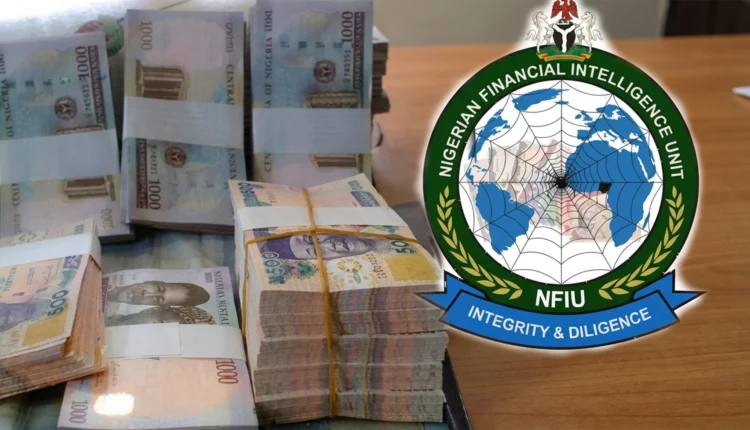


The Nigerian Financial Intelligence Unit (NFIU) has raised concerns over new methods allegedly being used by terrorist financiers to hide the identities of those controlling illicit funds.
The agency said the methods include the use of bank accounts opened in women’s names, identities of deceased persons and pre-registered SIM cards.
The disclosure was contained in the NFIU’s 2025 Annual Report, which identified weak customer identification controls, disconnected SIM-Bank Verification Number (BVN) links and proxy accounts as emerging risks to Nigeria’s efforts to combat financial crime and terrorism financing.
According to the report, some individuals involved in terrorism financing use SIM cards registered to deceased persons or other people to distance themselves from financial transactions.
The NFIU said the practice could make it difficult for investigators to identify the actual individuals controlling bank accounts because phone numbers used for mobile banking, transaction alerts and other services may be registered to people who are not connected to the transactions.
The agency said the method effectively weakens the link between SIM registration and BVN records, creating difficulties in tracing suspicious transactions to their actual beneficiaries.
The NFIU also identified proxy bank accounts as another method allegedly used to conceal illicit funds.
It said some accounts are opened in the names of women, including wives, sisters and female associates, while male commanders, logistics managers or other operatives allegedly control the accounts.
The agency described the practice as “identity laundering”, explaining that the actual operators may control the ATM cards, mobile banking credentials and personal identification numbers linked to the accounts.
It added that some women whose identities are used may not be aware of the nature or volume of transactions conducted through the accounts.
The NFIU said the use of proxy accounts creates a layer of separation between those controlling illicit funds and the accounts through which the money is transferred.
The agency said the findings highlight the need for stronger links between digital identities, SIM registrations, BVNs and National Identification Numbers (NINs).
It also identified weak customer identification procedures and limited oversight of some digital financial services as areas that require greater attention.
The disclosure comes amid broader efforts by Nigerian regulators and security agencies to strengthen measures against terrorism financing, money laundering and electronic financial crimes.
The NFIU said closing gaps in Nigeria’s digital identity and financial systems would improve the ability of financial institutions and law enforcement agencies to trace suspicious transactions and identify the real beneficiaries of illicit funds.