
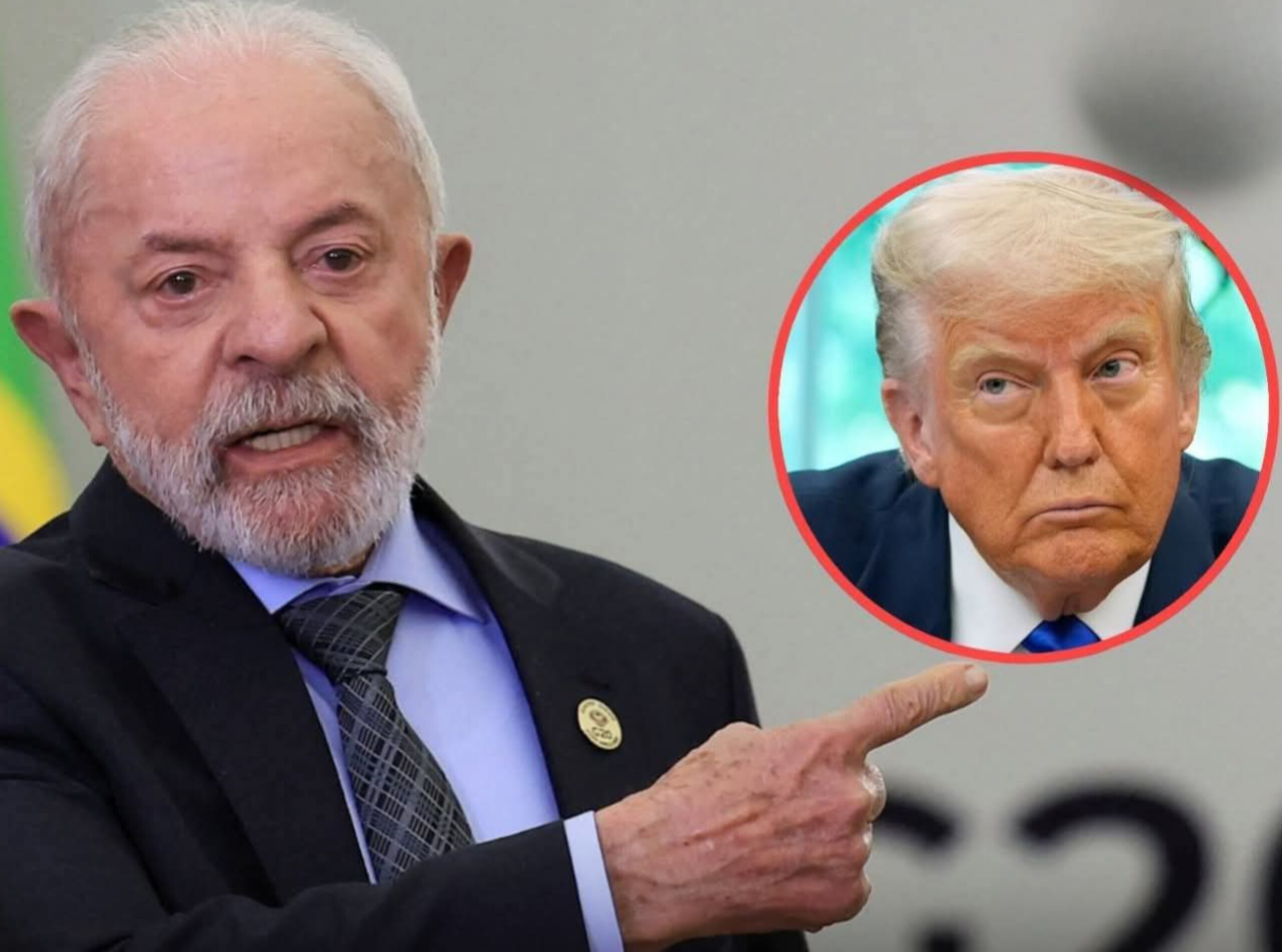


_The yo-yo president and what his fourth term means for us_
By Sam Ogabidu
Luck and pluck is more than a ding-dong affair. It is a yo-yo story. And it has defined the personality and politics of Brazil’s enigmatic president — Ignácio Lula da Silva.

His rise and fall and rise is a mix of luck — chance — and pluck — courage. His not-so-rosy start in life did not deter him, and fate has kept him alive to witness his own rise and fall and rise.
His down-today, up-tomorrow story began in 1945 in Pernambuco, from where his family took their poverty to São Paulo to tone it down.
There were no low-hanging fruits for him to munch for an easy life, so he had to brace himself to confront the poverty circle with all his muster. He didn’t have the connections and the pedigree to hang amongst the biggies.
So he grinded as a metalworker and lathe operator in the ABC industrial belt. He was headstrong and hardworking, the combo that enabled him to eventually become a union leader.
He had the pluck and the luck that the mood of the country was stirring against dictatorship. Roles were rising and seeking applicants that needed dare and courage, and he stepped up to the plate, helping stoke the flames of the 1970s-80s strikes against military dictatorship that choked Brazil from 1964 to 1985.
In 1980, after a long stay in the trenches, he found the gumption and organized a Workers’ Party (PT), on which platform he formally challenged the establishment.
He ran for the presidency three unsuccessful times — 1989, 1994, 1998.
In 2002, the stars shined brightly on his ambition and he was elected president — the first from the working class.
In 2006, he was re-elected for a second term, which he finished and handed power to a favoured successor from his party.
He left a legacy of Bolsa Família cash transfer that lifted 20 million from poverty, increased minimum wage by 77% in real terms, and rode a commodity boom.
Brazil under his watch entered a golden age. The country freed itself from the shackles of IMF indebtedness and discovered pre-salt oil, like the gods had decided to cloth the Brazilian with a garment of favour.
He left office with an unprecedented 83% approval rating.
From 2010 to 2016, Dilma Rousseff, his female successor, moved on with the shine — until the rosy ride bumped with the 2014 Lava Jato scandal — a money-laundering scandal named after the investigation of a gas station, that involved a ring of under-invoicing and over payments to Petrobra s (Brazil’s national oil company) directors and top politicians to the tune of $2-3 billion dollars. The crime syndicate was so large and intricate it involved twleve countries and the massive investigation led to over 200 high profile convictions.
Dilma was impeached for obstruction in 2016, and Lula was convicted for corruption in 2017.
Interestingly, she wasn’t found guilty of collecting bribes but was indicted for judgmental slips that appear to be a witch-hunt by the opposing forces of the elite championed by the Bolsonaro clan.
His bad turn worsened with his imprisonment in 2018. He was not only imprisoned but barred from contesting the 2018 election, which the right-winger Bolsonaro won.
Comeback Kid of Brazilian Politics
In 2022, he found the pluck to jostle with Jair Bolsonaro, whom he defeated with a closely called margin — 50.9% to 49.1%. The margin was so slim, it split Brazil into two political worlds.
In 2026, Bolsonaro staged a comeback through his son Flavio and won the first round of voting but didn’t meet the mandatory over-50% cut-off. So a run-off took place and Lula came from behind and trounced Bolsonaro with 51.9% to 49.1%.
So he became the first fourth-term president of Brazil, much to the consternation of Bolsonaro and his backer-in-chief, Donald Trump.
There is a lot of huffing and puffing in the corridors of the White House, but Lula has shown his dare. Surviving homebred dictators is more deadly than an external bully who gives you fresh facts to fire nationalist tempers.
Trump and Bolsonaro have alleged that the election was rigged. A typical fluster from Trump’s playbook is to blame others and the system for cheating when he doesn’t get his way.
Here is what his victory means for Brazil: a return to social spending, the spreading of the umbrella covering for the Amazon forests, more energy for BRICS, (Brazil Russia India and China and South Africa)and pragmatic negotiation between the business class and the working class.
And what is Lula’s victory to Nigeria?
With Nigeria being home to the largest population of melanin-coloured humans and Brazil the largest constellation outside Africa, Nigeria and Brazil are historically tied, and both have had a cousin-like fraternity down the ages.
With the new threat of American unipolarism threatening the multilateral politics of both countries, Nigeria and Brazil’s relationship needs a new rejig.