
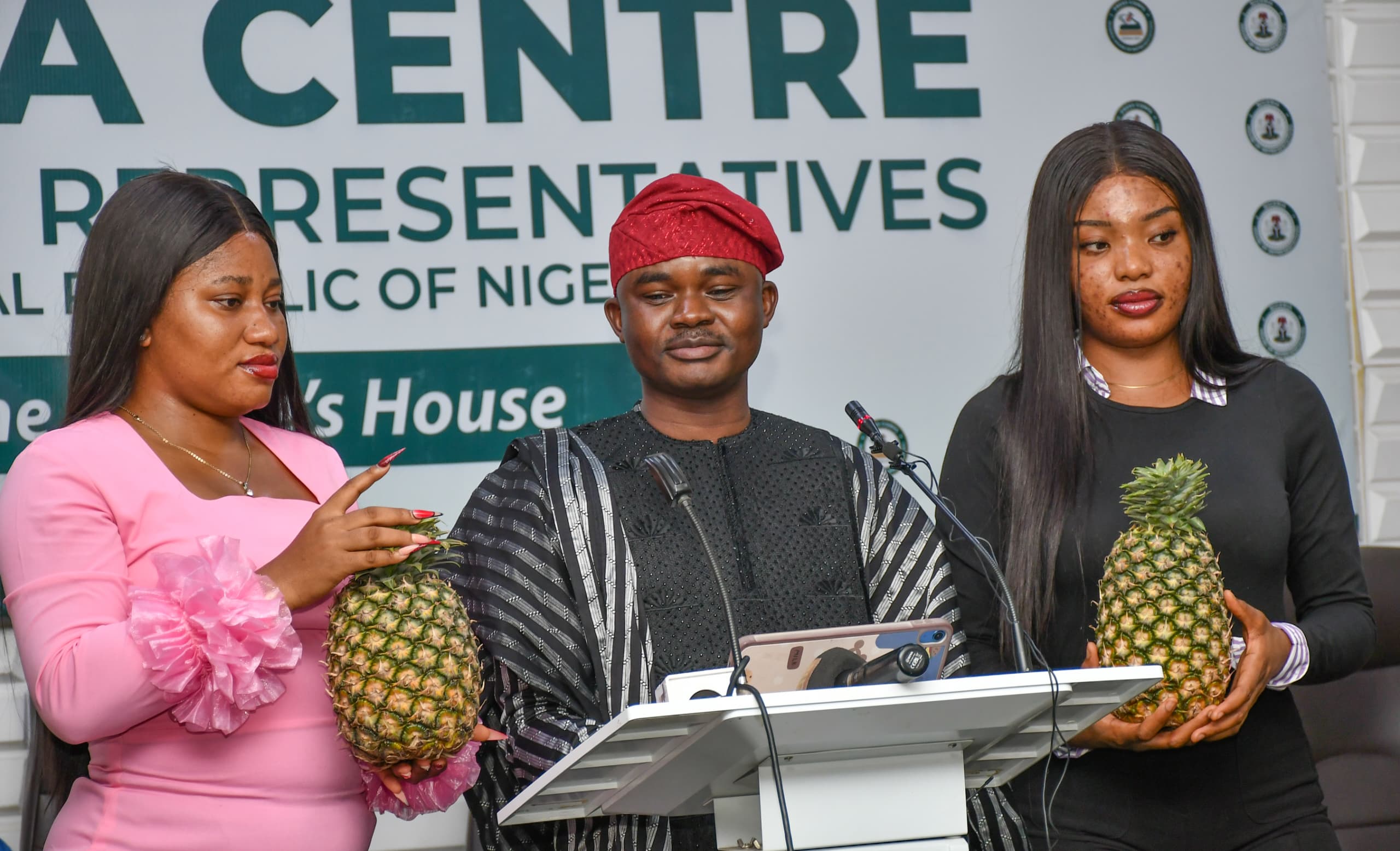


The Chief Executive Officer of Davidorlah Nigeria Limited, Segun Alabi, has called for a fundamental restructuring of Africa’s agricultural economy, urging a decisive shift away from raw commodity exports toward full-scale agro-industrial value creation.
Speaking at a press briefing on Monday, Alabi said Africa’s continued dependence on exporting unprocessed agricultural goods has trapped the continent in a cycle of low value capture despite its vast natural endowments.
“Africa is rich. Nigeria is rich. Yet our people are struggling,” he said. “We export raw materials, import finished goods, export jobs, and import unemployment. It is a structural problem affecting our future.”
He argued that the core challenge is not production capacity, but the inability to retain value within local production chains, which continues to limit industrial growth and job creation.
Using pineapple as a case study, Alabi explained the economic disparity between raw and processed agricultural goods.
“A pineapple sold raw is cheap, but when processed into juice concentrate, dried fruit, or bromelain, its value multiplies several times over,” he said. “This is not farming; this is industrial wealth creation.”
He described Davidorlah Nigeria Limited as an integrated agro-industrial platform designed to transform pineapple production into a value-driven export industry, combining farming, processing, and global market distribution.
According to him, the model is structured to increase farmers’ incomes, attract investment returns, improve Nigeria’s foreign exchange earnings, and strengthen industrial capacity across Africa.
“We are moving from agriculture as survival to agriculture as an industry,” he added.
Alabi said the adoption of agro-processing could significantly impact Nigeria’s economy by boosting GDP, reducing import dependence, creating employment opportunities, and easing youth migration pressures.
He urged governments to prioritise policies that support agro-industrial infrastructure, enhance export logistics, and expand financing access for indigenous agribusinesses.
“Supporting companies like Davidorlah is not just supporting a business—it is supporting economic transformation,” he said.
The CEO also called on local and international investors to tap into Africa’s agricultural value chains, stressing that the continent’s long-term economic future lies in processing rather than primary production.
“The future of agriculture is not in raw production. It is in value chain processing and export,” he said. “Africa is not poor—it has simply been exporting its wealth in raw form.”
He concluded by positioning Davidorlah as a model for what he termed “Agricultural Intelligence,” describing it as a new approach to combining innovation, processing, and market integration to drive continental economic transformation.