
By Dr. Chike Okogwu
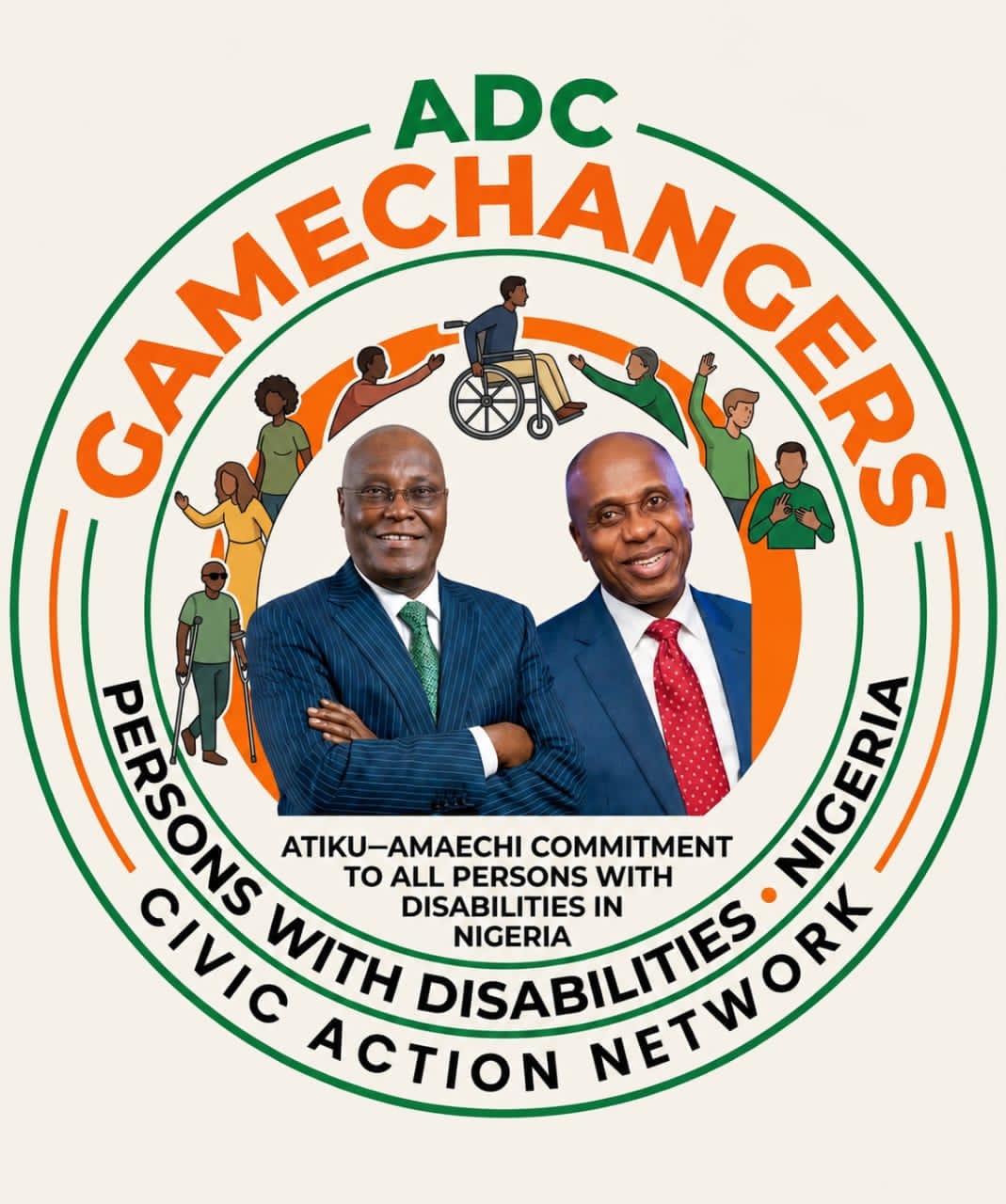
Former Member, Federal Government SURE-P, National Leader, African Democratic Congress (ADC), Persons With Disabilities and The ADC GAMECHANGERS PWD CIVIC ACTION NETWORK INITIATIVE.
There are moments in the life of a nation when history must be revisited, not to live in the past but to learn from it. Nigeria is at one of those moments.
When Alhaji Atiku Abubakar, GCON, Presidential Candidate of the African Democratic Congress (ADC), declared that he would restore fuel subsidy if elected President of Nigeria, the predictable chorus began.
“Subsidy is corruption”,
“Subsidy is unsustainable”,
“Subsidy benefits the rich”,
“Subsidy is a return to the past”, but there is another question that Nigerians must ask: What if the problem was never the idea of cushioning the Nigerian people from an essential commodity’s international price shock, but the manner in which the system was designed, administered, monitored and abused?
That is the conversation Nigeria should be having.
I speak not merely as a politician but as someone who was privileged to serve as a member of the Federal Government’s Subsidy Reinvestment and Empowerment Programme (SURE-P) during the administration of President Goodluck Jonathan and represented Persons With Disabilities on the Board between 2012 and 2015. I saw the system from inside. I saw what worked.
I saw what did not work.
I saw what could have been better and I saw, above all, what Nigeria can learn from SURE-P.
Today, as National Leader of the African Democratic Congress representing Persons With Disabilities, I believe Atiku Abubakar’s call for the reintroduction of subsidy deserves serious national consideration. Not a return to the old system. A new subsidy architecture that is intelligent, targeted, transparent and digitally traceable. A subsidy that supports Nigerian production, protects the poorest and most vulnerable, that Nigerians can audit and most importantly, a subsidy that works for Nigerians rather than for middlemen.
I KNOW WHAT SURE-P DID.
SURE-P was created against the backdrop of the 2012 fuel subsidy reforms with the central principle that savings arising from subsidy reform should be reinvested in infrastructure and social programmes.
The programme was not simply a cash-distribution scheme. It was designed around infrastructure, transportation, healthcare, employment, maternal and child health, vocational training and other interventions. The official 2012 budget documents, for example, specifically provided SURE-P funding for the Second Niger Bridge, Oweto Bridge and major railway corridors including Lagos-Kano, Port Harcourt-Maiduguri and Kaduna-Abuja. The 2014 SURE-P appropriation also explicitly allocated funding to the Second Niger Bridge and Oweto Bridge alongside major national road projects. These are not theoretical achievements. They are part of Nigeria’s infrastructure history.
The Second Niger Bridge.
Today, Nigerians drive across a piece of infrastructure that was once little more than a national aspiration. SURE-P provided counterpart funding support for the Second Niger Bridge project. Contemporary federal records specifically identify SURE-P as part of the funding structure for that project.
The Loko-Oweto Bridge.
The Loko-Oweto Bridge linking Nasarawa and Benue is another example.
In 2013, the Jonathan administration approved N30 billion from SURE-P funds for the project.
The return of rail services.
SURE-P also had a substantial transportation and rail component.
The programme’s official budget architecture included major rail corridors and rolling stock while contemporary SURE-P reporting documented commitments to railway rehabilitation and modernisation projects across the country. I had the privilege of overseeing aspects of this work and therefore I cannot sit quietly while an entire programme is reduced to the simplistic political description of “corruption”.
Was SURE-P perfect? No.
Was there room for improvement? Absolutely.
Were there abuses associated with the broader subsidy architecture in the states and LGAs? Yes.
Was the Federal Government SURE-P structure simply a gigantic corruption machine? I reject that characterization unequivocally.
THE SURE-P THAT I KNEW.
SURE-P had different levels and structures of implementation. There was the Federal Government component. There were state-level structures and there were local-government-related structures. These must not be conveniently lumped together as though they were one undifferentiated organisation with one chain of command. The Federal Government SURE-P that I knew operated under the leadership of distinguished Nigerians including the late Dr. Christopher Kolade, General Martin Luther Agwai (Rtd.) and Chief Ishaya Akau. My experience of the Federal SURE-P structure is that it was overwhelmingly transparent in the movement of funds to approved beneficiaries and projects. Indeed, I can say from my own experience and knowledge of the Federal structure that it was over 97 percent clean. That is my position. I say that with the confidence of someone who was there. A substantial part of the architecture involved funds moving through controlled banking channels directly to designated beneficiaries, contractors or programme recipients rather than simply placing large pools of cash at the disposal of political actors. That distinction matters.
THE POLLUTION OF THE SURE-P BRAND.
Unfortunately, the SURE-P brand became polluted by activities and controversies associated with state and local structures over which the Federal SURE-P Board did not have the any direct operational control of.
Now, here lies one of the great ironies of Nigerian politics. Some of those who participated in or were associated with the political structures that abused public resources under various subsidy-related arrangements later re-emerged in different political positions. Some became legislators. Some became governors. Some became ministers. Some became political power brokers and some, Nigerians may reasonably ask, are still enjoying the fruits of questionable accumulation. Yet somehow the institution itself became the villain. The brand was convicted while the individuals disappeared into politics. That is not how we should write Nigeria’s history. If there were corrupt individuals, prosecute the individuals. If there were fraudulent transactions, investigate the transactions. If there were weaknesses in the system, fix the weaknesses but do not tell Nigerians that because a system was abused, therefore every social protection mechanism is inherently evil.
By that logic, we should abolish government procurement because procurement has been abused. We should abolish banking because banks have been used for fraud. We should abolish public contracts because some contracts have been inflated. That is not reform. That is surrender.
FROM SURE-P TO BVN: NIGERIA NOW HAS THE TECHNOLOGY TO DO IT BETTER.
Here is where history meets the future. When SURE-P was operating, Nigeria’s digital identity and financial-data architecture was nowhere near where it is today. The Bank Verification Number was launched by the Central Bank of Nigeria in February 2014 as a unique biometric identity for bank customers. Its objectives included strengthening KYC, reducing fraud and creating a single identity across banks. Therefore, let us use the tools we have today. If Atiku Abubakar restores a subsidy regime, there should be nowhere for subsidy fraud to hide. Every legitimate beneficiary should be digitally identifiable. BVN can be integrated, subject to privacy law and proper data-governance safeguards, with relevant government identity and payment systems. The system should know:
Who is receiving the benefit.
How much they are receiving.
Why they are receiving it.
Where they are located.
Which account receives it.
How frequently they receive it and whether the same person, vehicle, company or transaction is appearing multiple times. A modern subsidy system should operate on a principle I would call:
“ONE CITIZEN. ONE VERIFIED ECONOMIC IDENTITY. ONE TRACEABLE BENEFIT.” Where subsidies are paid to individuals or vulnerable households, identity verification should prevent ghost beneficiaries. Where subsidies are granted through the downstream petroleum sector, product volumes should be digitally tracked from refinery to depot to truck to filling station. Every litre should have a digital trail. Every truck should have a GPS trail. Every depot should have an electronic inventory trail. Every filling station should have a verified sales trail. Every naira should have an audit trail. That is how we turn subsidy from an opaque political system into a measurable public-policy instrument.
NIGERIA CANNOT IGNORE THE COST-OF-LIVING CATASTROPHE
Let us look at the Nigeria of today. Twelve years ago, Nigerians were buying petrol at prices around the neighbourhood of ₦91 per litre. Today, petrol prices have crossed ₦1,300 per litre in parts of the country. Recent reports show Abuja pump prices moving above ₦1,300 as marketers adjusted prices upward.
That is not a small adjustment. That is an economic earthquake and fuel does not exist in isolation. Fuel moves food.
Fuel moves people. Fuel moves medicine. Fuel moves building materials.
Fuel powers generators. Fuel influences electricity costs. Fuel affects water production. Fuel affects farming. Fuel affects manufacturing. Fuel affects school transportation. Fuel affects hospital operations. Fuel affects virtually every product and service in Nigeria. When transportation costs rise, the price of rice rises. When logistics costs rise, the price of bread rises. When electricity becomes more expensive, production becomes more expensive.
When production becomes more expensive, businesses transfer the cost to consumers and when all these costs converge, the Nigerian worker’s salary buys less and less. That is inflation in the real world. Not a statistic on a television screen. It is the mother who removes meat from the family pot. It is the student who cannot afford transport to school. It is the farmer who cannot afford to move produce. It is the person with disability who must choose between transportation, medication and food. It is the elderly Nigerian who cannot afford the medicine prescribed by the doctor.
WHERE DID THE “SAVINGS” GO?
The argument for subsidy removal was straightforward:
Remove subsidy.
Save money.
Share the savings.
Invest the money.
Build infrastructure.
Improve healthcare.
Improve education.
Improve security.
Strengthen the economy.
Make Nigerians better off, but Nigerians have every right to ask: Where is the dividend? The Federal Government itself now says that approximately ₦15.8 trillion in resources were mobilised from subsidy removal between June 2023 and December 2025, with approximately ₦5.4 trillion attributed to the Federal Government and ₦10.4 trillion distributed through the Federation Account to states and local governments and even the government has acknowledged that Nigerians are asking where the savings went. The official explanation is that these resources were absorbed by higher expenditure pressures including debt service, wages, infrastructure and other obligations but there is an even more fundamental question –
If the Nigerian people are supposedly benefiting from the savings, why are so many Nigerians feeling poorer? That question cannot simply be dismissed. The National Employers’ Consultative Association has itself called for accountability regarding the ₦10.4 trillion distributed to states and local governments. This is precisely the lesson of SURE-P. Money must not merely be released. It must be traceable from source to beneficiary and from appropriation to outcome.
THE EXCESS CRUDE ACCOUNT AND THE LESSON OF SAVING IN GOOD TIMES.
Nigeria has historically used the Excess Crude Account as a mechanism for saving proceeds above benchmark oil prices. The Central Bank describes excess crude funds as savings of excess proceeds from crude oil, petroleum profit tax and oil royalties belonging to the three tiers of government. The principle was simple:
When oil prices are high, Nigeria should not behave as though high oil prices will last forever. Save some. Stabilise the economy. Protect the budget. Prepare for the downturn. That same philosophy should inform a modern subsidy policy. When international crude prices rise sharply, Nigeria should not simply pass every international price shock directly to Nigerian consumers. We should create a Domestic Energy Price Stabilisation Mechanism. When crude prices rise above an agreed benchmark, a portion of excess petroleum revenues can be channelled into the stabilisation mechanism. When international prices fall, the mechanism builds reserves. When prices spike, the reserve cushions the domestic market. That is how responsible countries manage volatility.
SUPPORTING DANGOTE AND NIGERIA’S OTHER REFINERIES.
This is where Atiku’s subsidy policy can become fundamentally different from the old regime. Nigeria should not subsidise imports forever.
Nigeria should subsidise Nigerian energy security. That means creating a transparent mechanism that supports domestic refining while protecting consumers. The more crude Nigeria processes domestically, the less exposed we become to the full cost of importing refined petroleum products.
A domestic refinery does not have to incur the same international logistics chain involved when Nigerian crude is shipped abroad for processing and refined products are subsequently transported back into Nigeria, reducing unnecessary international shipping, associated insurance, financing, handling and other logistics costs can strengthen the economics of domestic refining. The objective should therefore be
Nigerian crude for Nigerian refinery for Nigerian fuel for Nigerian consumers and Not Nigerian crude to foreign refinery for international shipping to Nigerian depot for Nigerian consumer. If Dangote Refinery and other Nigerian refineries can obtain reliable crude supplies under transparent commercial arrangements, Nigeria can progressively retain more value within the domestic economy. That is not simply subsidy.
That is industrial policy.
ATIKU’S SUBSIDY SHOULD BE DIFFERENT.
When Atiku becomes President on May 29, 2027, I would strongly recommend that he does not simply announce:
“Subsidy is back.”
He should announce:
“Nigeria’s new transparent fuel-price stabilisation and consumer protection system begins today” which should have at least ten pillars.
1. A publicly defined subsidy formula: Nigerians must know exactly what the government is subsidising. No secret numbers. No mysterious under-recovery. No unexplained petroleum accounts.
2. A transparent benchmark price: Government should establish an independently determined benchmark based on crude prices, refining costs, transportation, taxes and other legitimate components.
3. Domestic-refinery priority: Where qualifying Nigerian refineries can supply products competitively, domestic supply should receive priority.
4. BVN-linked beneficiary architecture: Where direct household or vulnerable-person support is involved, beneficiaries should be verified using BVN and other lawful identity systems. BVN itself must never become a tool for indiscriminate surveillance; it should be used within clear privacy, data-protection and cybersecurity safeguards.
5. Digital litre tracking: From refinery to depot to truck to filling station. Nigeria should know where subsidised products go.
6. GPS-enabled petroleum logistics: A subsidised truck should not mysteriously disappear across the border. Its route should be digitally traceable.
7. Independent audit: Every naira spent on subsidy should be audited and the aggregate results published regularly.
8. Citizen dashboard. Imagine Nigerians opening a website and seeing: Subsidy this month: ₦XXX billion. Litres subsidised: XXX million. Domestic refineries supplied: X%. Average pump-price benefit: ₦XX/litre. States benefiting: XXX. Verified beneficiaries: XXX million. Fraud prevented: ₦XXX billion. That is transparency.
9. Parliamentary and civil-society oversight. The National Assembly, professional bodies, labour, civil society, disability organisations and consumer groups should have structured oversight roles.
10. Automatic sunset and review clauses. Subsidy must never become an eternal entitlement.
Every few years, it should be independently reviewed against clear economic and social indicators. If the economy improves sufficiently, the programme can be gradually redesigned. If the economy deteriorates, the stabilisation mechanism can respond.
PERSONS WITH DISABILITIES MUST NOT BE AN AFTERTHOUGHT.
I speak particularly for Persons With Disabilities.
For many Nigerians, rising transportation costs are painful. For Persons With Disabilities, they can be devastating. Many PWDs depend on specialised transportation. Many depend on caregivers.
Many require regular hospital visits. Many require medication.
Many need assistive devices. Many are unemployed or underemployed and disability frequently multiplies the cost of ordinary living. A wheelchair user may pay more for accessible transportation. A person with a mobility impairment may have no alternative to private transport when public transportation is inaccessible. A blind person may require assistance that adds cost.
A person with a chronic disability may have recurring medical expenses. Therefore, when government says: “Fuel is now market price, but we have given everyone the same nominal palliative”,
it is not necessarily equitable. The ADC’s Orange Book must also therefore guide a subsidy architecture that recognises vulnerability and inclusion. The poor.
Persons With Disabilities.
The elderly. Widows. Low-income families.
Students, Farmers, Small businesses, Public transport users and other vulnerable groups should not be treated as statistical abstractions. Economic policy must have a human face.
AND WHAT ABOUT THE BORDERS?
Atiku’s proposed reopening of Nigeria’s land borders must also be understood within this larger economic philosophy. Closed or heavily restricted borders can create distortions and
Legitimate commerce suffers. Neighbouring economies find alternative routes thus, Smuggling becomes more lucrative, Prices rise, The formal economy loses opportunities. A responsible administration should therefore pursue controlled, secure and commercially intelligent border reopening, not a reckless free-for-all. Borders should facilitate legitimate trade while technology, customs intelligence and security agencies deal aggressively with smuggling. Nigeria should make legal trade easier than illegal trade. That is the winning formula. If rice can legally enter Nigeria at a predictable cost, the incentive for smuggling declines. If agricultural inputs can move efficiently, farmers benefit. If manufactured Nigerian products can enter neighbouring markets legally, Nigerian businesses grow. If ECOWAS trade is properly managed, Nigeria can become the economic centre of West Africa rather than behaving as though its neighbours are enemies.
ATIKU’S BUSINESS EXPERIENCE MATTERS.
Atiku Abubakar is not coming into this debate as someone who has never managed money. He has spent decades as a businessman and public administrator. A businessman understands something government often forgets – Revenue is not profit. Cash flow is not wealth. Borrowing is not income and above all, Every naira has an opportunity cost. If Nigeria spends ₦1 trillion on something, that ₦1 trillion cannot simultaneously be spent somewhere else. That is the mentality Nigeria needs. Government must know its cost. Government must know its revenue.
Government must know its liabilities. Government must know its leakages. Government must know its return on investment and government must know whether Nigerians are actually better off.
THE ATIKU ECONOMIC TEST SHOULD BE SIMPLE.
When Atiku becomes President, Nigerians should not have to understand complicated economic terminology to know whether his government is working. They should ask these five questions:
Can I feed my family?
Can I afford transportation?
Can I access healthcare?
Can my children get a decent education?
Can I earn enough to live with dignity? That is the real GDP. That is the real exchange rate. That is the real economic indicator. That is the real meaning of development.
SUBSIDY MUST BECOME A DEVELOPMENT TOOL.
We should stop thinking of subsidy merely as money spent on petrol and think of it as a potential economic stabilisation instrument. A well-designed subsidy can
Reduce transport costs.
Reduce food logistics costs. Support farmers.
Protect small businesses. Support domestic manufacturing. Stabilise household budgets. Protect vulnerable Nigerians. Support domestic refining. Reduce inflationary pressure and buy Nigeria time to transition toward a more efficient energy economy. However, there is one condition, It must be transparent. The old opaque system must never return. The new system must be measurable, digital, audited, fraud proof with blockchain. The new system must be targeted and temporary where appropriate. The new system must be designed around the Nigerian consumer.
WE SHOULD NOT BE ASHAMED TO CORRECT A POLICY.
Good governments change policies when reality changes. There is nothing inherently virtuous about refusing to change a policy simply because it was previously described as “reform”. If a policy is producing unbearable consequences, government must listen. If an economic theory is not delivering prosperity, government must adapt. If the people are suffering, government must respond and if a previous programme contained both successes and failures, government should preserve the successes and eliminate the failures. That is what intelligent governance means.
THE SURE-P LESSON IS NOT “SUBSIDY WAS PERFECT”.
My argument is not that SURE-P was perfect in its entirety. It was not.
My argument is that SURE-P demonstrated that money associated with subsidy reform could be converted into visible national infrastructure and social programmes. The official records demonstrate allocations toward roads, bridges, rail and social interventions. The lesson is therefore not:
“Bring back SURE-P exactly as it was”,
The lesson should be: Take what worked. Remove what failed. Digitise what was vulnerable. Audit everything. Publish everything. And put Nigerians first.
WHAT ATIKU SHOULD BUILD.
I would therefore propose to my Principal, Alhaji Atiku Abubakar to make a historic promise to Nigerians – The Atiku Subsidy Compact. A national compact built around Affordable Energy,
Domestic Refining, Transparent Subsidy, Digital Tracking, BVN-Enabled Verification, Independent Auditing, Domestic Industrialisation, Vulnerable-Person Protection, Food and Transport Security, Accountable Federalism, Block chain full proof security and every naira saved or spent should be traceable.
THE MONEY MUST FOLLOW THE OUTCOME.
If a road is funded, Nigerians should see the road. If a hospital is funded, Nigerians should see the hospital. If schools are funded, children should see the classrooms. If agriculture is funded, farmers should see the inputs. If security is funded, Nigerians should feel safer. If subsidy is funded, Nigerians should feel the reduction in their cost of living. Persons With Disabilities where included, should see accessibility and opportunity. This is the difference between spending money and creating value.
ATIKU’S CHALLENGE TO NIGERIA.
The debate before Nigerians is not really:
Subsidy or no subsidy? The real debate is “Who should bear the burden of Nigeria’s economic shocks”? Should the entire burden be transferred to the Nigerian family? Should the trader pay? Should the farmer pay? Should the student pay? Should the person with disability pay? Should the pensioner pay? Should the small business owner pay or should the Nigerian state use the enormous resources available to it to absorb part of the shock while simultaneously rebuilding the productive economy? I believe the answer is clear. The Nigerian people must not always be the shock absorbers of government policy. Government exists to protect citizens.
FROM THE SURE-P BOARD TO THE ADC.
I served Persons With Disabilities within the SURE-P architecture. Today, I serve as National Leader of the African Democratic Congress representing Persons With Disabilities. My position has therefore evolved with experience. I am not calling for a return to yesterday. I am calling for a better tomorrow built from the lessons of yesterday. I saw what SURE-P achieved. I saw its limitations. I saw its vulnerabilities. I saw how political narratives can destroy the reputation of institutions and I know what technology can now do that was difficult to do then.
I therefore support Atiku Abubakar’s position as I support a new generation of subsidy. A subsidy with a conscience. A subsidy with data. A subsidy with accountability. A subsidy with an exit strategy. A subsidy that strengthens Nigerian refineries. A subsidy that protects the vulnerable. A subsidy that reduces the cost of living. A subsidy that can withstand forensic audit and a subsidy that Nigerians can see working.
NIGERIA DOES NOT NEED MORE ECONOMIC THEORIES. NIGERIANS NEED RESULTS.
For years we have been told that Nigerians must endure today for a better tomorrow but tomorrow cannot remain permanently postponed. A nation cannot ask its citizens to sacrifice indefinitely while politicians continue to enjoy the privileges of office. The Nigerian people have sacrificed enough. The market has spoken. The streets have spoken. The kitchens have spoken. The farms have spoken. The transport parks have spoken. The hospitals have spoken. The classrooms have spoken and we, Persons With Disabilities have spoken. Now government must listen.
ATIKU IS COMING.
Atiku Abubakar is coming with a different proposition.
Not simply to bring back the past but to reimagine what worked. Not to recreate the old subsidy regime but to create a transparent, technology-driven, targeted and accountable subsidy system that serves the Nigerian people. He will use the ADC Orange Book as his governing compass.
Atiku will make every naira count even as he restores confidence in government.
He must reopen Nigeria’s economic doors intelligently and must strengthen domestic production. Atiku must and wi empower agriculture and also rebuild infrastructure.
Healthcare and education transformation will be a must. Atiku has said that he will strengthen security and support the military. I trust he will do so. He must also reform justice and ensure that Persons With Disabilities and other vulnerable Nigerians are not merely remembered during elections but included in the architecture of government. I trust him on this too. Nigeria needs an administration that understands that economics is ultimately about people. The Nigerian economy is not an Excel spreadsheet. It is the Nigerian family. It is the Nigerian farmer. It is the Nigerian worker. It is the Nigerian entrepreneur. It is the Nigerian student. It is the Nigerian pensioner. It is the Nigerian soldier. It is the Nigerian person with disability. It is every Nigerian who wakes up every morning hoping that life will be just a little better than it was yesterday. That is the Nigeria Atiku must build. That is the Nigeria the ADC must deliver.
That is the Nigeria Atiku Abubakar must lead. Atiku is coming. Let’s vote right. Let’s vote for competence. Let’s vote for accountability. Let’s vote for inclusion. Let’s vote for a government that understands the value of every naira. Let’s vote for Nigeria. Let’s vote ADC. Let’s vote Atiku Abubakar.