
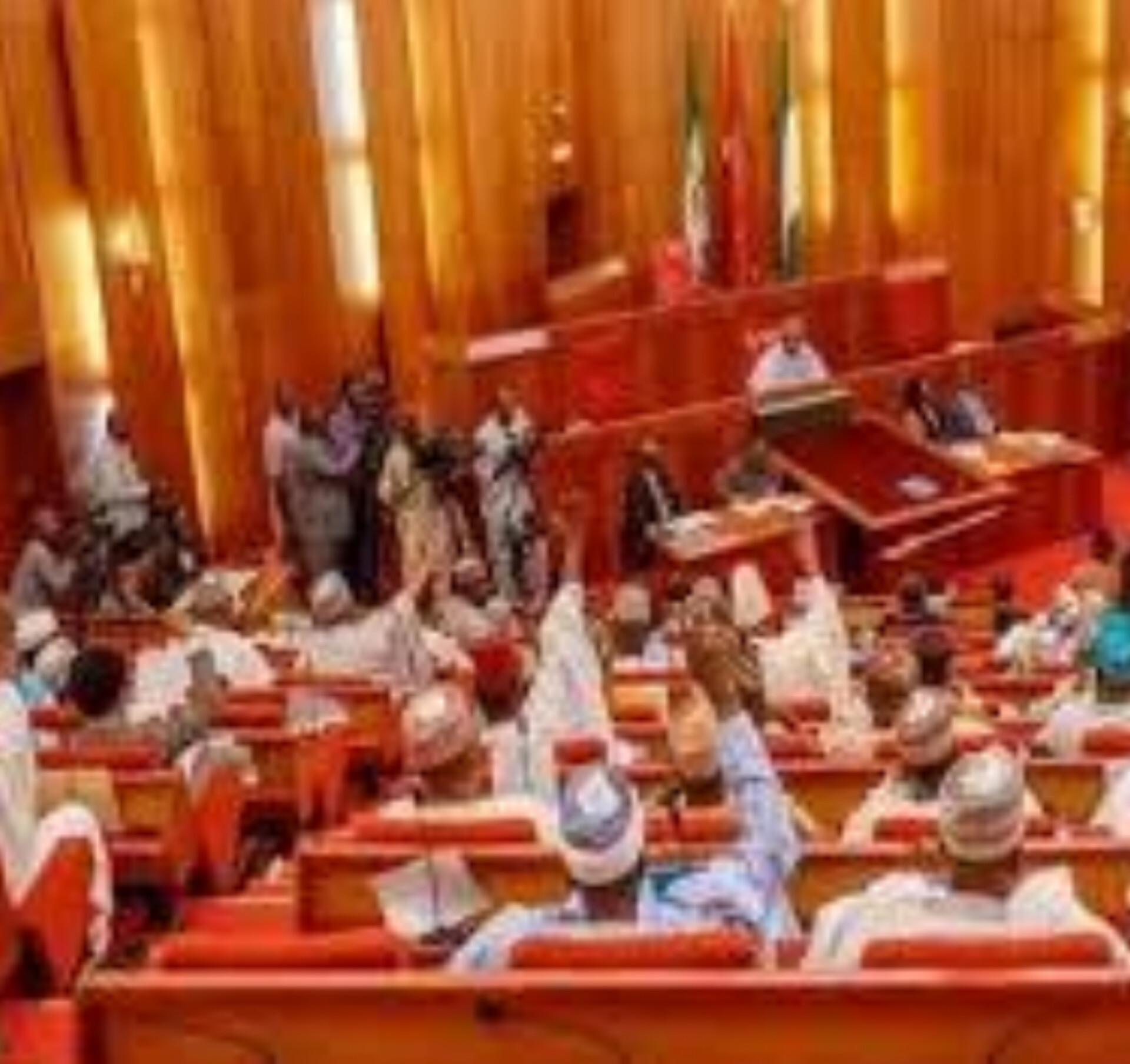

The Senate has been urged to investigate the demolition of properties belonging to the family of former Director-General of the Kogi State Bureau of Lands, Abdulmalik Teina, amid allegations that the action was politically motivated and executed without adherence to due process.
The request was contained in a petition submitted to the President of the Senate through Senator Natasha Akpoti-Uduaghan, who represents Kogi Central Senatorial District.
In the petition, Teina called on the National Assembly to intervene and safeguard the constitutional rights of his family, insisting that the demolished structures in Okene were lawfully acquired and not connected to any criminal or terrorist activity as alleged by the Kogi State Government.
Among the demands contained in the petition are a comprehensive Senate investigation into the circumstances surrounding the demolition, an examination of whether legal procedures were followed, and a recommendation directing the state government to reconstruct the affected buildings.
“The intervention of the Senate is necessary to ensure justice, accountability and the protection of citizens’ fundamental rights,” the petition stated.
The petition, prepared by Abuja-based legal practitioner Femi Motojesi on behalf of Hajia Zainab Abdulmalik, wife of the former lands bureau chief, challenged the state government’s claim that the properties were being used as hideouts for members of the Islamic State West Africa Province (ISWAP).
According to the petitioners, the affected properties, located in the Idoji area of Okene Local Government Area, were acquired legally through government allocations and subsequent transfers supported by valid title documents.
They further argued that the facilities had long been occupied by members of MASWAJ, an Islamic religious and educational organisation operating across Kogi Central, and were being used for legitimate religious and educational activities.
“The property is being occupied and utilised by known Islamic scholars for Islamic activities known as MASWAJ,” the petition noted.
The legal team alleged that the demolition, which reportedly took place on January 15, 2026, stemmed from political disagreements between Teina and the administration of Governor Ahmed Usman Ododo.
According to the petition, the state government’s decision to designate the property as a location harbouring suspected ISWAP operatives was a consequence of those political differences.
“It is the fallout of these differences that resulted in the political vendetta prompting the State Government to label the property legitimately acquired by our client as one harbouring and camping so-called ISWAP militants,” the petition alleged.
The petitioners also questioned the legality of the demolition exercise, arguing that no notice was served on the property owners and that no publicly available evidence had been presented linking the occupants or users of the facilities to terrorism-related activities.
“The question that readily comes to mind is when and how these innocent scholars and Islamic teachers suddenly became ISWAP militants to warrant the destruction of our client’s property without any prior notice,” the petition queried.
Adding another dimension to the controversy, the petition claimed that Governor Ododo had hosted leaders of MASWAJ in December 2025 and publicly commended their activities, making subsequent allegations connecting the organisation to terrorism difficult to reconcile.
“It is therefore surprising to see the same Governor leading the early morning invasion and demolition of our client’s property under the allegation that the property was housing ISWAP militants,” the lawyers argued.
Senator Akpoti-Uduaghan, in forwarding the petition to the Senate leadership, stated that she was acting in line with her constitutional duty to represent and present grievances brought forward by her constituents.
Following its presentation, the petition was referred to the Senate Committee on Ethics, Privileges and Code of Conduct for consideration and further legislative action.
The committee is expected to examine the claims raised by the petitioners and determine whether the matter warrants a formal investigation by the upper legislative chamber.