
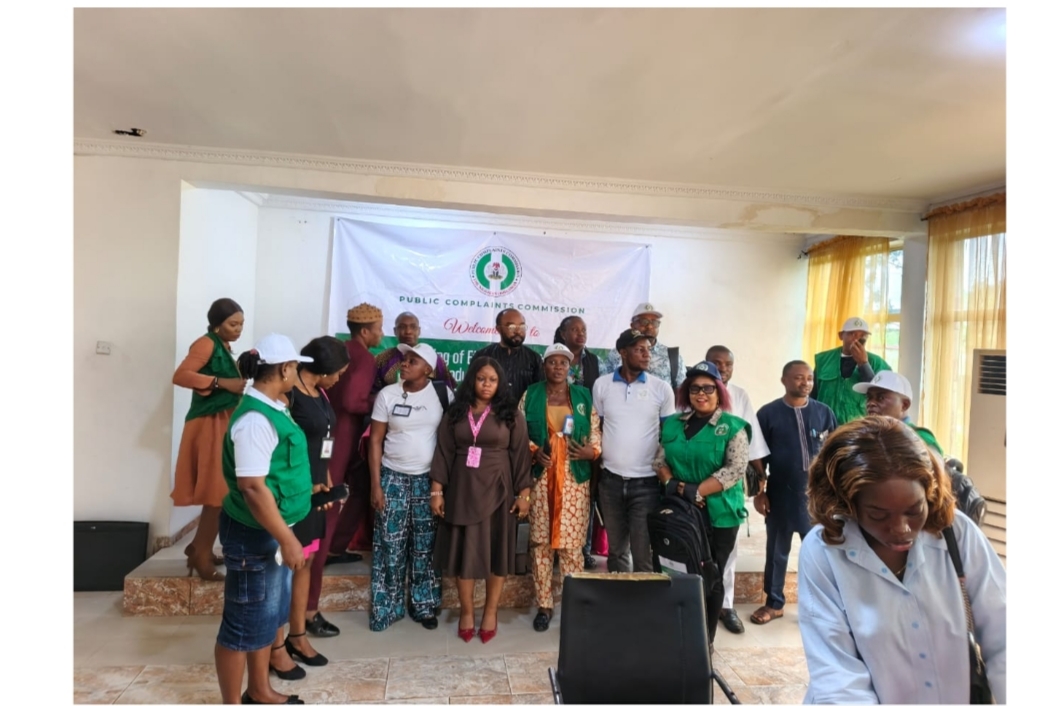


The Public Complaints Commission (PCC) is deepening its reform agenda with a renewed focus on ethics, professionalism and public trust, as officers across the South-South undergo intensive training on integrity and responsible public service.
The three-day programme, organised in two phases, brings together officers from Akwa Ibom, Cross River, Bayelsa, Edo, Delta and Rivers states. The first phase held from August 4 to 6, 2026, while the second is scheduled for August 11 to 13.
The initiative is being implemented under the leadership of the PCC Chief Commissioner, Hon. Bashir Abubakar (MFR), as part of efforts to strengthen the Commission’s capacity to deliver impartial and citizen-centred administrative justice.

Rather than focusing solely on technical competence, the programme places ethical conduct at the centre of complaint resolution, recognising that public confidence in the Ombudsman system depends heavily on the integrity of the officials entrusted with citizens’ grievances.
Facilitated by Instinct Resources Services Ltd, the training features specialists in public administration and governance who are taking participants through ethical leadership, transparency, accountability, conflict-of-interest management, professional conduct and international standards in Ombudsman administration.
The Honourable Commissioners from the participating states praised the initiative, describing investment in the workforce as essential to transforming the Commission and rebuilding confidence in public institutions.
They urged participants to translate the lessons from the training into daily practice, particularly in the handling of complaints and interactions with members of the public.
The Commissioners noted that competence without integrity could undermine the credibility of the Commission, stressing that fairness, impartiality and accountability must remain central to the work of every PCC officer.

The Lead Consultant, Associate Professor Agbegbedia Anthony Oghenevwoke, PhD, commended Abubakar for placing continuous professional development at the heart of the Commission’s reform programme.
He said a credible Ombudsman institution must be anchored on ethics and integrity, particularly because its officers are often the first point of contact for citizens seeking redress against administrative injustice.
Another consultant, Dr. Adegboyega Adedolapo OLA, said the programme was designed to bring the PCC’s operations closer to international best practices.
He noted that strengthening ethical standards would improve the quality, transparency and efficiency of complaint-resolution processes while reinforcing public confidence in the institution.
Participants are receiving practical training in ethical decision-making, anti-corruption principles, workplace discipline, complaint management, accountability systems and value-driven public service.
The sessions also feature case studies, scenario-based exercises, interactive discussions and experience sharing, allowing officers to examine how ethical principles can be applied to real-life administrative challenges.
The South-South programme forms part of the PCC’s wider reform drive to build a more responsive, professional and citizen-focused Ombudsman institution.
At its core, the initiative seeks to ensure that citizens who approach the Commission for redress encounter not only competent officials, but a system defined by fairness, integrity and accountability.