

Former Chief of Staff to the Imo State Governor, Uche Nwosu, has warned that the Igbo apprenticeship system must undergo a major transformation or risk losing its capacity to produce the next generation of entrepreneurs.
Nwosu said the system that helped generations of young Igbo people move from poverty to business ownership remained one of the community’s greatest economic assets, but could no longer depend entirely on the methods that worked decades ago.
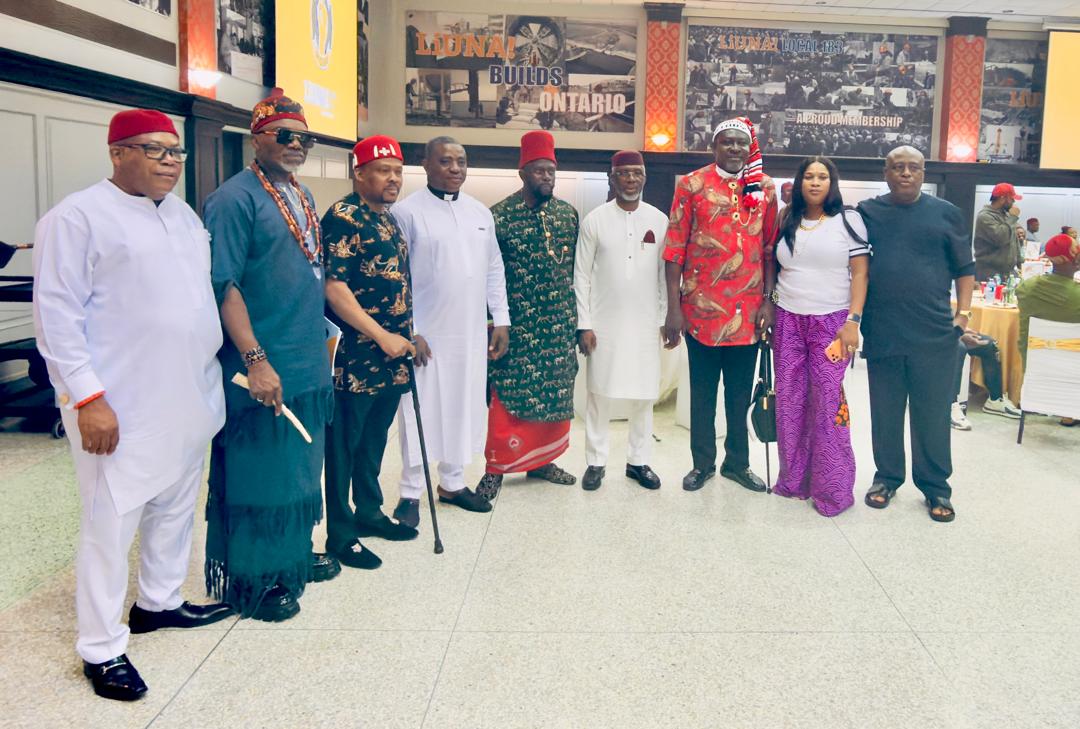
He spoke at the 2026 Igbo National Convention in Canada, where he challenged Igbo leaders, entrepreneurs and members of the diaspora to redesign the traditional Igba Boi, Imu Ahia and Imu Oru model around the realities of technology, global markets and a changing workforce.
According to Nwosu, the greatest mistake would be to preserve apprenticeship merely as a cultural tradition rather than recognise it as an economic institution capable of tackling unemployment, building businesses and transferring wealth across generations.
“The real beauty of the system is this: a successful master deliberately trains someone who may one day become his competitor,” he said.
Nwosu argued that this philosophy distinguished the Igbo model from conventional employment, because its ultimate objective was not to keep young people working for established entrepreneurs indefinitely but to prepare them for economic independence.
He said the system had historically equipped young people with practical knowledge of trading, negotiation, customer relations, stock management, market intelligence and business survival, while successful masters provided the capital, goods, contacts or opportunities needed to establish their apprentices.
But the former Chief of Staff said the model was now confronting a new economic reality.
Young people entering apprenticeship today need more than traditional trading skills, he said.
They must understand digital commerce, financial management, technology, branding, social media marketing, modern accounting, international supply chains and other tools required to compete beyond local markets.
Nwosu therefore called for the replacement of informal apprenticeship arrangements with a more structured system involving written agreements, defined training periods, clear settlement terms, skills certification and mechanisms for resolving disputes.
He said reform was necessary not to destroy the traditional model but to preserve its most important principle — **that one person’s success should create an opportunity for another person to rise.
Nwosu said Igbo leaders must resist the temptation to romanticise the past while ignoring the economic challenges facing younger generations.
He noted that the apprenticeship system played a significant role in the economic recovery of Igbo communities after the Nigerian Civil War, helping families rebuild businesses and producing generations of traders, manufacturers, craftsmen and employers.
But he said the circumstances facing young people today were different and demanded a new approach.
“A tradition does not survive because we refuse to change it. A tradition survives because we protect its values while improving its methods,” he said.
Nwosu also called for the full integration of women into the apprenticeship economy, arguing that Igbo enterprise could not afford to leave a significant portion of its human capital behind.
He advocated equal opportunities for young women in mentorship, technical training, access to capital, business networks and enterprise development.
Nwosu also turned his attention to the Igbo diaspora, challenging professionals and business owners abroad to redefine the meaning of “giving back”.
He said diaspora contributions should move beyond emergency remittances to long-term investment in people, businesses, technology and knowledge.
He proposed a **“One successful Igbo professional, one apprentice, one future enterprise”** initiative under which successful Igbo professionals would commit to mentoring and supporting at least one emerging entrepreneur.
A technology professional in Canada, he said, could mentor a young developer in Enugu; an engineer could support an emerging entrepreneur in construction or manufacturing; while healthcare professionals could help young Nigerians build sustainable health enterprises.
For Nwosu, the objective should be to turn the enormous professional and financial resources of the diaspora into an organised pipeline for enterprise creation at home.
“If 1,000 Igbo professionals adopted this commitment, we would not simply produce job seekers. We would produce business owners,” he said.
He further challenged the Igbo Union Canada to ensure that the proposed Igbo House in Canada serves not only as a centre for preserving culture but also as a platform for economic advancement.
Rather than limit the facility to cultural exhibitions, celebrations and social gatherings, he proposed a hub where young people could receive mentorship, acquire skills, meet investors and connect with international markets.
“An Igbo House should be more than a building where we preserve clothing, food, music and dance. It should become a living business school,” he said.
Nwosu said such an institution could bridge the gap between Igbo heritage and the aspirations of a new generation growing up in a globalised economy.
He challenged successful Igbo entrepreneurs to redefine their legacy by asking not only what they had accumulated but what they were doing to create successors.
“The question we must ask every successful Igbo person is no longer only, ‘What have you achieved?’ We must also ask, ‘Whom are you preparing to rise?’”
He said the survival of Igbo economic strength would ultimately depend on whether today’s successful generation could transfer its knowledge, networks and opportunities to those coming behind.
Nwosu invoked the Igbo maxim “Onye aghana nwanne ya”, saying the principle should become the foundation of a new economic compact in which prosperity is deliberately transferred from one generation to another.
He urged the community to preserve the communal spirit of the apprenticeship system while modernising its methods, opening it to women and connecting it to technology, education, capital and global markets.
“Let us rise, and as we rise, let us raise others,” he said.