
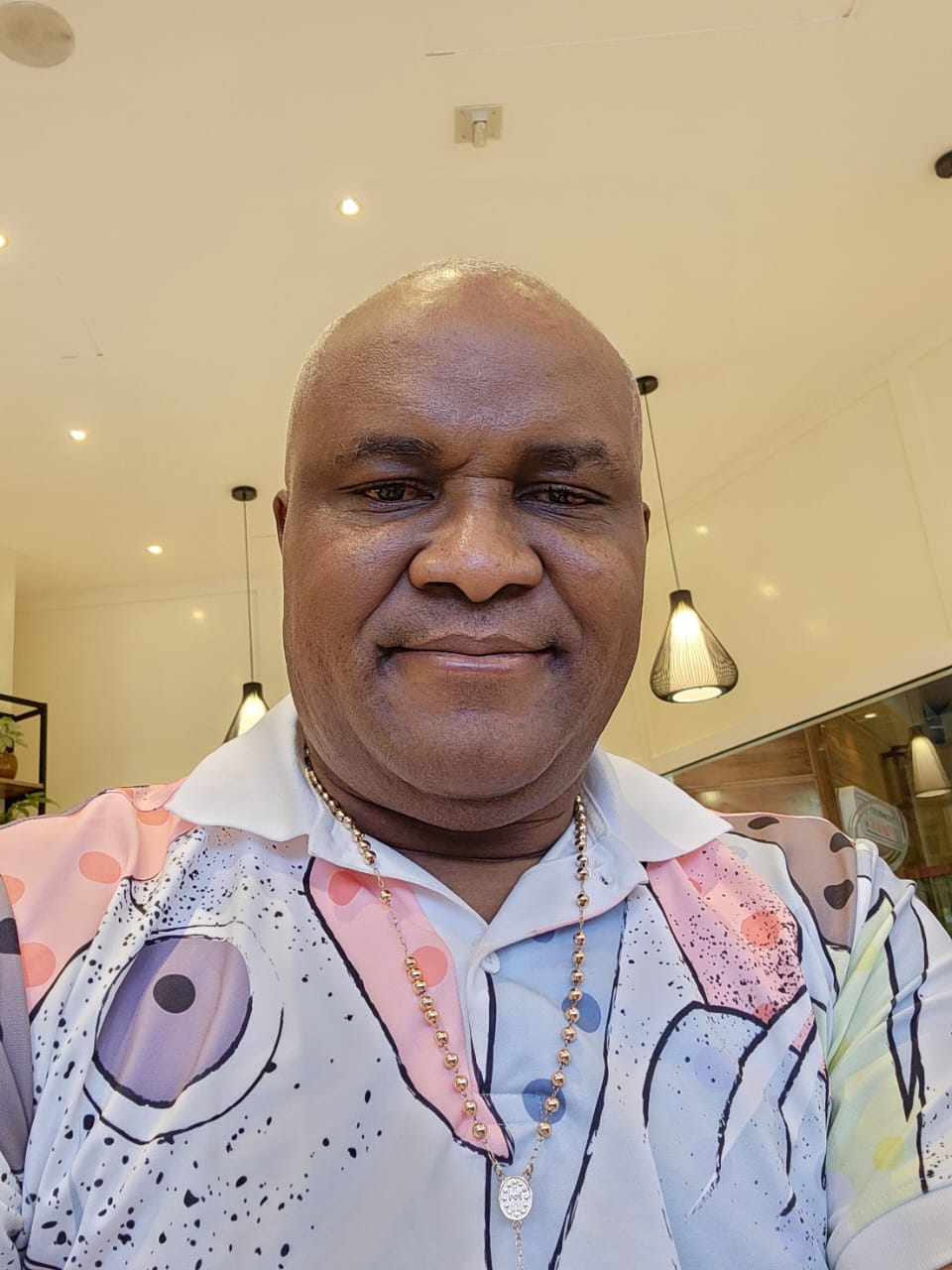

By Emmanuel Nnadozie Onwubiko
Reading about the recent mayoral by-election in Greater Manchester, United Kingdom, I was fascinated by the successful candidate’s description of her politics as “non-tribal.” Her remarks offer an important lesson for Nigeria as the country prepares for the 2027 general election.
As widely reported by the British media, Labour Party candidate Bev Craig won the mayoral by-election to succeed Andy Burnham after he stepped down to contest the office of Prime Minister.

Craig grew up in Greenisland, outside Belfast, Northern Ireland, before moving to Manchester to study Politics and Modern History at the University of Manchester.
Reflecting on her victory, the 41-year-old politician said her family in Northern Ireland were “incredibly proud.” She explained that growing up on a council estate shaped both her political outlook and her approach to leadership.
«”I think it’s also shaped my ability to work with people and shaped how I view politics in a non-tribal way,” she said.»
She added:
«”Because my experience growing up in Northern Ireland is that you find allies in unexpected places.”»
Craig stressed that she wanted to be “a mayor for everyone.”
According to her, Northern Ireland taught her that breaking divisions and overcoming cynicism require leaders to seek common ground and build alliances across traditional divides.
She also reflected on her upbringing, saying that although she grew up in a proud community, it was in Manchester that she found “a sense of home and belonging” that she had not previously experienced.
Craig’s remarks about non-tribal politics should serve as a powerful reminder to Nigerians about the kind of politics we should encourage and reward.
I deliberately use the word “encourage” because politicians often exploit ethnic and religious divisions only when voters permit them to do so. If Nigerians collectively reject tribal politics and insist on issue-based campaigns founded on competence, integrity, and national unity, politicians will have little choice but to adjust their rhetoric and conduct. After all, democracy ultimately reflects the will of the electorate.
Unfortunately, tribal politics has remained one of Nigeria’s greatest political burdens since independence. In the years immediately following the end of colonial rule, ethnic rivalry contributed significantly to the political violence in the old Western Region, culminating in the infamous “Operation Wetie,” during which supporters of Chief Obafemi Awolowo and Chief Samuel Ladoke Akintola were killed in violent confrontations.
More than six decades later, the same dangerous politics resurfaced during the 2023 general election.
One of the most controversial moments came after Labour Party presidential candidate Peter Obi defeated APC candidate Bola Ahmed Tinubu in Lagos State. In response, Bayo Onanuga, then Director of Media and Publicity of the APC Presidential Campaign Council, warned the Igbo against what he described as “interference” in Lagos politics.
Writing on his verified X (formerly Twitter) account, he declared:
«”Let 2023 be the last time of Igbo interference in Lagos politics. Let there be no repeat in 2027. Lagos is like Anambra, Imo, any Nigerian state. It is not No Man’s Land, not Federal Capital Territory. It is Yoruba land. Mind your business.”»
The statement generated widespread controversy and intensified ethnic tensions that had already begun to characterize political discourse in Lagos.
In the days leading to the governorship election, social media became saturated with ethnic slurs and inflammatory rhetoric. Political campaigns increasingly assumed ethnic dimensions, dragging both the incumbent governor, Babajide Sanwo-Olu, and Labour Party governorship candidate Gbadebo Rhodes-Vivour into divisive narratives.
At the time, the Human Rights Writers Association of Nigeria (HURIWA), which I founded, repeatedly urged security agencies to take decisive action against individuals promoting ethnic hatred and inciting violence against the Igbo community living outside the South-East.
HURIWA warned that the growing wave of anti-Igbo rhetoric, particularly on social media, was becoming increasingly dangerous and that the apparent reluctance of law enforcement agencies to prosecute offenders only emboldened those spreading hate speech.
The organisation also recalled the widely circulated remarks of Musiliu Akinsanya, popularly known as MC Oluomo, who, ahead of the Lagos governorship election, warned Igbos who would not support the ruling APC to remain indoors on election day.
Following those developments, HURIWA condemned what it described as the failure of the Nigeria Police Force and other security agencies to investigate and prosecute individuals responsible for threats, hate speech, and ethnic intimidation.
The organisation further argued that the failure to enforce the law encouraged a climate of impunity and deepened public distrust in the neutrality of state institutions.
Today, with the 2027 general election approaching, there are legitimate concerns that tribal politics could once again become a major source of political instability.
These fears are heightened by the fact that many of those accused of promoting divisive rhetoric during the 2023 elections were never prosecuted. Instead, some have gone on to occupy influential public positions.
Critics have also questioned the continued prominence of MC Oluomo within organised transport unions despite reported judicial decisions challenging aspects of his leadership. Such developments have reinforced public perceptions that political loyalty sometimes outweighs accountability.
Equally troubling is the extent to which ethnic polarization has spread among ordinary Nigerians, particularly on social media. Since 2023, online discourse has increasingly reflected deepening ethnic divisions, with many young Nigerians appearing to adopt narratives promoted by political elites.
If this trend continues into the 2027 election cycle, constitutional rights and democratic freedoms could become casualties of politically motivated ethnic violence.
There is also widespread concern about the perceived neutrality of Nigeria’s security institutions. Given persistent allegations regarding ethnic imbalance within the leadership of key security agencies, including the Nigeria Police Force and the Department of State Services, many Nigerians remain apprehensive about whether these institutions will respond impartially should election-related violence erupt.
The Nigeria Police Force and the Department of State Services must reassure Nigerians through their actions—not merely their statements—that every Nigerian’s life matters equally, regardless of ethnicity, religion, or political affiliation.
They must demonstrate zero tolerance for hate speech, ethnic incitement, voter intimidation, and politically motivated violence.
Nigeria cannot afford another election dominated by ethnic hatred. The future of our democracy depends on our collective willingness to reject divisive politics and embrace a politics founded on citizenship, equal rights, justice, competence, and national unity.
As Bev Craig’s experience reminds us, lasting political progress is achieved not by exploiting differences but by building alliances across them. That is the lesson Nigeria should embrace as it approaches 2027.
Emmanuel Nnadozie Onwubiko is the Founder of the Human Rights Writers Association of Nigeria (HURIWA) and a former National Commissioner of the National Human Rights Commission of Nigeria.