
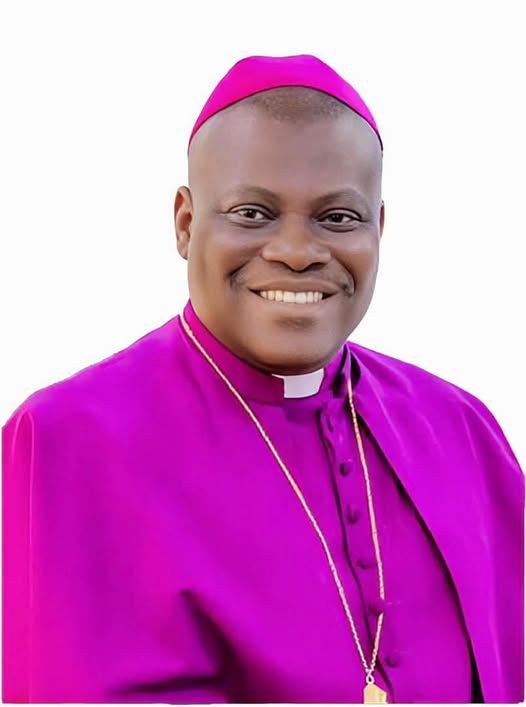

The growing disagreement among Christian leaders over the performance of President Bola Ahmed Tinubu’s administration has raised fresh questions about the political neutrality of the Church, following public interventions by Bishop Stephen Adegbite in defence of the Federal Government.
Adegbite’s recent criticism of Catholic Bishops who have expressed concerns about the administration has brought renewed attention to the relationship between religious leadership and political power, particularly where clerics hold official appointments linked to government.
Adegbite is the Executive Secretary of the Nigerian Christian Pilgrim Commission (NCPC), having been appointed by President Tinubu in January 2024 for an initial five-year tenure. He also serves as Chaplain of the Aso Rock Villa Chapel and Chairman of the Lagos State chapter of the Christian Association of Nigeria (CAN).
While his supporters maintain that his position reflects his personal assessment of the administration and his right to defend policies he considers beneficial to Nigerians, critics argue that his institutional proximity to government makes his interventions worthy of closer scrutiny.
Former Minister of Youth and Sports, Solomon Dalung, is among those questioning the implications of the controversy.
Dalung said Adegbite was entitled to support Tinubu and defend the administration but argued that the same principle of scrutiny should apply when he attributes political motives to Catholic Bishops who criticise the government.
The former minister said the central issue was not the denomination of the clerics involved but whether religious leaders could maintain sufficient independence to commend government when it performs well and challenge it when it fails.
According to him, there is a distinction between disagreeing with the Catholic Bishops and alleging that their criticism is politically motivated.
“The first is an opinion. The second is an allegation. And allegations require evidence,” Dalung said.
He challenged those questioning the Catholic Bishops’ interventions to identify specific claims they had made that were inaccurate, particularly on insecurity, economic hardship and other national concerns.
“If the Catholic Bishops have lied about insecurity, let Bishop Adegbite tell us precisely what they lied about. If they exaggerated the suffering of Nigerians, show us where. If their intervention was politically motivated, establish it,” he said.
Dalung said religious leaders should not lose their moral independence simply because a particular government is in power, stressing that the responsibility of the Church should be to society rather than to any political administration.
The former minister’s position has consequently widened the debate beyond the immediate disagreement between Adegbite and the Catholic Bishops to the broader question of how religious institutions should relate to political authority.
Adegbite has, in previous public interventions, expressed support for the Tinubu administration and spoken positively about the President’s leadership and policies. He has also urged Nigerians to support the administration’s Renewed Hope Agenda.
There is, however, no suggestion that his government appointment legally or automatically prevents him from expressing political opinions or defending the administration.
The issue raised by Dalung is instead one of perception, institutional credibility and the ability of religious leaders to retain an independent voice while maintaining relationships with those in power.
In a democracy, religious institutions occupy a particularly sensitive position. Their influence extends beyond partisan politics, with many Nigerians looking to clerics for moral guidance on issues ranging from governance and corruption to insecurity, poverty and social justice.
That influence, Dalung argued, makes the independence of the pulpit particularly important.
“A government should be able to survive criticism. A President should be able to hear uncomfortable truths. And religious leaders should be able to speak truth to power without being required to obtain clearance from the Presidency,” he said.
He maintained that the real test of moral authority was not whether a religious leader could praise those in power but whether he could confront them when their actions required correction.
“I would have no problem with Bishop Adegbite praising Tinubu today if he believes Tinubu deserves praise,” Dalung said.
“But I would be much more impressed if tomorrow, when Tinubu gets something fundamentally wrong, he can stand before that same government and say: ‘Mr President, on this matter, you are wrong.’”
For Dalung, such independence should apply irrespective of the identity of the President or the political party controlling government.
“The Church should not be a government department. It should not be an opposition party either. It should be the conscience of society,” he said.
He also acknowledged his own political position as a member of the opposition, saying he wanted the Tinubu administration subjected to scrutiny and its claims tested.
However, he insisted that the question of religious independence transcended partisan interests.
“I want every Nigerian, including our bishops and other religious leaders, to retain the courage to speak truth to power,” he said.
The controversy comes against the backdrop of heightened political contestation ahead of the 2027 general elections, when public statements by influential religious and traditional institutions are likely to attract greater political attention.
For critics of government, interventions by faith leaders provide an important avenue for highlighting concerns over governance. For supporters of the administration, however, such interventions can sometimes appear politically charged.
The challenge, therefore, is whether religious leaders can navigate the increasingly polarised political environment without becoming perceived as extensions of either government or opposition.
Dalung’s intervention has brought that question into sharper focus.
“Are the Catholic Bishops really the problem because they criticised the government, or are we simply uncomfortable with anyone who refuses to tell power what it wants to hear?” he asked.
The question may ultimately extend beyond the current disagreement between Christian leaders: how can Nigeria’s religious institutions preserve their moral authority when their leaders increasingly find themselves operating close to political power?