
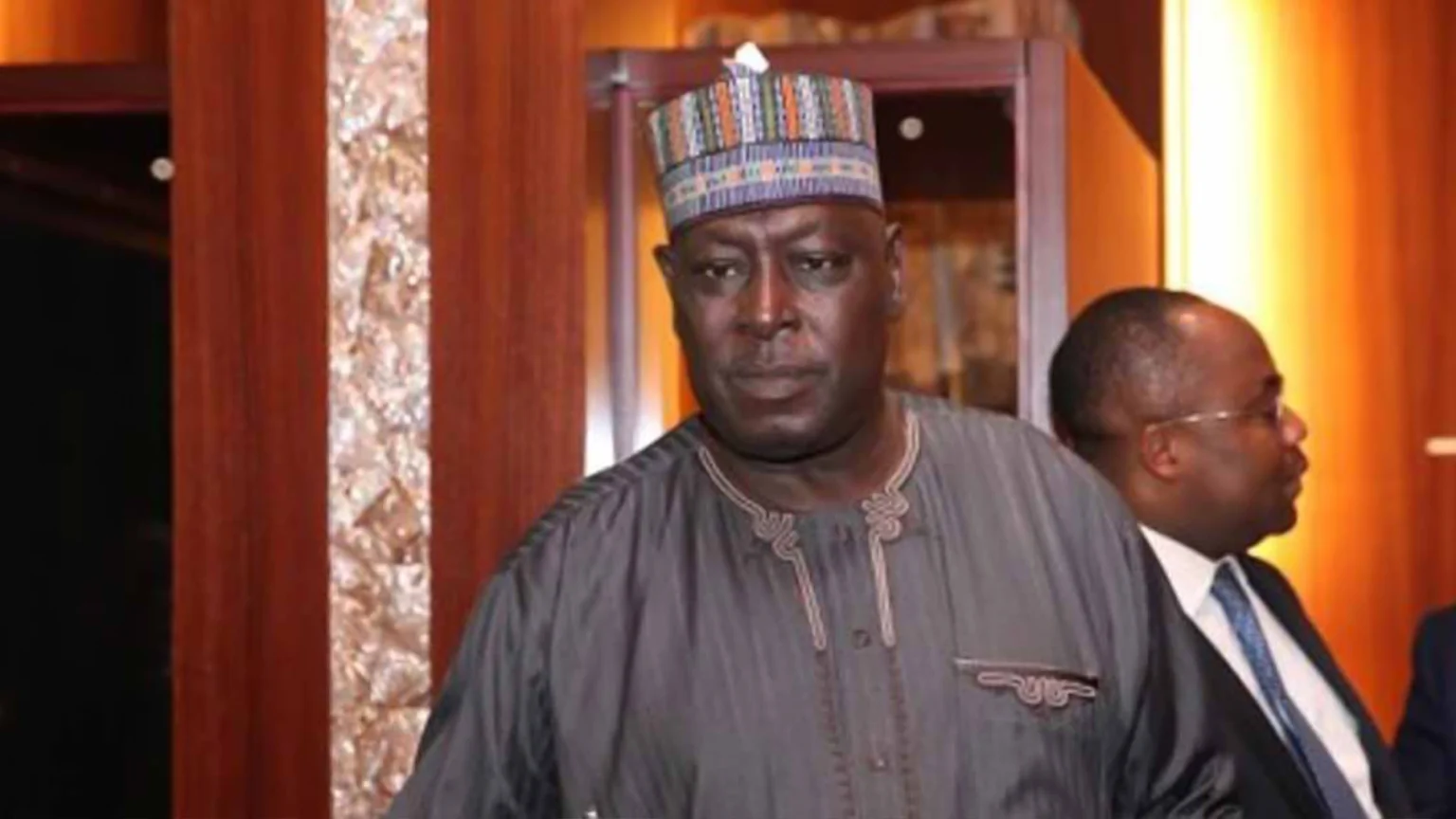
 BabachirLawal


Fresh divisions have emerged within Nigeria’s opposition ranks after former Secretary to the Government of the Federation, Babachir Lawal, announced his exit from the African Democratic Congress (ADC), citing what he described as a heavily manipulated presidential primary that produced former Vice President Atiku Abubakar as the party’s flagbearer for the 2027 general election.
In a blistering statement on Monday, Lawal alleged that the primary process was compromised in favour of Atiku, claiming that results were “written and rewritten” to guarantee his emergence. The former SGF said he could not remain in a party he believes has abandoned internal democracy.
Lawal’s resignation represents a significant blow to efforts by opposition figures seeking to build a united front against President Bola Ahmed Tinubu ahead of the 2027 presidential contest.
The former SGF accused Atiku’s political camp of pursuing ethnic and religious interests rather than national development, arguing that supporting the former vice president would ultimately hand Tinubu an easier path to re-election.
According to Lawal, his decision was driven by conscience and a conviction that Nigeria requires a different leadership direction. He maintained that he did not join the ADC to participate in what he described as politics that could worsen the country’s challenges.
In some of his strongest remarks yet against Atiku, Lawal questioned the former vice president’s capacity to provide the kind of governance needed to reverse Nigeria’s economic and security difficulties. He also criticised northern political actors whom he accused of backing Atiku despite widespread hardship across the region.
The former SGF further alleged that the opposition candidate had surrounded himself with political operatives skilled in vote manipulation, while controversially claiming that such tactics would still fall short against Tinubu’s political machinery.
Lawal said he would now return to private life temporarily while consulting with political allies on the next phase of his engagement ahead of the 2027 elections.
His departure adds another layer of uncertainty to the opposition landscape, raising fresh questions about unity within anti-Tinubu forces and whether a fragmented opposition can mount a serious challenge in the next presidential race.