

By Friday Idachaba, Lokoja
As Nigeria joins the global community to mark the 2026 International Workers’ Day, civil society actors and labour leaders have raised fresh concerns over the deepening impact of insecurity and poverty, warning that both challenges are steadily weakening the foundation of decent work and sustainable livelihoods.
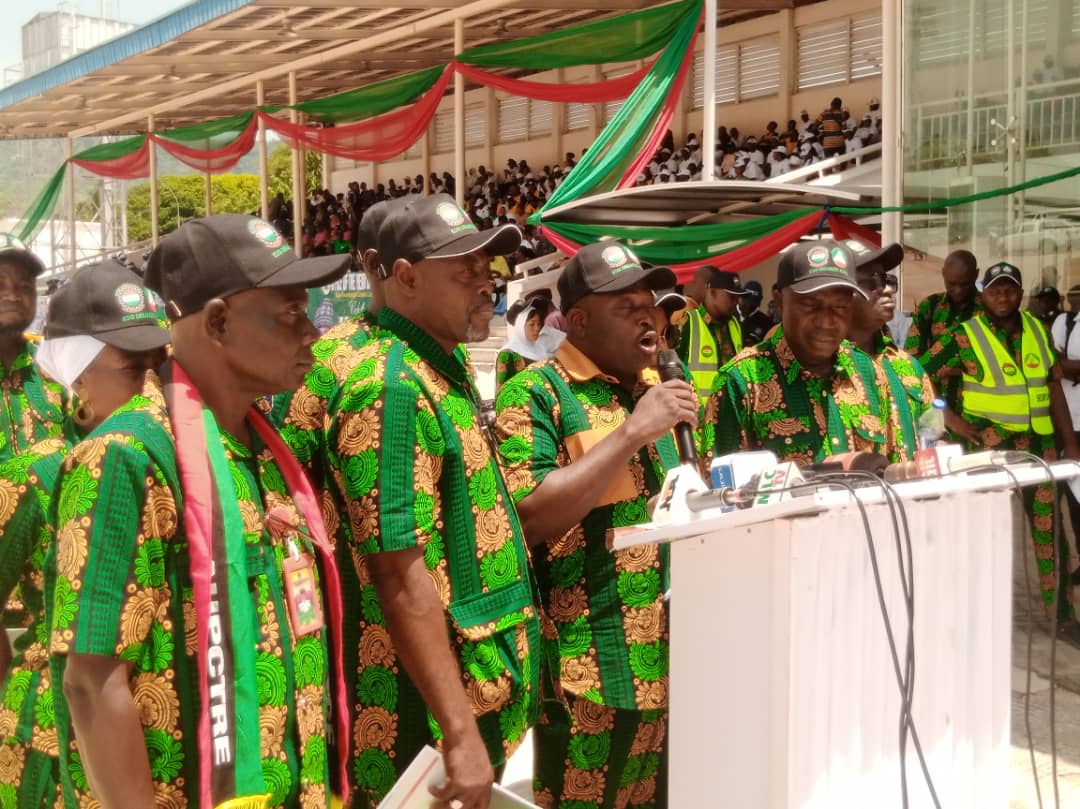
The concerns were voiced by Mr Idris Miliki Abdul, Executive Director of Conscience for Human Rights and Conflict Resolution (CHRCR), during a pre-May Day engagement organised by the Kogi State Council of Organized Labour in Lokoja.
Abdul said that while the Nigerian Constitution guarantees fundamental rights including life, dignity, liberty, and freedom of expression, millions of citizens are unable to enjoy these rights in practice due to widespread poverty, illiteracy, and poor access to healthcare.
He described the situation as a growing imbalance that has created a “two-tier system” in which the wealthy can enforce their rights, while the poor remain largely shut out of justice, protection, and basic services.
According to him, this widening inequality is fueling exclusion, frustration, and social tension, with serious implications for national stability and security.
Abdul stressed that government’s constitutional responsibility to ensure security and welfare cannot be achieved through security operations alone, but must be supported by strong socio-economic interventions that address root causes of insecurity.
While commending recent security responses in Kogi State, including temporary closures of schools and markets following threats, he expressed concern over continued attacks on vulnerable institutions such as orphanages.
He called for the establishment and training of community-based vigilante groups at ward levels to support conventional security agencies, noting that local intelligence and community participation are critical to addressing evolving threats.
Abdul further identified unemployment, corruption, governance failures, and inequality as key drivers of violent extremism, warning that these factors continue to push many young people into vulnerability and radicalisation.
He also faulted what he described as fragmented and poorly coordinated security responses, urging the adoption of a unified national framework that integrates federal, state, and local government efforts in preventing and countering violent extremism.
On poverty, he described the situation in Nigeria as structural and deeply rooted, attributing it to poor governance, unequal resource distribution, and systemic economic imbalance.
He urged policymakers to shift from rhetoric to action by implementing inclusive development policies that prioritise access to clean water, quality education, healthcare, and rural infrastructure.
Abdul also underscored the role of the media in giving voice to disadvantaged communities and strengthening accountability by bridging the gap between citizens and decision-makers.
He called for stronger collaboration among government institutions, civil society, and labour unions, as well as greater decentralisation and community empowerment to drive sustainable development.
In conclusion, Abdul warned that Nigeria cannot afford to treat security and welfare as separate priorities.
“Security without welfare is brittle, and welfare without security is fragile,” he said, urging stakeholders to ensure that constitutional promises translate into tangible realities for ordinary Nigerians.