
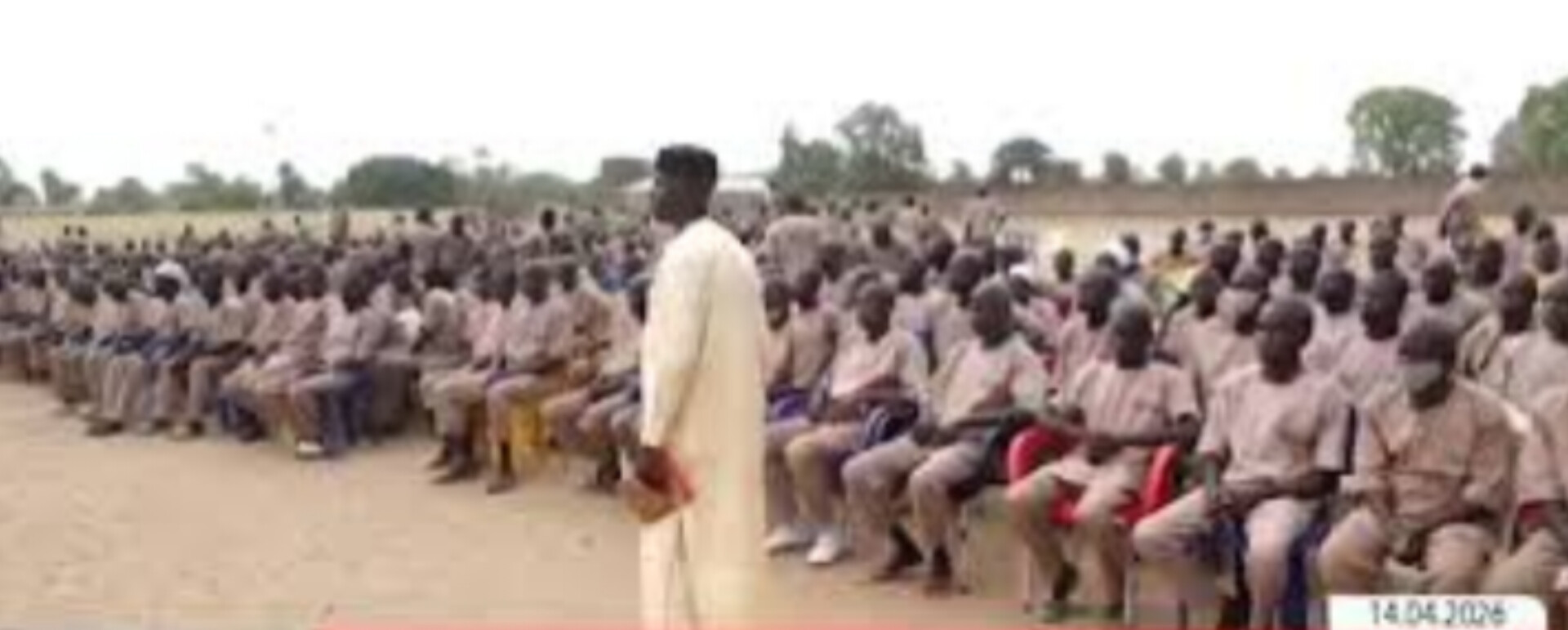

The Human Rights Writers Association of Nigeria (HURIWA) has renewed its criticism of the Federal Government’s decision to reintegrate 744 individuals described as “repentant terrorists,” warning that the move could expose Nigeria to long-term security and justice failures.
In a fresh statement, the rights group described the exercise under Operation Safe Corridor as a “high-risk national security gamble” that prioritises administrative rehabilitation over judicial accountability, at a time when communities affected by insurgency are still grappling with trauma and displacement.
The controversy follows the graduation of the 744 beneficiaries in Gombe State after completing a deradicalisation programme run by the military. The Federal Government insists the initiative is part of a broader non-kinetic strategy aimed at reducing extremism through rehabilitation, vocational training, psychosocial support, and civic reorientation.
Authorities maintain that the programme is not an amnesty, but a structured intervention designed to encourage disengagement from violence and support reintegration into civilian life.
However, HURIWA argues that the policy raises deeper constitutional, moral, and security concerns that cannot be dismissed with official assurances.
The group warned that reintegrating individuals allegedly linked to violent extremism without transparent judicial processes or full public accountability risks “normalising impunity under the guise of peacebuilding.”
According to the organisation, the absence of independently verifiable safeguards, coupled with the large scale of the exercise, heightens fears among affected communities who remain vulnerable to renewed violence.
The beneficiaries were drawn mainly from insurgency-hit areas in the North-East, alongside participants from other parts of the country and foreign nationals from Chad, Niger Republic, Cameroon and Burkina Faso.
HURIWA stressed that while rehabilitation is an important component of post-conflict recovery, it must not override the fundamental requirement of justice for victims of terrorism.
The group further warned that the policy risks eroding public confidence in the justice system and could weaken the morale of security personnel who have made significant sacrifices in the fight against insurgency.
It also raised concerns that the programme may unintentionally send a message that violent extremism can be resolved through administrative reintegration rather than through transparent prosecution and accountability.
HURIWA therefore called for an urgent review of the programme, insisting on:
Immediate suspension of the reintegration process; Full disclosure of beneficiary profiles and risk assessments; Clear evidence of judicial accountability measures; Strengthened victim support and compensation mechanisms and an Independent oversight involving civil society and security experts.
The organisation maintained that peace cannot be sustained without justice, warning that any strategy that sidelines victims in favour of expediency risks long-term instability.
The Federal Government has continued to defend the initiative, describing it as essential to breaking cycles of radicalisation and promoting national stability. But with growing opposition from rights groups like HURIWA, the debate over Nigeria’s balance between justice and reintegration is becoming increasingly intense and politically sensitive.