
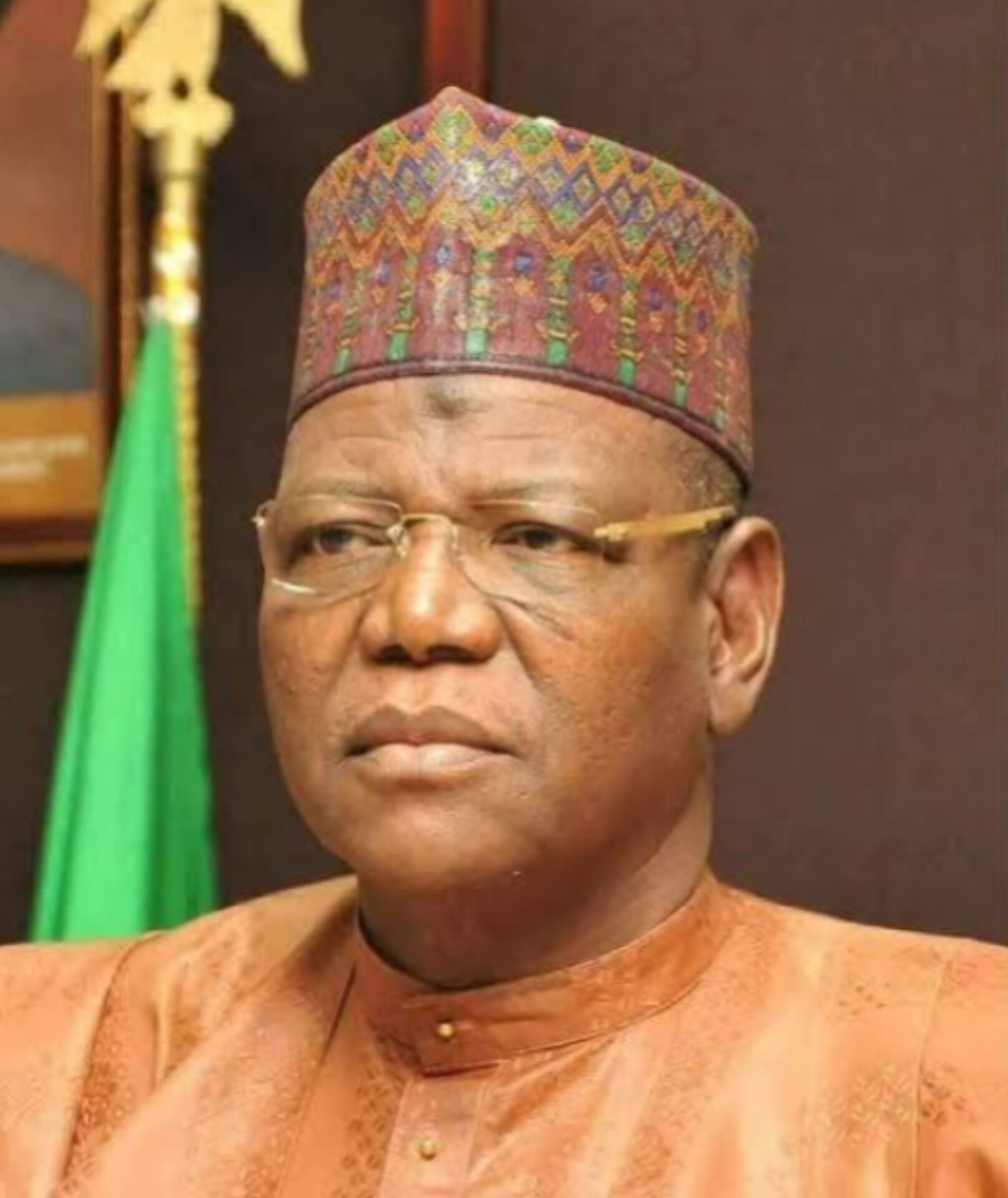

Former Jigawa State governor, Sule Lamido, has made a dramatic shift in his stance within the Peoples Democratic Party (PDP), moving from one of Nyesom Wike’s most vocal critics to a leading voice calling for reconciliation.
For months, Lamido openly demanded the expulsion of the Rivers State governor, accusing Wike of anti-party conduct and blasting the party leadership for its inability to discipline him. Lamido’s criticism was pointed and public, culminating in threats to boycott meetings of the PDP’s Board of Trustees (BoT).
He argued that the BoT could not maintain the moral authority of the party while tolerating members who openly supported the ruling All Progressives Congress (APC).
“The Board of Trustees is supposed to be the conscience of the party. It cannot sit down with people who openly say they are working for the opposition,” Lamido said. “That was why I threatened to boycott meetings until action was taken.”
Yet in a recent interview, Lamido explained that the change in his tone is not an endorsement of Wike’s past actions but a recognition of political realities. Several influential PDP governors and leaders have defected to the APC in recent months, weakening the party and leaving it struggling to maintain the organizational structures necessary for contesting elections.
“As of today, tell me the condition of the PDP. It’s comatose,” Lamido said. “No matter what anybody says — whether it’s Wike or Bala or anyone else — what is the status of the party? The PDP has no national executive elected through a convention, and the group recognised by INEC has become the symbol and authority of the PDP at this moment.”
Lamido emphasized that the party’s problems are structural, not merely the result of individual actions. “The issue is bigger than Wike or any single person. The PDP faces structural and legal challenges that threaten its very existence,” he said. He noted that the PDP Governors’ Forum recently met to address these issues and concluded that reconciliation was the only viable path forward.
“The governors agreed not to appeal the Supreme Court verdict on the convention matter. Instead, they decided that the best way forward is reconciliation, involving all parties regardless of what roles they may have played in the past,” he said.
Lamido explained that the ongoing crisis hampers the PDP’s ability to prepare for elections. “We want people to contest elections under the PDP — for the National Assembly, state assemblies, governorships, and even the presidency. But without a functioning structure, we cannot nominate candidates or organise primaries,” he said.
From Criticism to Reconciliation
Six months ago, Lamido’s position on Wike was unambiguous. “I told Damagum that the NWC must sack Wike. I said it openly and publicly. The NWC and NEC never had the courage to discipline him because they feared him,” he recalled.
Yet, Lamido now argued that the political situation has changed. “Those who were accusing Wike are now inside APC. The governors who refused to listen when I spoke against Wike have already defected. Wike is still in PDP, even if he publicly supports Tinubu. But whose offence is bigger?”
He stressed that politics is unpredictable. “The future is dynamic. Between now and tomorrow, anything can happen. Wike may change his position before the next election, but those who have already moved to APC have taken a definite step.”
Lamido outlined a clear strategy for rebuilding the PDP. “The first step is to expand the caretaker committee to include all groups — Wike’s faction, Makinde’s supporters, and other stakeholders still in the PDP. Then we can sit down as one family and organise a proper, all-inclusive convention to elect a new leadership. That leadership will have the legitimacy to guide the party forward,” he said.
He also made it clear that his personal ambition does not factor into the reconciliation process. “I am not running for any office anymore. My only interest is rebuilding the party and ensuring it survives,” Lamido said.
Defections and the APC Challenge
Recent defections have further complicated the PDP’s situation. “Many leaders have moved to APC — the same people who organised the Ibadan convention. Politicians often think about their own interests and political survival. But their actions have done incalculable damage to the PDP. Only God can forgive them,” Lamido warned.
He also commented on the implications for the APC, noting that history shows that when one party becomes too dominant, internal contradictions eventually emerge
Despite the challenges, Lamido offered a cautiously optimistic outlook for the PDP. “We are embarking on a journey of hope. Yes, many of our generals have defected, and that has weakened the party. But we must focus on how to salvage what remains,” he said.
He stressed the importance of party elders in the rebuilding process. “Saraki, myself, Makinde, and other stakeholders will meet soon to discuss the future of the PDP. We will work together to stabilise the party and ensure it is ready for elections,” he added.
Lamido also addressed members still loyal to the party.
“We must forgive each other. Ego and pride will destroy the party if we allow them. But if we choose reconciliation and unity, the PDP can still rise again,” he said.
At the center of this reconciliation push is Wike, whose actions once symbolized deep divisions within the PDP.
Lamido’s shift signals a pragmatic recognition that internal unity is now more important than personal grievances. “We have all been offended one way or another. If the PDP is to survive, we must put differences aside and work together,” he said.
Observers note that Lamido’s new approach could be critical in preparing the PDP for upcoming elections, particularly as the party faces the dual challenges of defections and legal uncertainties surrounding its leadership structures.
As the PDP seeks to stabilise, Lamido’s call for reconciliation underscores the party’s urgent need to focus on survival and political strategy rather than factional disputes. The former governor’s pivot from fierce critic to advocate of unity may well define the party’s trajectory in the coming months.