


By Abdulkarim Abdulmalik
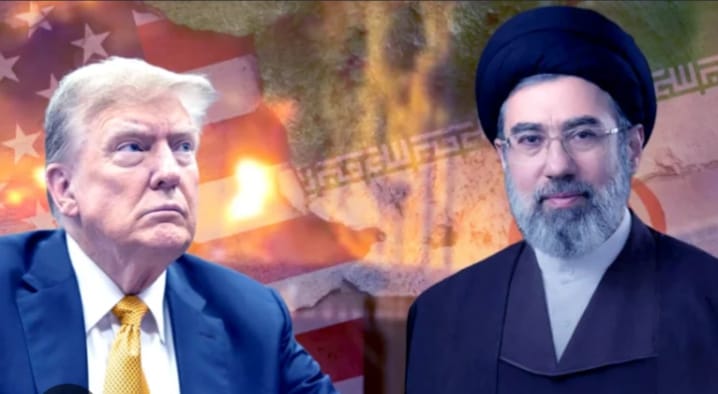
There is a fundamental question hanging over Washington, Tehran, the Middle East and indeed the global economy: has President Donald Trump turned a difficult confrontation with Iran into a strategic miscalculation that neither side can easily escape?
The question matters because the consequences of the present crisis are no longer confined to the United States and Iran. The diplomatic process has stalled, the temporary peace arrangement has failed to produce any realistic settlement, and the Strait of Hormuz—the narrow waterway vital to global energy flows—has become the symbol of a much larger geopolitical struggle. On August 17, the deadline for the U.S.-Iran peace arrangement lapsed with no breakthrough; both countries continued to blame the other for the collapse.

Calling Trump’s approach a “bad deal” may therefore may not be misleading. The greater problem may be that Washington has moved from negotiation to coercion without establishing a mutually acceptable political destination. A deal that neither side believes is fair, enforceable or sustainable is not really a peace agreement. It is merely a stop gap for the next crisis.
*Why is Trump Making What Looks Like a Bad Deal?*
Trump’s instinct has often been to negotiate from a position of overwhelming pressure skin to master-servant duel. The logic is straightforward: demonstrate superior power, impose economic pain and force the adversary to accept terms.
That approach may work in business transactions. International conflicts, however, are not ordinary commercial negotiations.
Iran is not simply a government calculating profits and losses. Its leaders also calculate sovereignty, national pride, domestic legitimacy, regional influence and historical memory. A proposal that Washington considers generous may be viewed in Tehran as a demand for capitulation.
This is where the American strategy appears to have encountered its greatest difficulty. Iran reportedly sought measures including relief from pressure, security assurances and arrangements concerning the Strait of Hormuz, while Washington expected Iran to make substantial concessions. When the two sides could not bridge those differences, the interim process deteriorated. The result was not peace but renewed confrontation.
Trump’s subsequent turn towards what he described as a major economic campaign against Iran obviously deepen this problem. Economic pressure could hurt an adversary, but it could also harden resistance and create incentives for other countries to develop alternative trading, financial and political arrangements.
The danger, therefore, is that Washington is unarguably losing the larger contest for an enduring settlement.
*How Badly Did Trump Miscalculate Iran?*
The most important miscalculation was assuming that military superiority automatically produces political compliance.
The United States no doubt possesses enormous military, financial and technological power. However, power is not measured only by the size of an army or the sophistication of equipment. In asymmetric conflicts, geography, endurance, political will and the ability to impose economic costs could also be important.
Iran’s greatest strength has not necessarily been its ability to defeat the United States in a conventional contest. Its strength has been its capacity to make confrontation extraordinarily costly and difficult to conclude.
The Strait of Hormuz demonstrates this reality. Even disruption and uncertainty around this strategic waterway could affect oil supplies, shipping costs, insurance premiums, transport prices and inflation far beyond the Middle East. Recent reports show sharply reduced tanker traffic and growing uncertainty over commercial shipping as the conflict continues.
That is the strategic lesson Washington had underestimated: Iran does not have to defeat America militarily to deny America an easy victory politically.
The longer the conflict continues, the more expensive it becomes for everyone but more on the United States given that high military expenditures, diplomatic strain and domestic economic consequences. As for Iran, it suffers severe economic hardship and isolation. The Gulf states too, face insecurity while Europe worries about energy and trade. Also, Asian economies fear supply disruptions.
In other words, this has become a conflict in which even the strongest military power cannot simply dictate the economic consequences.
*Is the Whole World Really Lining Up Against America?*
The answer requires caution.
The whole world is not literally lining up against the United States. Many governments remain American allies, depend on security relationships with Washington or disagree strongly with Iranian policies.
But there is an important distinction between supporting America and supporting every American policy.
Countries could oppose Iran’s conduct while simultaneously rejecting an endless war. They could value their alliance with Washington while refusing to sacrifice their economies for a confrontation they did not choose.
Europe, for instance, has been deeply concerned about the wider consequences of the conflict, particularly energy security and regional instability. European governments were not privy participants in the initial offensive and have had to confront the economic fallout from a crisis largely shaped elsewhere.
China, Russia and other powers have their own reasons for resisting an American-dominated approach. For some, Iran has become part of a wider geopolitical contest over sanctions, trade routes, energy security and the future of the international order.
Meanwhile, regional countries are increasingly pursuing their own diplomatic calculations. Oman has continued to feature in mediation and discussions connected to maritime access, while Egypt and Pakistan have also been involved in efforts to revive diplomacy.
Against this backdrop, what appears to be the world “lining up against America” is better understood as a broader rejection of a policy of permanent escalation. The international community is not necessarily choosing Iran over the United States. Many countries are choosing their own economic survival over somebody else’s war.

*The Economic Ripples Are Already Global*
This is perhaps the most dangerous dimension of the crisis.
War in the Gulf is never merely a Gulf problem. Energy is the bloodstream of the modern global economy. When its supply routes are disrupted, the consequences swiftly travel—from oil terminals to factories, from shipping companies to food markets, and eventually to ordinary families.
Reduced traffic through the Strait of Hormuz has already contributed to higher uncertainty, shipping costs and pressure on energy markets. The conflict’s economic consequences have become an international concern rather than a regional inconvenience.
For developing countries such as Nigeria, the danger is particularly serious. Higher global energy costs could raise transportation expenses and the prices of imported goods. Inflation could intensify. Businesses could face higher production costs. Governments that are already struggling with debt and fiscal pressures may find their room for manoeuvre shrinking.
Ironically, even oil-producing countries may not automatically benefit. A temporary increase in crude prices could be offset by higher costs of refined petroleum products, shipping, food imports and general inflation.
There are though, no real winners in this US-Ireal imposed hostility against Iran, the global energy arteries become battlefields.
*The Way Forward: Peace Through Mutual Security*
The first requirement is an immediate return to serious diplomacy.
Not diplomacy as propaganda.
Not diplomacy as a pause for further threats.
Real diplomacy.
The United States should recognise that Iran cannot be forced into a sustainable settlement through humiliation.
A credible peace framework should include five broad principles:
First, a verifiable ceasefire and protection for civilian and commercial navigation.
Second, a guaranteed international mechanism for the safe movement of shipping through the Strait of Hormuz.
Third, phased reciprocal commitments: verified de-escalation by Iran matched with clearly defined and verifiable relief from punitive measures.
Fourth, credible security guarantees designed to reduce the fear of future attacks or retaliation.
Fifth, an inclusive diplomatic process involving credible mediators and major stakeholders.
This may not satisfy the maximalists in Washington or Tehran. But maximalism is precisely what has brought the world to the present impasse.
Trump’s real test of leadership is no longer whether he could apply more pressure. It is whether he could recognise when pressure has reached the point of diminishing returns and transform confrontation into negotiation.
Iran’s test is also clear: whether it could defend its interests without allowing resistance to become an endless economic burden.
The world has reached the apogee where peace is no longer simply a moral aspiration. It is an economic necessity.
The reopening of diplomatic channels would calm energy markets, reduce shipping risks, ease inflationary pressures and restore confidence among investors. A genuine settlement would have ripple effects from the Middle East to Africa, Europe, Asia and the Americas.
The choice is stark. The United States and Iran could continue measuring who is stronger while the rest of the world pays the bill. Or they could accept a more difficult truth: neither side is likely to obtain everything it wants, but both could obtain something far more valuable than total victory.
They could obtain peace.
And in an increasingly fragile global economy, peace may be the best deal either side could make.
– Abdulkarim Abdulmalik is an Abuja-based Journalist and Chairman, Governing Board, Guild of Interfaith Media Practitioners Nigeria (GIMP-Nigeria). Email: nowmalik@gmail.com