
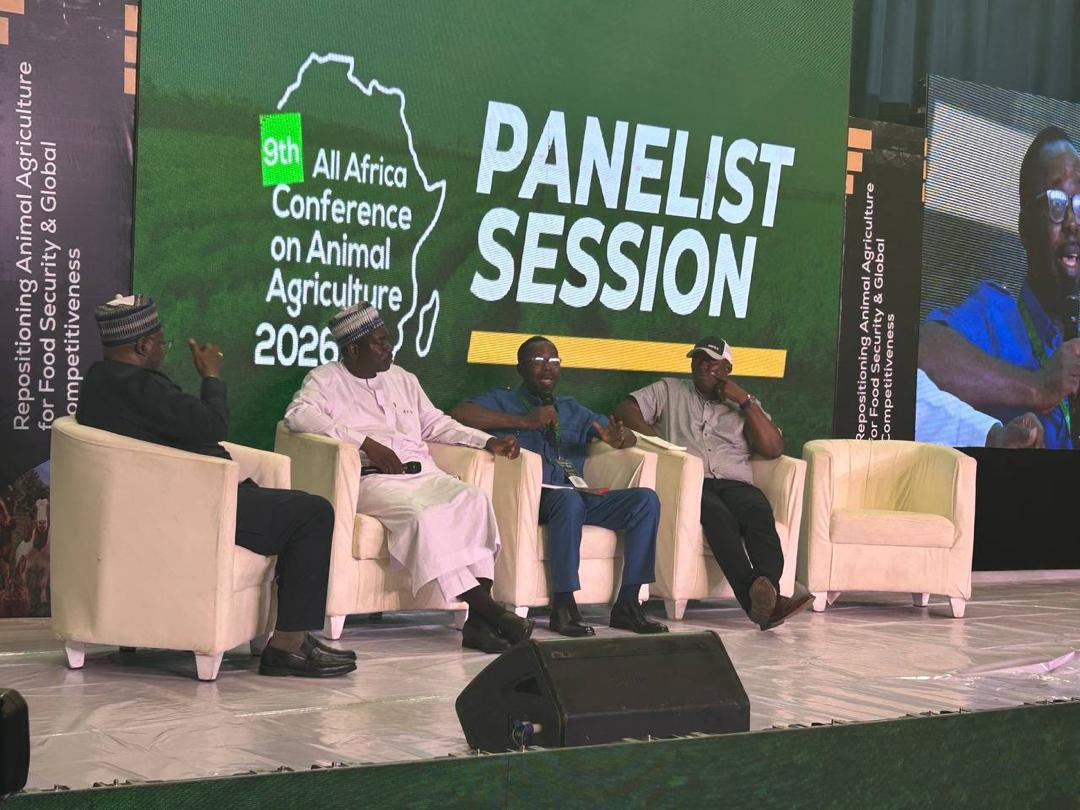


Youths must be empowered with practical skills, financing and modern technology to unlock Africa’s vast livestock potential and reduce the continent’s dependence on imported genetic materials, experts at the 9th All Africa Conference on Animal Agriculture have said.
The experts made the call during a panel session at the conference in Abuja, stressing that Africa’s livestock sector could become a major engine of employment, food security and economic growth if young people were deliberately positioned at the centre of its transformation.
A member of the Presidential Livestock Implementation Committee, Prof. Demo Kalla, described Nigeria’s youthful population as its greatest economic asset, but warned that failure to channel their energy and creativity into productive ventures could have serious consequences.
“Our youthful population is our greatest asset, but it is, on the other hand, a keg of gunpowder waiting to happen to us if we do not harness their creativity, their talents and their energies and direct them towards productive means,” Kalla said.
He said the livestock industry offered opportunities far beyond conventional animal husbandry, urging young Nigerians to explore emerging fields such as artificial intelligence, digital agriculture, animal tracking, agribusiness, processing, engineering, logistics and specialised service delivery.
According to him, the sector needs young entrepreneurs capable of deploying digital platforms and AI-enabled systems to improve production efficiency and make Nigeria and other African countries more competitive in the global livestock market.
“For us in the livestock sector, our focus is to see youth take up innovative enterprises and innovative platforms, digital economy, digital platforms and AI-enabled systems to change the face of our current production systems and make them more efficient,” he said.
Kalla said the conference was designed to place African youths at the centre of discussions on animal agriculture and help change the perception of livestock farming from a subsistence activity to a commercially viable industry.
He described animal agriculture as a “multi-trillion-dollar economy” waiting to be fully developed, saying young people could participate in areas ranging from the production of animal identification tags to traceability systems and professional services across the value chain.
He also highlighted the role of livestock products in nutritional security, noting that milk, meat, eggs and other animal-source foods were essential components of a healthy food system.
Another panelist from Ghana, Prof. Kawu Domako, called for deliberate policies to make agriculture attractive to young Africans, arguing that exposure should begin from the basic education level.
Domako urged African countries to introduce agriculture as a subject in basic schools so that children could develop an early understanding of farming and its commercial potential.
He expressed concern that despite Africa’s abundant fertile and arable land, many countries still depend heavily on imported food commodities, stressing that governments must prioritise domestic production.
The Ghanaian expert also called for youth-centred financing schemes, including grants and affordable loans, to enable young people to establish and grow agricultural enterprises.
“We need to create a conducive environment to let agriculture become attractive to young people,” he said, arguing that young entrepreneurs should not be excluded from finance simply because they lacked collateral, established credit histories or sufficient cash flow.
He proposed a system in which young farmers could receive small start-up grants, followed by additional funding as their businesses demonstrate progress.
Domako noted that many young farmers currently depend on personal savings to finance their operations, while the absence of collateral and affordable credit limits their ability to expand.
He added that inadequate access to guaranteed markets further exposes young farmers to financial losses, making it necessary for governments to strengthen agricultural value chains and create reliable markets for locally produced goods.
The experts agreed that combining practical farm-based training, access to finance, technology and market opportunities would be critical to attracting a new generation of African entrepreneurs into agriculture and positioning livestock as a major driver of the continent’s economic transformation.