
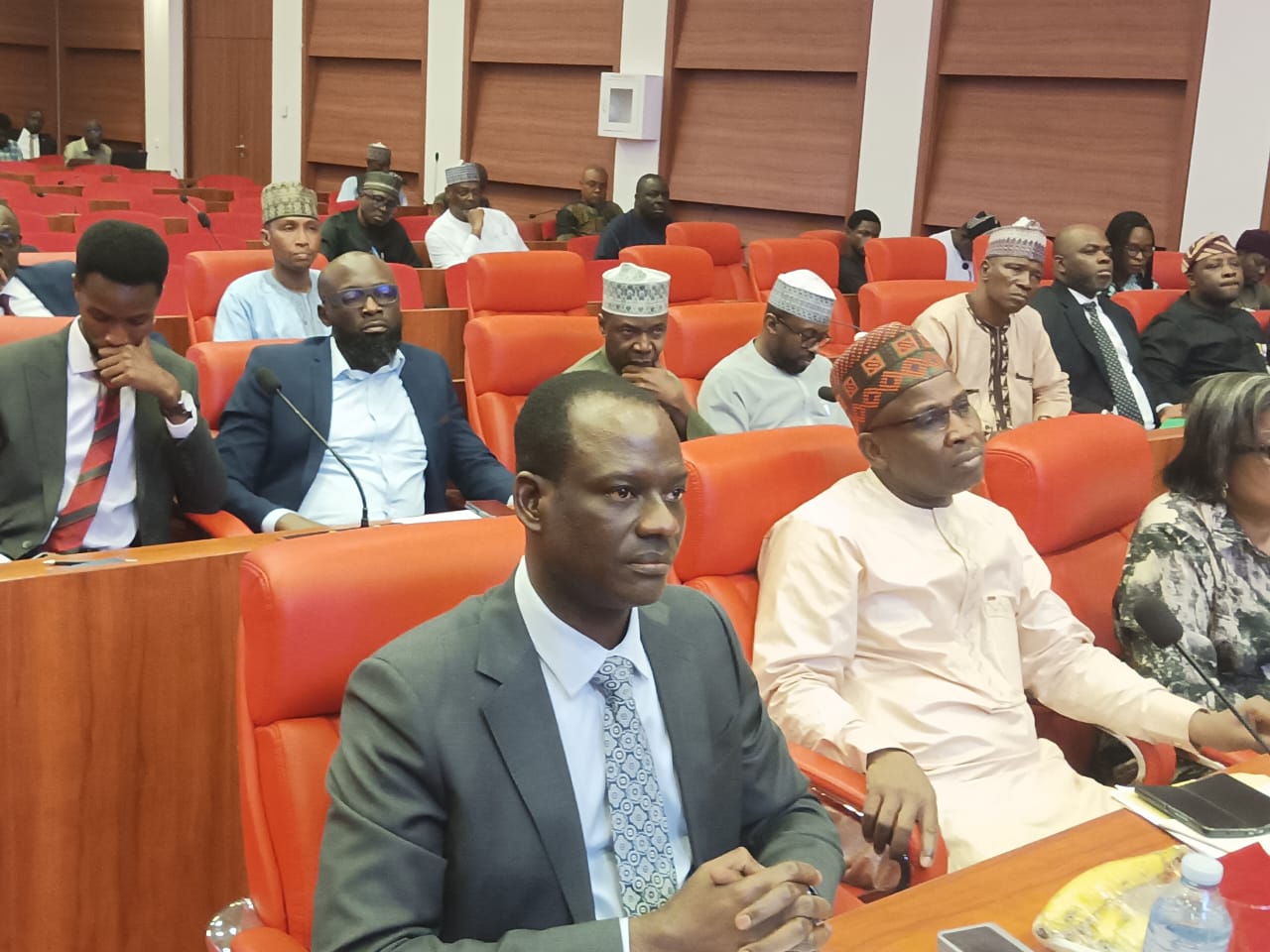

The Chairman of the Presidential Committee on Fiscal Policy and Tax Reforms, Taiwo Oyedele, has dismissed claims that President Bola Tinubu’s administration borrowed about ₦80 trillion, telling the Senate that the sharp rise in Nigeria’s public debt is largely the result of naira depreciation, inherited liabilities and accounting adjustments rather than fresh borrowing.
Speaking during an economic review session organised by the Senate Committee on Finance, Oyedele said public debate over Nigeria’s debt profile had been distorted by a misunderstanding of how the country’s debt stock is calculated.
His clarification comes amid growing public concern over Nigeria’s debt burden, estimated at about ₦159 trillion, at a time of rising inflation, declining purchasing power and widespread economic hardship.

“When this administration came into office, public debt was around ₦75 trillion. Many people simply compare the number before and the number now and conclude that this government has borrowed so much. That is not correct,” Oyedele said.
According to him, over ₦40 trillion was added to the debt stock following the depreciation of the naira, which automatically increased the naira value of Nigeria’s existing foreign currency loans.
“Because our debt is reported in naira, once the exchange rate changes, the value of external debt also changes even when no new loan has been taken,” he explained.
He further disclosed that another ₦33 trillion resulted from the securitisation of the Central Bank of Nigeria’s Ways and Means advances accumulated under the previous administration.
“That was not new borrowing. It was simply bringing existing obligations onto the government’s books,” he said, adding that the move improved transparency by formally recognising previously outstanding liabilities.
Oyedele also cautioned against interpreting all borrowing approvals by the National Assembly as loans already accessed.
“We have not even taken half of what the National Assembly has approved,” he said, explaining that borrowing approvals merely provide legal authority, while actual loan drawdowns occur later after negotiations and project implementation.
He revealed that the Ministry of Finance was preparing a comprehensive public document detailing borrowing approvals, actual disbursements and the projects financed.
On domestic borrowing, Oyedele explained that much of the government’s activities involved refinancing maturing obligations rather than accumulating entirely new debt.
“This administration has been very responsible with borrowing. We remain committed to debt sustainability. Every naira and every dollar we borrow must add more value than the amount borrowed,” he said.
Responding to concerns that improved revenue collection should reduce borrowing, Oyedele argued that borrowing remains necessary where expenditure obligations exceed available income.
“If government needs ₦10 to fund its budget but generates ₦6, it still needs to borrow ₦4. Even if revenue rises to ₦7, there is still a financing gap,” he explained.
He cited rising debt servicing costs, implementation of the new national minimum wage, salary adjustments and social intervention programmes, including the Nigerian Education Loan Fund (NELFUND), as factors increasing government expenditure.
Earlier, Chief Whip of the Senate, Senator Tahir Monguno, questioned the slow pace of budget implementation despite improved revenue performance by agencies such as the Federal Inland Revenue Service (FIRS) and the Nigeria Customs Service.
He observed that much of the 2025 capital budget had been rolled over into 2026, warning that poor implementation undermines the delivery of democratic dividends.
“The dividends of democracy are delivered through the implementation of the budget, particularly capital projects. If the budget is not being implemented, then the fundamental purpose of government is undermined,” Monguno said.
He also lamented that security agencies had informed lawmakers they were yet to receive capital releases despite worsening insecurity.
The senator maintained that failure to implement an Appropriation Act constituted a breach of the law, describing it as “an impeachable offence.”
Monguno further sought clarification over Federation Account Allocation Committee (FAAC) disbursements, asking why about ₦1.7 trillion was reportedly retained after approximately ₦3.7 trillion accrued to the Federation Account.
Also speaking, Senator Adamu Aliero expressed concern over Nigeria’s debt profile, stating that while former President Muhammadu Buhari left office with about ₦75 trillion in debt, the current administration’s debt stock had risen to between ₦75 trillion and ₦80 trillion in additional obligations according to public perception.
Although he acknowledged major infrastructure projects such as the Lagos-Calabar Coastal Highway and the Sokoto-Badagry Highway, Aliero said budget implementation remained below expectations, with several critical road projects still awaiting execution.
Responding, Oyedele said he was not familiar with the specific figures cited but explained that FAAC distributions are made after statutory deductions, including allocations to intervention agencies and approved collection costs for revenue-generating institutions.
Chairman of the Senate Committee on Finance, Senator Mohammed Sani Musa, said the success of the government’s economic reforms would ultimately be measured by improvements in the welfare of ordinary Nigerians rather than macroeconomic statistics.
“While there are encouraging signs in some key economic indicators, there is still much work to be done to ensure that the benefits of these reforms are properly felt by citizens and businesses across the country,” Musa said.
He added that although recent National Bureau of Statistics data suggested improvements in some sectors, stronger coordination between fiscal and monetary authorities remained essential.
Following a closed-door meeting with the Minister of Finance and the economic management team, Musa called for a comprehensive overhaul of Nigeria’s budgeting system.
He advocated the adoption of a performance- and priority-based budgeting framework, arguing that the current system encourages the annual repetition of expenditure items without adequate scrutiny.
“The National Assembly and the Executive need to look at the budget framework itself because you can see so many line items that keep repeating every year, adding more to the budget,” he said.
According to him, the proposed reform would ensure that public spending is guided by measurable outcomes rather than routine allocations.
“Nations have been adopting performance and priority-based budgeting systems and it has been working for them. I promote it because I know it is good for Nigeria,” he said.
Musa explained that the proposed reform would focus on stricter scrutiny of recurrent expenditure and overhead costs to ensure spending aligns with available revenue.
He also called for improved coordination between fiscal and monetary policies and suggested decentralising aspects of the government’s payment process while retaining oversight by the Office of the Accountant-General of the Federation to improve efficiency.
The Senate concluded the session by requesting further details on debt management, revenue utilisation, budget execution and the overall impact of the government’s economic reforms on Nigerians.