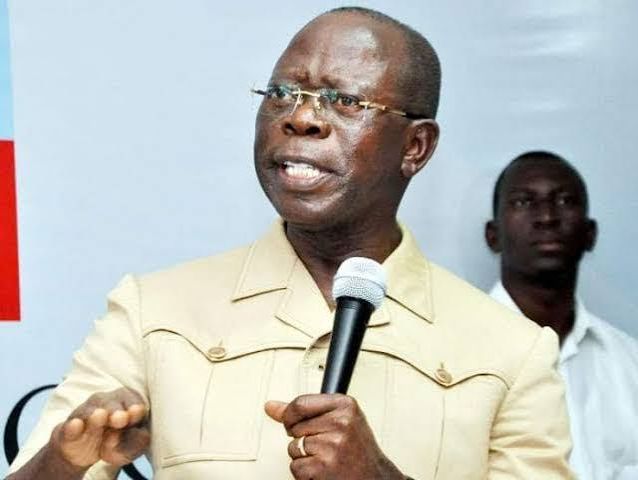
 Adams Oshiomhole

By Douglas Baye-Osagie
Senator Adams Oshiomhole stirred the hornets’ nest this week on the floor of the Senate by reawakening his colleagues to the constitutional responsibilities of the Senate regarding oversight of all government ministries, departments and agencies as enshrined in the Constitution. The trigger was military spending and the fresh outrage over the kidnapping of children in Oyo State.
Nigeria’s 1999 Constitution gives the National Assembly clear oversight powers, and defence spending is not exempt. Section 88 allows each House to, by resolution, direct investigations into any matter within its legislative competence and into the conduct of affairs of any person, authority, ministry, or government department charged with executing laws or disbursing money appropriated by the National Assembly. That definition covers MDAs, agencies, parastatals, and the military. Section 88(2) says the purpose of this power is to make laws, correct defects in existing ones, and expose corruption, inefficiency or waste in the execution of laws and in the disbursement of funds appropriated by the legislature. Since defence and security budgets are appropriated by the National Assembly, Section 88(2)(b) applies directly.

Section 89 then gives the National Assembly teeth. For any investigation under Section 88, the Senate, House of Representatives, or their committees can procure evidence, written or oral, direct or circumstantial, and can summon any person in Nigeria to give evidence or produce documents. They can issue warrants to compel attendance of anyone who refuses a summons, administer oaths, and punish for contempt. State Assemblies have the same powers under Sections 128-129. Section 80(4) adds the “power of the purse”: no money shall be withdrawn from the Consolidated Revenue Fund except as prescribed by the National Assembly. Section 4(2) confirms that NASS makes laws for peace, order and good government, including defence. The Armed Forces Act also gives it power to confirm service chiefs. In short, the Senate and House can hold hearings, summon service chiefs, review budgets, and investigate how military funds are spent. That is the power of the purse combined with the power of oversight.
Senator Adams Oshiomhole, representing Edo North and Chairman of the Senate Committee on Interior, is now forcing the Senate to confront that responsibility. In October 2025, he moved an amendment after a motion on suicide bombings in Gwoza, Borno. He called on the Senate committees on Defence, Army, Navy and Air Force to oversight and monitor all appropriations to ensure funds are not diverted. He alleged that previous service chiefs diverted security funds to build universities in their villages. The Senate ruled against it.
Again, debating on the floor this week, Oshiomhole said the Senate had not done enough on past resolutions. His additional prayer to a new motion asked the Senate to probe defence appropriations. The Senate rejected it again. That is what he calls “The Hold Back” — the legislature refusing to use the constitutional powers it already has. He insists oversight is “very key” and that without it, the National Assembly cannot guarantee that money voted for security actually gets to the troops and equipment needed on the ground. The timing matters. With children kidnapped in Oyo and insecurity persisting despite over a trillion naira appropriated on defence, Nigerians are asking hard questions. Commentators have accused the National Assembly of abdicating its constitutional role and reducing oversight to theatre instead of accountability. Oshiomhole’s intervention aligns with that critique. He is pushing back against the Senate holding back from real oversight when citizens need answers most.
Oversight does not mean disrespect. Much of the National Assembly’s reluctance to probe the military comes from respect and honour for the sacrifices of our armed forces. But the Constitution makes no exception for the military, security agencies, or any MDA. Appropriating billions without investigating how the funds are spent protects no one. Proper oversight protects both the troops on the frontline and taxpayers at home.
This is standard practice in democracies. The US Congress, through the House and Senate Armed Services Committees and Appropriations Committees, routinely investigates Pentagon spending. No military budget is automatic. During the George W. Bush era, Congress held multiple hearings on F-35 Joint Strike Fighter cost overruns and cancelled the $16 billion Future Combat Systems program because of waste. The Senate Armed Services Committee also investigated defence contracting fraud in Iraq and Afghanistan, including overbilling by contractors like Halliburton and KBR. In the Obama era, the Senate Armed Services Committee held hearings on the $2 trillion spent in Afghanistan, continued Pentagon waste, and rising F-35 costs. Congress also probed the Littoral Combat Ship procurement and defence contract abuses. The House Oversight Committee investigated $60 billion in untracked cash shipped to Iraq under Bush, an issue that continued into Obama’s term.
The UK Parliament follows the same model. The House of Commons Defence Committee investigates Ministry of Defence budgets, procurement failures and military operations. It summoned top military officials over the Afghanistan withdrawal and delays with the Ajax armoured vehicle. Parliament must approve defence spending every year.
Section 88(1)(b) covers every ministry, department and agency funded by appropriation. Section 89 gives the National Assembly the tools to enforce oversight: summons, oaths, warrants and contempt powers. Respect for the military is right, but the Constitution demands facts. With insecurity still claiming lives and children being kidnapped in Oyo, appropriation without investigation violates the very purpose of oversight in Section 88(2)(b). The Senate must stop holding back and start holding military spending to public account.
Douglas Baye-Osagie
Masters in Legislative Studies