
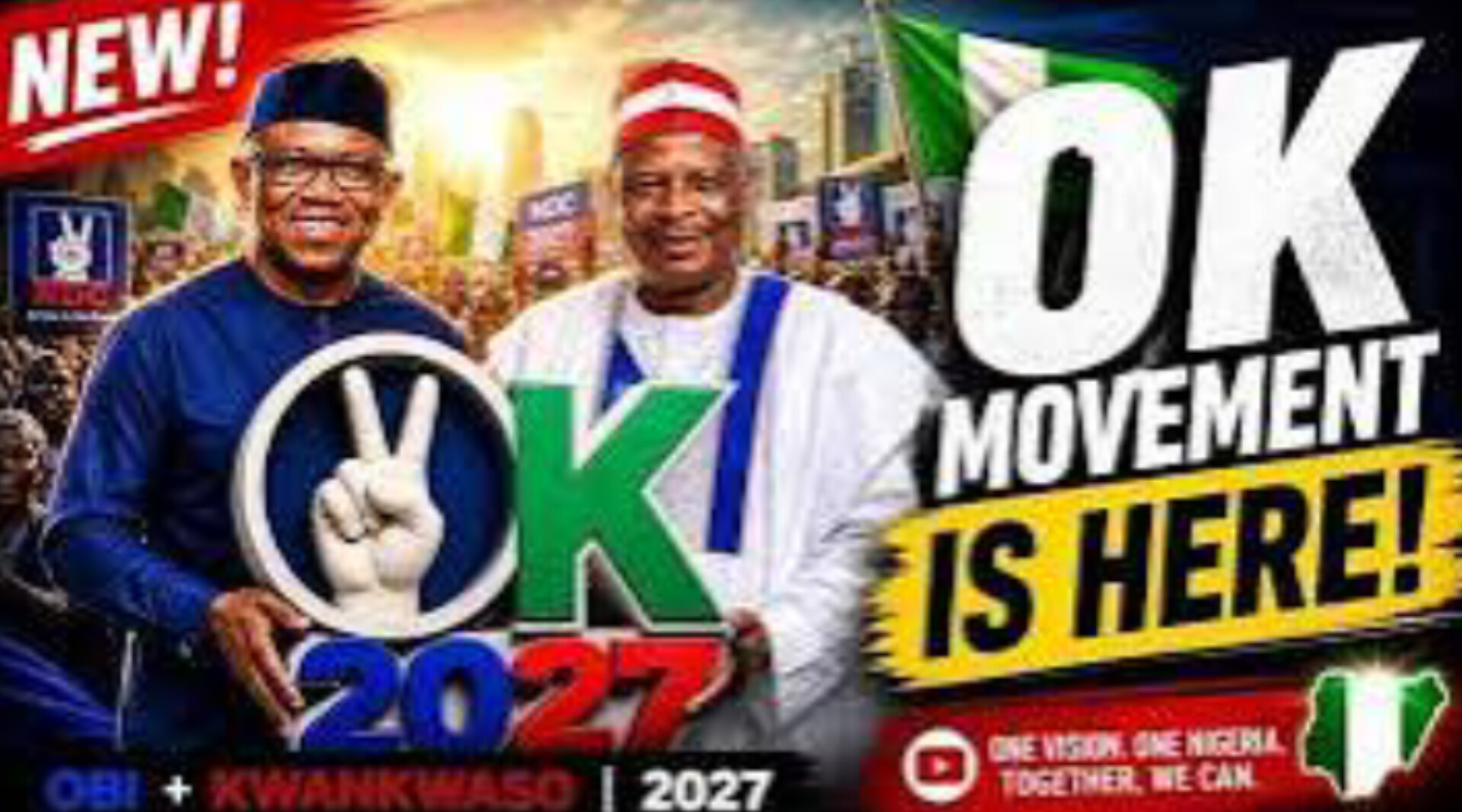

The Obidient/Kwankwasiya (OK) Movement has drawn a line over the control of its campaign structure, rejecting the position of the National Leader of the Nigeria Democratic Congress (NDC), Senator Seriake Dickson.
The movement insisted that its Presidential Campaign Council remains valid and operational despite Dickson’s position on the role of political support groups.
The latest development has opened a fresh disagreement over the relationship between the NDC and the OK Movement ahead of the 2027 general elections.
The OK Movement was formed around the mobilisation of supporters of NDC presidential candidate, Peter Obi, and his running mate, Senator Rabiu Musa Kwankwaso.
The movement has maintained that it is an independent political organisation with its own leadership, principles and organisational structure.
Dickson had clarified that the NDC’s recognition of political support groups did not extend to allowing them to operate as parallel structures to the party.
He also said support groups backing Obi and Kwankwaso had an important role to play in grassroots mobilisation but could not assume the functions of the political party or its official campaign organisation.
His position followed controversy over the 59-member Presidential Campaign Council announced by the OK Movement.
But in a statement signed by its National Director General, Hon. John Ozyl Ughulu, the movement rejected the suggestion that its structure required approval from Dickson or any other NDC leader.
The OK Movement said its independence predated the announcement of its Presidential Campaign Council.
It argued that while the NDC had the right to constitute and manage its official campaign structures, the party could not automatically determine the internal structure of an independent political organisation.
The movement also rejected any suggestion that it was seeking superiority over the NDC.
It said the NDC and the OK Movement were separate organisations with different structures, principles and leadership arrangements.
The group further maintained that its grassroots mobilisation structure was not established through financial support from Obi or the NDC.
According to the movement, every candidate contesting under the NDC platform could benefit from its grassroots mobilisation.
It therefore said no candidate should consider himself or herself superior because of political office or proximity to the party leadership.
The OK Movement also warned against any attempt to “undermine, appropriate, dissolve or otherwise interfere” with its leadership and organisational structure.
It said such attempts would be resisted.
However, the movement said its position was not aimed at confrontation with the NDC.
It described the issue as one of institutional respect and organisational independence.
The group said it remained prepared to work with the NDC, provided its principles, values and organisational identity were respected.
It added that it would not abandon its structure to satisfy the preferences of any individual or group.
The OK Movement consequently reaffirmed that its Presidential Campaign Council remains as announced.
It said its principles remained unchanged and that its mission was to mobilise Nigerians towards what it described as a better and transformed Nigeria.