
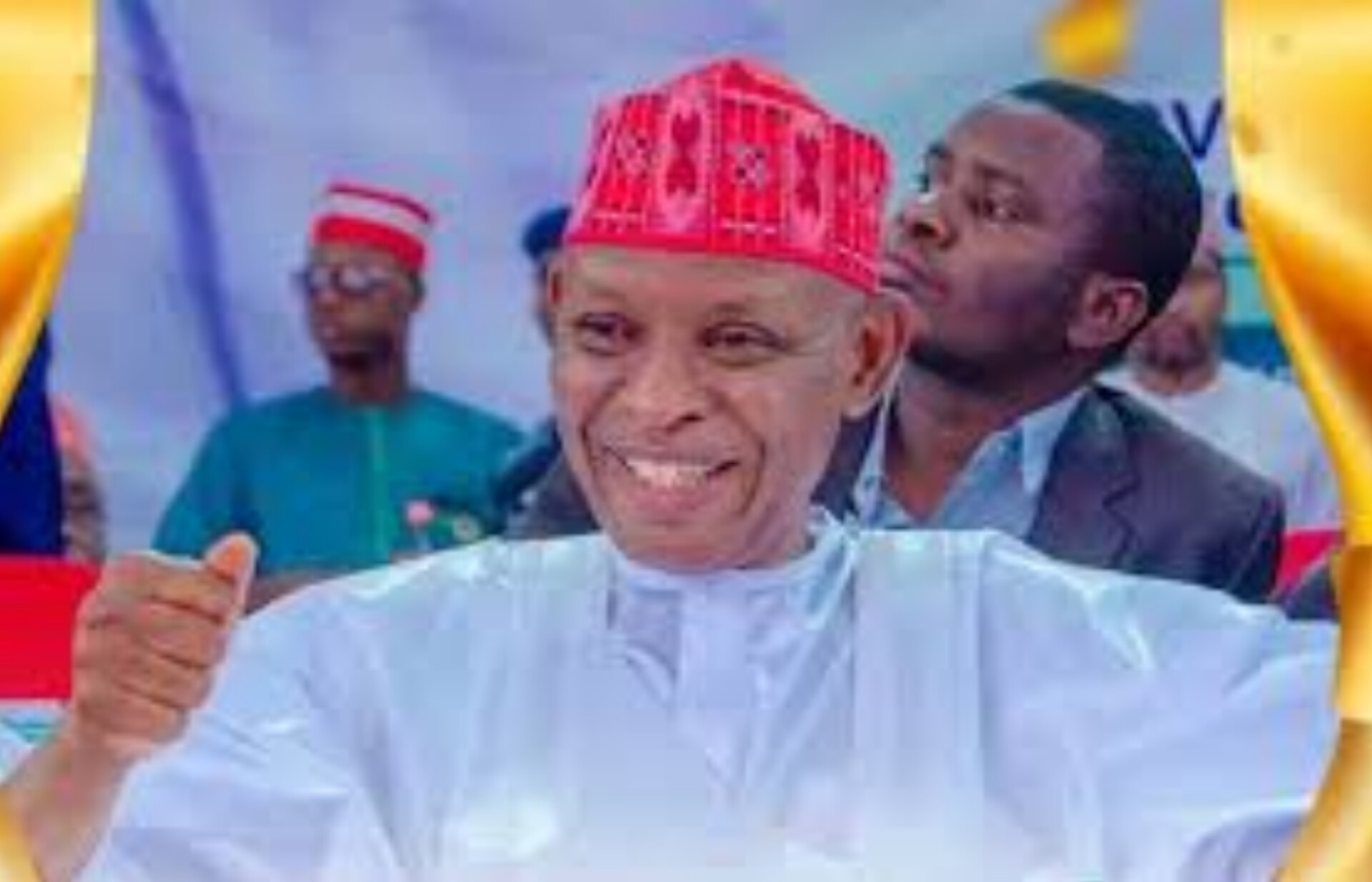
 Gov Abba Yusuf

By Lamara Garba Azare
Some leaders announce themselves with noise. Others arrive quietly, clothed in simplicity, guided by conscience and driven by duty. Governor Abba Kabir Yusuf belongs to the latter order. He is a politician whose bearing is humble, whose lifestyle is modest, and whose politics is softened by sympathy for the weak. Yet beneath that calm exterior lies a heritage of royalty, loyalty and lifelong service to humanity.
As he marks his 63rd birthday on January 5, 2026, Kano is not merely counting years. It is reflecting on a man whose life story speaks of patience, preparation and purpose. A leader who understands that power is not for display but for service, not for distance but for closeness to the people.
Born into values that prize honour and responsibility, Abba Kabir Yusuf learned early that leadership is first a moral calling. His simplicity is not accidental. It is cultivated. His empathy is not political theatre. It is instinctive. These qualities shaped his formative years and followed him into public service, where he built a reputation as a diligent civil servant who respected process, valued institutions and understood the silent pains of ordinary citizens.
Politics, for him, was never a shortcut to privilege. It was a longer road to responsibility. His rise was steady, tested and rooted in the grassroots. He listened more than he spoke. He learned more than he promised. When he eventually assumed office as Governor of Kano State, he carried with him not arrogance of victory but awareness of burden.
From the first days of his administration, his message was clear. Government must feel human. Governance must touch lives. Leadership must answer to the people.
Across Kano State, this philosophy is translating into action. In agriculture, policies have focused on empowering farmers, restoring dignity to rural livelihoods and strengthening food security. The soil is being treated not just as land but as hope. In healthcare, renewed attention to facilities, access and service delivery reflects a leader who sees health as a right tied to human dignity.
Education has remained close to his heart. By prioritising schools, teachers and learning environments, Governor Yusuf is investing in tomorrow while repairing yesterday. He understands that a society that neglects education mortgages its future. Security and transparency have also received careful attention, anchored on the belief that peace and trust are the soil in which development grows.
Perhaps nowhere is his vision more visible than in the ongoing urban renewal across Kano. Roads are being rebuilt, public spaces restored and infrastructure revived. These projects are not about appearance alone. They are about mobility, commerce, safety and pride. They signal a return to Kano’s historic role as a centre of culture, trade and industry.
Yet beyond concrete and policies lies the moral centre of his leadership. His decision to clear long standing gratuity arrears owed to pensioners and former councillors remains one of the most defining acts of his tenure. It was not politically convenient. It was ethically necessary. By honouring those who served before, he sent a message that service is remembered and dignity in old age matters. It was governance with a human face.
At 63, Abba Kabir Yusuf stands as proof that politics can be decent, that power can be gentle and that leadership can still be guided by conscience. His life reminds us that humility and authority are not opposites, and that simplicity can coexist with strength.
As Kano celebrates him, it celebrates a style of leadership that listens, heals and builds. A leadership inspired by loyalty to the people, respect for history and commitment to humanity. The years ahead hold promise, and the journey continues.
May strength be renewed. May wisdom deepen. And may Kano continue to find in him a servant leader whose heart remains with the people.

Lamara Garba Azare, former Chairman of the Kano NUJ Correspondents Chapel, writes from Kano