
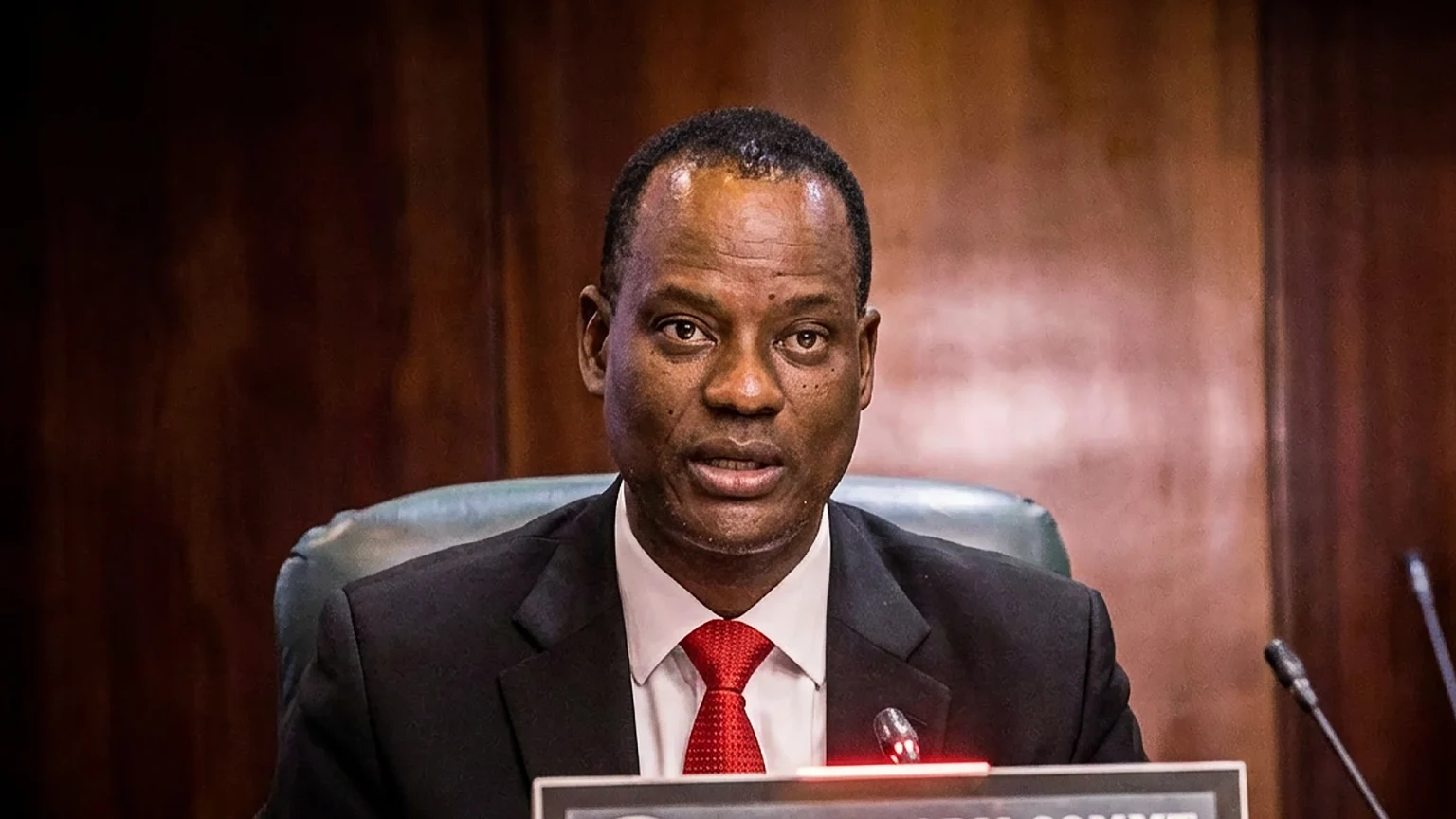

President Bola Tinubu’s ministerial nominee for the finance portfolio, Taiwo Oyedele, has outlined a series of fiscal policy priorities aimed at strengthening revenue, improving public spending and stabilising the Nigerian economy if confirmed by the Senate.
Speaking during his screening at the Nigerian Senate, Oyedele said Nigeria must address policy uncertainty in key sectors such as solid minerals while adopting more realistic budgeting and better fiscal management to drive growth.
He acknowledged ongoing efforts in the mining sector but stressed the need for clearer policies to attract investors.
“The team and the Minister for Solid Minerals have been doing a lot, but we need to complement that with a policy certainty environment. We may be coming to the National Assembly in this regard, because once we can fix the policy, I think the other issues are secondary.”
According to him, Nigeria’s economy remains largely driven by government spending, though the long-term goal is to transition to a private-sector-led model.
“The Nigerian economy is largely public sector–driven, even though our journey is to move towards a private sector–led economy. But that will not happen overnight.”
The nominee emphasised the need for greater discipline in budgeting, noting that government plans must be backed by actual revenue.
“When we have budgets, we need to ensure that there is funding behind them and that there are releases so that we can execute them — 100 per cent if possible — particularly for capital expenditure.”
Reviewing fiscal trends in recent years, he observed that budgets had often been overly ambitious relative to the country’s revenue profile.
“Looking at Nigeria’s budgets over the past five years, we have had many years where the budgets appeared too ambitious compared to the revenue. We were focusing on the expenditure side without paying enough attention to the revenue side.”
He warned that heavy reliance on borrowing was becoming a growing concern.
“Today, if you combine the federal and state governments, nearly half of our budgets are deficit-financed. We need to pay more attention to realistic revenue to drive our projects.”
Oyedele also highlighted the importance of transparency in government obligations, particularly debts owed to contractors.
“If I am confirmed by this distinguished Senate, one of the first things I will do is create a clear status-quo analysis. In many countries, you even quantify what we call domestic arrears. If we owe contractors, we should know it.”
“We should say: as of today, this is how much we owe contractors, this is how much we have, this is the gap, and this is how we plan to raise the money.”
He criticised the slow execution of infrastructure projects, saying prolonged timelines reduce value for money.
“If you are trying to build a road that could have been completed in one year but you stretch it over 10 years, that is nine extra years wasted during which Nigerians did not get maximum value for that investment.”
On macroeconomic management, the nominee stressed the need to pursue growth while keeping inflation in check.
“We have to be intentional about driving disinflationary growth.”
He argued that the gains from recent economic reforms must translate into tangible benefits for citizens.
“If the government gets more revenue because subsidy has been removed, it is actually a transfer from the people to the government. The only way we can make that sacrifice worthwhile is to spend that money in areas of priority for the people.”
Such spending, he said, should target critical sectors that directly impact livelihoods.
“Those priorities can be as basic as roads from the farm to the warehouse, to the factory and to the markets. When that happens, people see the impact almost immediately.”
He added that improved public spending could help moderate inflationary pressures.
“Government must improve how we spend — wisely, productively — to help address issues around inflation.”
On debt management, Oyedele noted that Nigeria faces significant Eurobond obligations in the coming years.
“Nigeria has about 18.5 billion dollars in Eurobond obligations, and about seven billion dollars will mature in the next five years.”
However, he said refinancing at lower yields could provide fiscal relief.
“If we refinance those bonds at current lower yields, we could save hundreds of millions of dollars in debt servicing annually. Imagine channeling those savings into productive capital expenditure — the impact would be significant.”
He also proposed a strategy to manage oil price volatility, suggesting forward sales of crude oil.
“Nigeria also has an opportunity when it comes to crude oil pricing. In our 2026 budget, the benchmark is around $64.8 per barrel. If prices fall below that, we panic; if they rise above it, our people suffer.”
“One strategy used in several countries is selling crude forward. Nigeria can lock in a price for a portion of our crude for a period of time. That would guarantee budget financing and also give Nigerians stability so prices are not fluctuating.”
The nominee said these measures, if implemented, could strengthen fiscal stability while ensuring government spending translates into real economic growth and improved living conditions for Nigerians.