
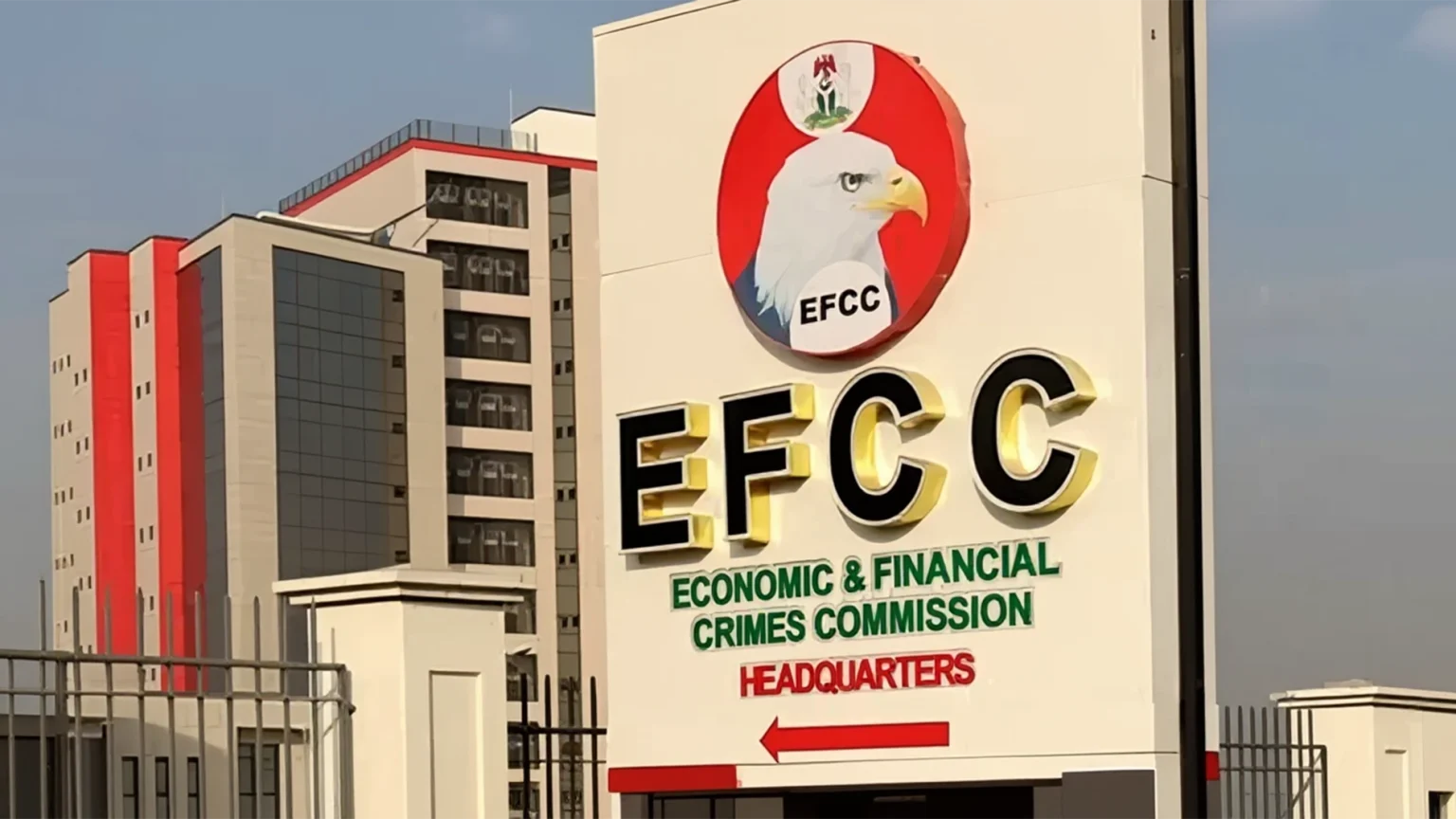

The prosecution’s case in the high-profile Mambilla Hydroelectric Power Project trial came under intense scrutiny after a key Economic and Financial Crimes Commission (EFCC) witness admitted under cross-examination that he certified disputed Federal Executive Council (FEC) documents without first comparing them with the original records.
The revelation emerged during proceedings before Justice Jude Onwuegbuzie of the FCT High Court, Abuja, where former Minister of Power and Steel, Dr. Olu Agunloye, is standing trial on a seven-count charge linked to the award of the $6 billion Mambilla Hydroelectric Power Project contract in 2003.
The Federal Government alleges that the contract was awarded under a Build, Operate and Transfer (BOT) arrangement without presidential approval, appropriation, or financial backing. The charges also include allegations surrounding an alleged N5 million payment said to have been received years after Agunloye left office.
However, recent proceedings have shifted attention away from the contract itself and onto the integrity of key documents forming the backbone of the prosecution’s case.
The controversy centres on extracts said to represent the minutes and conclusions of a Federal Executive Council meeting held on May 21, 2003. The defence has consistently challenged the authenticity and consistency of those documents, arguing that multiple versions of the same records have surfaced during the trial.
During cross-examination, the defence questioned earlier testimony by Assistant Commissioner of Police Umar Babangida (PW3), who allegedly tendered two different versions of what was described as the same FEC extract, marked as Exhibits 3D and 3K. According to the defence, the existence of differing versions raises serious concerns about the reliability of the documents being relied upon by the prosecution.
In an apparent effort to strengthen its documentary evidence, the prosecution subsequently called additional witnesses from the Office of the Secretary to the Government of the Federation (SGF) and the Ministry of Power.
A legal officer from the SGF’s office, identified as PW4, told the court that official extracts are expected to be exact reproductions of original government records and should not vary in form or content. However, he acknowledged that the versions presented before the court were not identical.
The most significant testimony came from PW5, Barrister John Illya Iyakwari of the Ministry of Power, whose admissions under cross-examination intensified questions surrounding the handling of the disputed documents.
PW5 told the court that although he prepared and certified one of the extracts tendered by the prosecution, he did not compare it with the original FEC minutes before certifying it as a true copy.
He further disclosed that the document had passed through EFCC personnel and other officials before it was returned months later for certification. Despite this, he admitted that he stamped and certified the document without direct verification against the original government record.
Under sustained questioning by the defence, the witness also acknowledged that he could not confirm whether any of the versions presented before the court had been altered at any point because he never checked them against the original FEC minutes.
PW5 further admitted that the certification process was based largely on oral instructions rather than formal written requests and that he had no independent means of confirming the authenticity of the documents he certified.
The disclosures prompted a strong objection from prosecution counsel, Abba Mohammed (SAN), who argued that parts of the cross-examination were improper. After extensive legal arguments from both sides, Justice Onwuegbuzie overruled the objection and allowed the defence to continue its questioning.
The court later adjourned proceedings to June 18, 2026, for the continuation of PW5’s cross-examination.
The latest developments have placed the prosecution’s documentary evidence under increasing pressure, with the defence seeking to portray the case as one built on disputed records, inconsistent exhibits, and a compromised certification process.
As the trial progresses, attention is expected to focus on whether the EFCC can restore confidence in the documents at the heart of its case or whether the admissions extracted from its own witnesses will further weaken the prosecution’s position.