
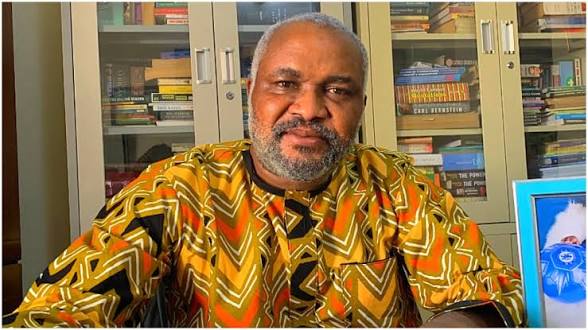

The Human Rights Writers Association of Nigeria has raised fresh concern over what it describes as an increasingly “travel-heavy” style of governance under President Bola Ahmed Tinubu, warning that Nigeria’s worsening insecurity and economic hardship demand sustained domestic attention rather than prolonged foreign engagements.
The group in a statement that was signed by its National Coordinator Comrade Emmanuel Onwubiko said it is deeply troubling that at a time when Nigerians are grappling with rising inflation, job losses, insecurity, and social pressure, the nation’s top leadership is frequently engaged abroad, with limited visible impact on the internal situation.
HURIWA argued that governance in a period of national strain must be anchored at home, where decisions are made, implemented, and monitored in real time—not from diplomatic circuits overseas.
The Association also questioned the practical returns of these repeated trips, insisting that Nigerians are yet to see clear, measurable benefits such as improved security outcomes, significant foreign direct investment inflows, or relief in economic pressure.
It noted that each foreign trip carries substantial financial weight—covering aircraft operations, security logistics, official delegations, accommodation, and allowances—costs ultimately borne by taxpayers already under severe economic stress.
Beyond cost considerations, HURIWA warned that perception matters in governance, stressing that citizens expect visible leadership presence, especially when communities are under threat and the economy is under pressure.
While affirming that international diplomacy is a legitimate function of statecraft, the group insisted it must be purposeful, time-bound, and clearly tied to national priorities with outcomes Nigerians can see and feel.
“Diplomacy is not the problem,” the statement noted. “The concern is imbalance—when external engagement appears to overshadow urgent internal governance responsibilities.”
HURIWA further urged a rethinking of Nigeria’s diplomatic priorities, calling for a clearer framework that ensures foreign visits are driven strictly by strategic necessity rather than routine political scheduling.
The group maintained that the real measure of leadership is not global visibility but domestic impact—security stability, economic recovery, and improved living conditions.
It therefore called on the Presidency to scale down non-essential foreign trips and redirect focus toward tackling insecurity, stabilising the economy, and restoring public confidence in governance.
“Nigeria is not short of international presence; it is short of internal results,” the group said. “What citizens need now is leadership that is physically present, emotionally engaged, and operationally focused at home.”
HURIWA reaffirmed its commitment to accountability and public interest advocacy, insisting that history will judge the administration based on outcomes achieved within Nigeria—not kilometres travelled abroad.