
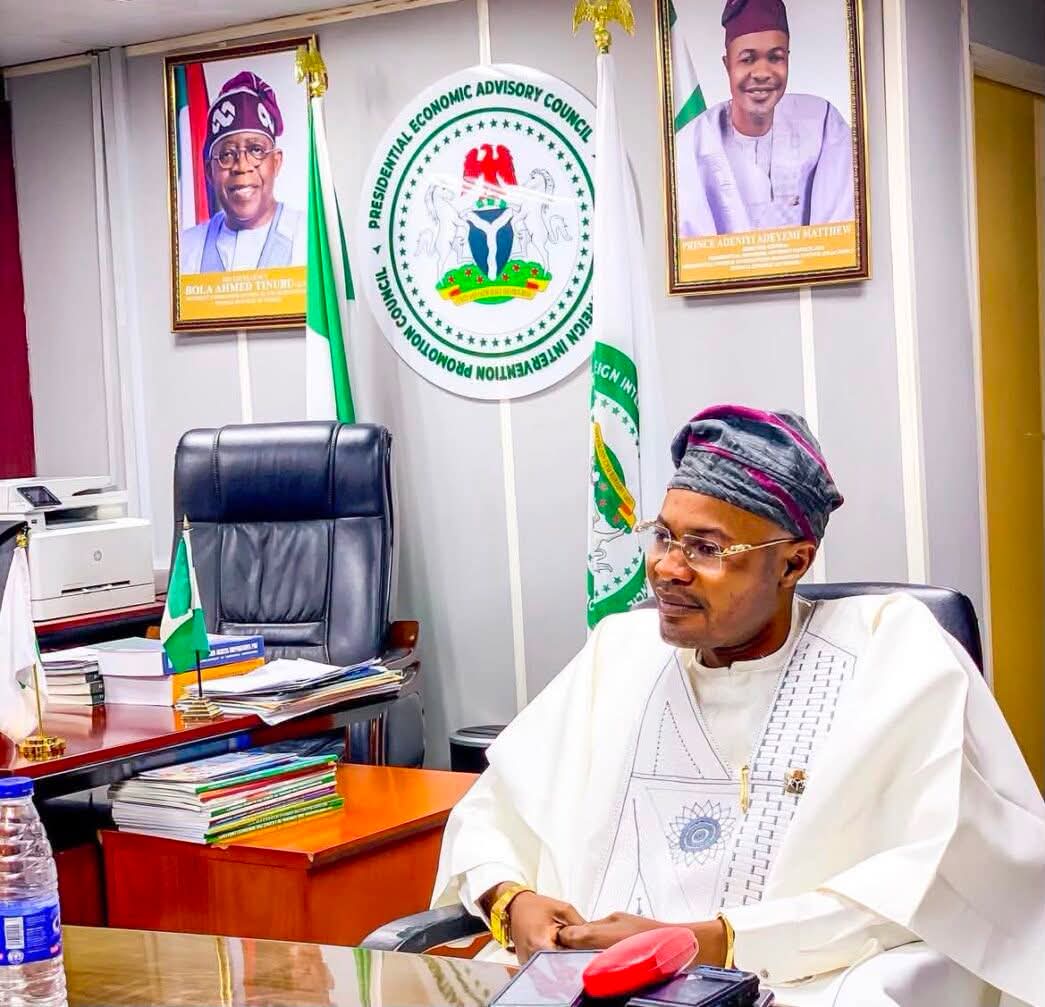

Fresh details released by the Presidency have shed light on what authorities describe as an elaborate scheme through which Adeniyi Adeyemi Matthew allegedly operated a fictitious presidential agency, secured official recognition from unsuspecting government institutions, engaged foreign diplomats and attempted to project himself as a top government appointee before his arrest by the police.
The disclosures, contained in a statement issued on Wednesday by the Special Adviser to the President on Information and Strategy, Bayo Onanuga, provide the most comprehensive account yet of the controversy surrounding Adeyemi, who has repeatedly claimed to be the Director-General of the Presidential Foreign Intervention Promotion Council, an entity the Federal Government insists never existed.
The revelations come amid renewed public debate over Adeyemi’s claims that he was appointed by the Office of the Chief of Staff to the President.
According to the Presidency, concerns over Adeyemi’s activities first surfaced after officials of the Nigerian Investment Promotion Council reported that another organisation appeared to be operating parallel investment-promotion activities while presenting itself as a federal government agency.
That complaint triggered inquiries that would eventually expose what investigators believe was a sophisticated web of forged documents, false identities and unauthorized dealings carried out in the name of the Presidency.
Documents released by the Presidency show that on October 17, 2025, the Chief of Staff formally petitioned the Department of State Services and the Nigeria Police Force, warning of the activities of individuals allegedly forging appointment letters and presenting themselves as presidential appointees.
The petition specifically identified Adeyemi as the purported head of a so-called Presidential Foreign Intervention Promotion Council, which investigators later concluded was not recognized by the Federal Government.
According to the complaint, Adeyemi and his associates allegedly operated openly from an office within the Federal Secretariat Complex in Abuja, conducted meetings with Nigerians and foreign nationals, and even sought diplomatic support from the Ministry of Foreign Affairs to facilitate visa applications for members of the organisation.
Investigators believe the operation had become sufficiently convincing to attract attention within key government institutions.
Weeks before Adeyemi’s arrest, alarm bells had reportedly gone off at the Ministry of Foreign Affairs after he convened a meeting involving ambassadors at a high-profile Abuja venue without official clearance from the ministry.
The ministry subsequently wrote to both the Office of the National Security Adviser and the Office of the Chief of Staff seeking clarification regarding the status of the organisation and its purported director-general.
Officials described the development as a breach of established diplomatic protocols and questioned the authority under which Adeyemi was operating.
What followed was a trail of correspondence among some of the highest offices in government.
Letters exchanged between the Ministry of Foreign Affairs, the Office of the National Security Adviser, the Office of the Secretary to the Government of the Federation and the Office of the Chief of Staff consistently sought to determine whether the council existed and whether Adeyemi had genuinely been appointed by the Presidency.
The Presidency maintains that every inquiry produced the same answer: neither Adeyemi nor the organisation he represented was known to government.
In separate communications, the Chief of Staff reportedly denied issuing any appointment letter to Adeyemi and stressed that appointments into federal offices do not originate from his office.
The turning point came on October 27, 2025, when police operatives arrested Adeyemi in Abuja.
Searches conducted at his office and residence reportedly yielded a cache of documents investigators say formed the backbone of the alleged operation.
According to the police findings cited by the Presidency, investigators concluded that the appointment documents used by Adeyemi were forged and that the presidential council he claimed to head had no legal existence.
The investigation also uncovered what authorities described as an extensive financial structure linked to the alleged scheme.
Police reportedly identified 34 bank accounts connected to Adeyemi, including nine allegedly opened in the names of organisations investigators described as fictitious entities.
More significantly, investigators alleged that forged documents were used to obtain a Central Bank of Nigeria account after officials of the Office of the Accountant-General of the Federation were allegedly misled into believing the organisation was a legitimate government agency.
Authorities, however, stated that no public funds were transferred into the account.
During interrogation, Adeyemi reportedly told investigators that a man identified as Dolapo Babatunde Tanimola assisted him in obtaining the disputed appointment letter.
Police efforts to track down the individual led investigators to discover that Tanimola had died in a fire incident at a hotel in Abuja days before Adeyemi’s arrest.
By the conclusion of the investigation, police alleged that Adeyemi’s actions constituted forgery, impersonation and obtaining by false pretence, offences they said damaged the reputation of both the Presidency and the Office of the Chief of Staff.
The findings formed the basis of an eight-count criminal charge filed before the Federal High Court in Abuja against Adeyemi and two alleged accomplices.
The case is scheduled to resume on July 27.
The Presidency said controversy resurfaced after Adeyemi, while on police bail, publicly renewed claims that he had been appointed by the Chief of Staff despite allegedly admitting during earlier police questioning that the appointment documents were not authentic.
Onanuga argued that the latest allegations against the Chief of Staff ignore months of documented correspondence, security investigations and court proceedings that predated the current public controversy.
The Presidency also pointed to a previous incident in 2016 when Adeyemi reportedly claimed to be President-General of the World Youth Organisation, an entity he described as being affiliated with the United Nations. The claim was later repudiated by the UN, according to the statement.
With the matter now before the Federal High Court, the Presidency urged politicians and public commentators to allow the judicial process to run its course rather than rely on what it described as the narrative of an accused impostor facing criminal prosecution.
For now, the case raises troubling questions about how a non-existent government agency allegedly operated openly within official circles, interacted with diplomats, secured office space and established multiple financial accounts before law enforcement agencies moved in.