
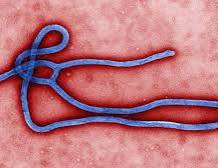


The Senate has demanded compulsory health screening for all international passengers arriving in Nigeria and called for emergency funding to contain the Ebola threat following the confirmation of a case in Abuja.
The lawmakers also urged the National Assembly to replace the 1926 Quarantine Act with modern public health legislation, warning that gaps in screening at the country’s entry points could undermine efforts to prevent the virus from spreading.
The resolutions followed a motion sponsored by Senator Francis Adedayo Faduyile, who warned that Nigeria must act swiftly to prevent the reported case from escalating into a wider public health crisis.
The proposed measures include health declaration forms, temperature checks, symptom screening, isolation facilities and enhanced surveillance of travellers who visited or transited through affected areas within the preceding 21 days.
The Senate also called on the Federal Government to release emergency funds to relevant agencies, insisting that the country could not afford to delay its response until the implementation of the 2027 budget.
Contributing to the debate, Senator Ali Ndume raised concerns about alleged lapses in screening at Nigerian airports, citing a traveller who reportedly arrived from Kenya without undergoing temperature checks or other health examinations.
“A traveller came from Kenya and entered Nigeria, and there was no check. There was no temperature check at the airport, and there was no form of check at all,” Ndume said.
He questioned how airport officials would detect an infected passenger without adequate screening.
“Assuming he was infected, how would the airport staff have known?” he asked.
Ndume said the reported incident should serve as a wake-up call for aviation authorities and other agencies responsible for monitoring international arrivals.
He also recalled Nigeria’s response to the 2014 Ebola outbreak, urging the government to sustain the country’s gains in disease prevention and control.
The senator called on the Senate Committee on Judiciary to engage relevant health authorities immediately to facilitate the review of the Quarantine Act rather than wait for the executive to initiate the process.
Senator Sadiq Suleiman Umar, representing Kwara North, said Nigeria must not allow complacency to undermine its previous success in containing Ebola.
“Nigeria did fantastically well, and we were celebrated all over the world. We must not lose that gain,” he said.
Umar called for a coordinated, multi-agency response backed by adequate resources, warning that the country must take the threat seriously.
“It means that Nigeria must not allow a single case of spread of Ebola because we will have failed from what we have done before,” he said.
Senator Ekong Sampson, representing Akwa Ibom South, also urged the government to respond urgently, describing the reported case as a reminder of the need to strengthen Nigeria’s healthcare system.
“The intrusion of the Ebola virus in our midst makes a strong case that we have to take our healthcare system very seriously and respond with every speed, with every urgency, so that we can protect ourselves,” he said.
Sampson warned that failure to contain the virus could have devastating consequences.
The Senate’s intervention comes amid concerns over the country’s preparedness to prevent further transmission, with lawmakers insisting that screening should cover all international arrivals, regardless of their country of departure.
They argued that travellers could have been exposed to the virus in countries not officially classified as affected areas.
The lawmakers also backed enhanced screening for passengers who had visited or transited through affected areas within 21 days before arrival, alongside exit screening for departing passengers during declared public health emergencies.
However, Senator Mohammed Adamu Aliero, representing Kebbi Central, said the Federal Ministry of Health and Social Welfare had already initiated measures through the Nigeria Centre for Disease Control and Prevention.
“Virtually all the prayers that have been canvassed, the ministry has already started doing them,” Aliero said.
He nevertheless supported the motion, stressing the need for sustained vigilance and coordination among relevant agencies.
The Senate urged the Ministry of Health, the Federal Airports Authority of Nigeria and the Nigeria Immigration Service to ensure that all entry points were adequately staffed and equipped with trained health personnel, thermal scanners, protective equipment and isolation rooms.
It also called for the readiness of isolation and treatment centres across the 36 states and the Federal Capital Territory.
On emergency funding, lawmakers insisted that the government must act without delay.
Ndume referred to an alleged N10bn allocation for Ebola control, but some senators questioned whether the funds had been formally approved and released.
The chamber subsequently adopted an amended resolution urging the Federal Government to make emergency funds available to relevant agencies through the service-wide vote.
The Senate also called for adequate funding for the NCDC and Port Health Services, while emphasising the need for oversight to determine whether previously approved funds had been released and properly utilised.
On the proposed review of the quarantine law, Senator Muhammad Tahir Monguno, representing Borno North, said the existing legislation no longer reflected contemporary public health realities.
“That Act has become obsolete and is not in consonance with existing realities, both objective and subjective,” Monguno said.
He urged the National Assembly to enact a modern public health law that would enable health officials at Nigeria’s entry points to operate in line with current technology and international standards.
The Senate consequently adopted a resolution urging lawmakers to replace the Quarantine Act of 1926 with legislation consistent with the International Health Regulations 2005.
Senator Ireti Kingibe, representing the FCT, proposed making Ebola vaccines available to protect Abuja residents and prevent the spread of the virus to other parts of the country.
She suggested establishing vaccination points at motor parks and airports.
However, Faduyile cautioned that any vaccination programme must consider the particular Ebola strain involved, noting that approved vaccines were not available for the Bundibugyo and Sudan strains.
He also questioned the practicality of mass vaccination at transport hubs, stressing the need for appropriate medical guidance.
The lawmakers further urged public and private institutions, hotels, ministries and event centres to strengthen hygiene measures and provide hand sanitisers.
They also discussed introducing temperature checks and handwashing facilities within the National Assembly to reduce the risk of transmission among lawmakers, staff and visitors.
To monitor compliance, the Senate mandated its committees on Health, Primary Healthcare and Disease Control, Aviation, Interior and Appropriations to work with relevant agencies, inspect major entry points and report back within four weeks.
The Committee on Legislative Compliance was also directed to monitor the implementation of the resolutions.
Faduyile thanked his colleagues for supporting the motion, describing the situation as a major public health emergency requiring decisive action.
“This is a major, major, major emergency, and a deadly emergency for that matter,” he said.
The Senate urged the relevant authorities to implement its resolutions promptly, stressing the need to strengthen surveillance, close screening gaps and prevent the reported case from developing into a wider public health crisis.