

National Leader of the Nigeria Democratic Congress (NDC), Senator Seriake Dickson, has unveiled plans to end manual primaries in the party, declaring that the NDC will pioneer electronic voting and set a new benchmark for internal democracy in Nigeria.
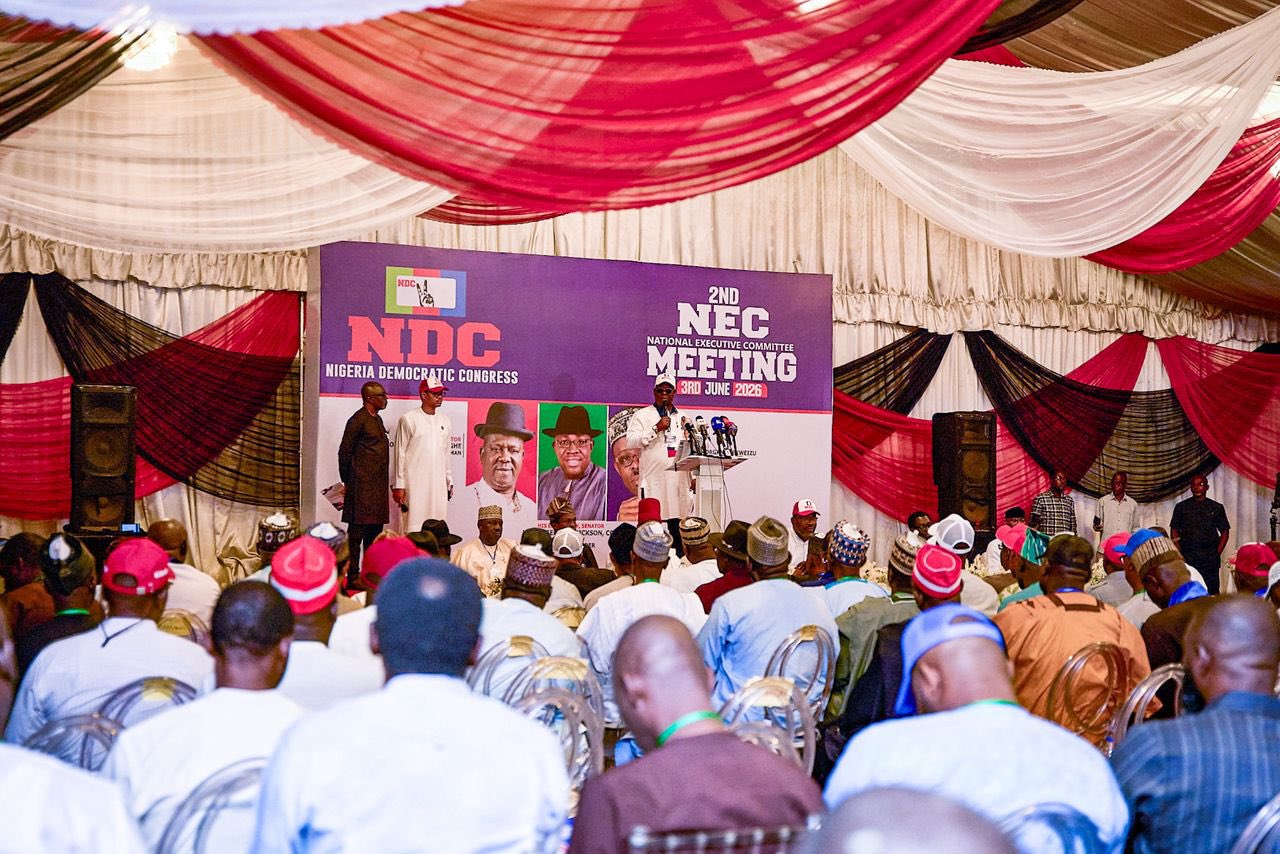
Dickson made the announcement at the party’s second National Executive Committee (NEC) meeting in Abuja, where he said the NDC was determined to lead a democratic revolution driven by technology, transparency, and accountability.
The former Bayelsa State governor described the party’s recently concluded primaries as a major achievement for a political platform barely a few months old, but stressed that the lessons learned from the exercise had reinforced the need for a more efficient and credible electoral system.
According to him, the next phase of the party’s evolution will be marked by the deployment of electronic voting for congresses, conventions, and primary elections, eliminating the controversies often associated with manual voting processes.
In what appeared to be one of the most significant policy declarations at the NEC meeting, Dickson said the primaries recently conducted by the NDC would be the first and last manual primaries in the history of the party.
“We have listened to our members, reviewed our experiences, and drawn the necessary lessons. The next primaries in the NDC will be electronic. We are determined to build a system that is transparent, credible, and beyond manipulation,” he declared.
Dickson argued that political parties must become laboratories for democratic innovation if Nigeria is to deepen electoral credibility and restore public confidence in governance.
He noted that while the country continues to debate electoral reforms, political parties have a responsibility to demonstrate practical solutions rather than merely advocate for change.
According to him, the NDC intends to show that technology can successfully drive democratic participation, just as it has transformed banking, commerce, communication, and public administration.
“We have been advocating electronic transmission of results and broader electoral reforms in Nigeria. As a party, we must lead by example. We cannot demand reforms from others if we are unwilling to reform ourselves,” he said.
The NDC leader acknowledged that the party’s rapid growth had created logistical and operational challenges, pointing out that a movement barely months old had already conducted nationwide congresses, a national convention, and multiple primary elections across the federation.
Despite those challenges, he said the party had succeeded in establishing itself as a serious national political force and was now positioned to introduce reforms that many older political parties had failed to implement.
Dickson stressed that electronic voting would significantly reduce disputes arising from party contests by providing members with a transparent and verifiable process.
He disclosed that party officials are already working on a digital electoral framework that will allow members to vote securely from designated locations while ensuring real-time collation and monitoring of results.
The initiative, he explained, is part of a broader vision to build a modern political institution capable of reflecting the aspirations of a new generation of Nigerians.
He also appealed to aspirants dissatisfied with the outcomes of recent primaries to remain committed to the party, assuring them that ongoing reconciliation efforts would address grievances and strengthen internal unity.
According to him, political competition should never overshadow the larger mission of building a credible alternative capable of transforming Nigeria.
Dickson maintained that the NDC’s commitment to electronic voting goes beyond internal administration and reflects its belief that technology must play a central role in strengthening democratic governance nationwide.
Political observers at the NEC meeting described the announcement as one of the boldest reform proposals by any major political party in recent years, particularly as debates over electoral transparency and voter confidence continue to dominate national discourse.
For Dickson, however, the objective is clear: to ensure that the NDC becomes the standard against which internal party democracy is measured in Nigeria.
“If Nigeria is slow in embracing electoral innovation, the NDC will show the way. We intend to become the model for transparent, technology-driven democracy in this country,” he said.
The declaration drew loud applause from delegates, many of whom viewed the proposal as evidence of the party’s determination to distinguish itself from traditional political structures ahead of the 2027 elections.
L