


The Human Rights Writers Association of Nigeria (HURIWA) has commended the joint military operation by United States and Nigerian forces which reportedly led to the elimination of Abu-Bilal al-Minuki, described as the global number two commander of ISIS, while urging Nigeria to urgently overhaul its counter-terrorism strategy to prevent continued nationwide insecurity.
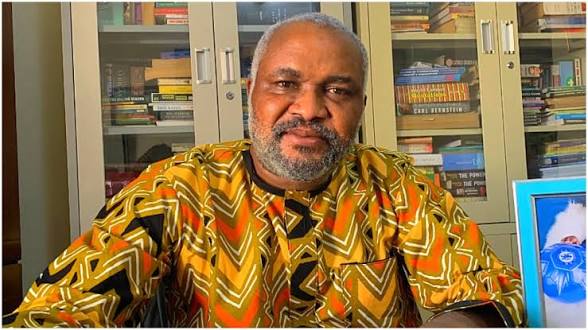
In a statement signed by its National Coordinator, Comrade Emmanuel Nnadozie Onwubiko, the group praised the operation as a significant breakthrough in global counter-terrorism efforts and acknowledged the professionalism and sacrifices of Nigerian troops involved in the mission within the Lake Chad Basin.
HURIWA also noted the importance of international intelligence cooperation in achieving the success of the operation, commending what it described as effective coordination between Nigerian forces and foreign partners, including the United States under former President Donald Trump.
However, the organisation warned against what it called “dangerous premature celebration,” stressing that the killing of a high-value target does not reflect a full resolution of Nigeria’s deepening security crisis.
According to the group, terrorist and armed groups continue to carry out deadly attacks across several parts of the country, including mass abductions of students in vulnerable communities, particularly in Borno, Yobe, and other northern states. HURIWA described these incidents as unacceptable and called for immediate and decisive rescue operations for all abducted victims.
The organisation argued that despite isolated operational victories, Nigeria still faces persistent insecurity marked by attacks on schools, rural communities, highways, and farming settlements, largely driven by Boko Haram insurgents and other violent non-state actors.
It maintained that the current security architecture remains inadequate, insisting that the country must transition from reactive military responses to a more proactive, intelligence-driven counter-terrorism framework.
HURIWA called on the Nigerian Armed Forces to fully adopt global best practices in asymmetric warfare, including advanced surveillance systems, coordinated special operations, enhanced intelligence gathering, and improved inter-agency communication.
The group also criticised what it described as long-standing fragmentation among security agencies, saying weak coordination between the Army, Air Force, Navy, intelligence services, and paramilitary institutions has continued to undermine operational effectiveness.
It insisted that duplication of duties, delayed intelligence sharing, and lack of synergy among security institutions must be urgently addressed if Nigeria hopes to defeat terrorism and banditry.
HURIWA further challenged the newly appointed Homeland Security leadership to immediately unveil a clear, measurable, and time-bound national security strategy focused on protecting schools, rural communities, worship centres, highways, and other vulnerable public spaces.
The organisation warned that Nigerians are increasingly losing patience with repeated assurances from government officials without corresponding results on the ground.
It urged security authorities to demonstrate urgency, innovation, and accountability in their operations, adding that leadership in the security sector must now be judged by performance, not promises.
HURIWA also called for stronger international collaboration in intelligence sharing, counter-terror financing disruption, cyber surveillance, drone warfare support, border security management, and special forces training.
According to the group, the success of the recent operation shows that when intelligence cooperation is effective, even globally recognised terrorist leaders can be tracked and neutralised.
The organisation further appealed for improved welfare packages, modern equipment, advanced training, and psychological support for Nigerian military personnel engaged in frontline operations across the country.
While commending the military for the recent success, HURIWA insisted that sustained and coordinated action is required to permanently dismantle terrorist and criminal networks operating in Nigeria.
It warned that continued violence in states such as Borno, Benue, Plateau, Zamfara, Katsina, and Niger underscores the urgency of a more decisive and comprehensive national security response.
HURIWA concluded that Nigeria must intensify efforts to reclaim all territories under threat from terrorists, bandits, kidnappers, and extremist groups, stressing that national security must remain the government’s highest priority.