
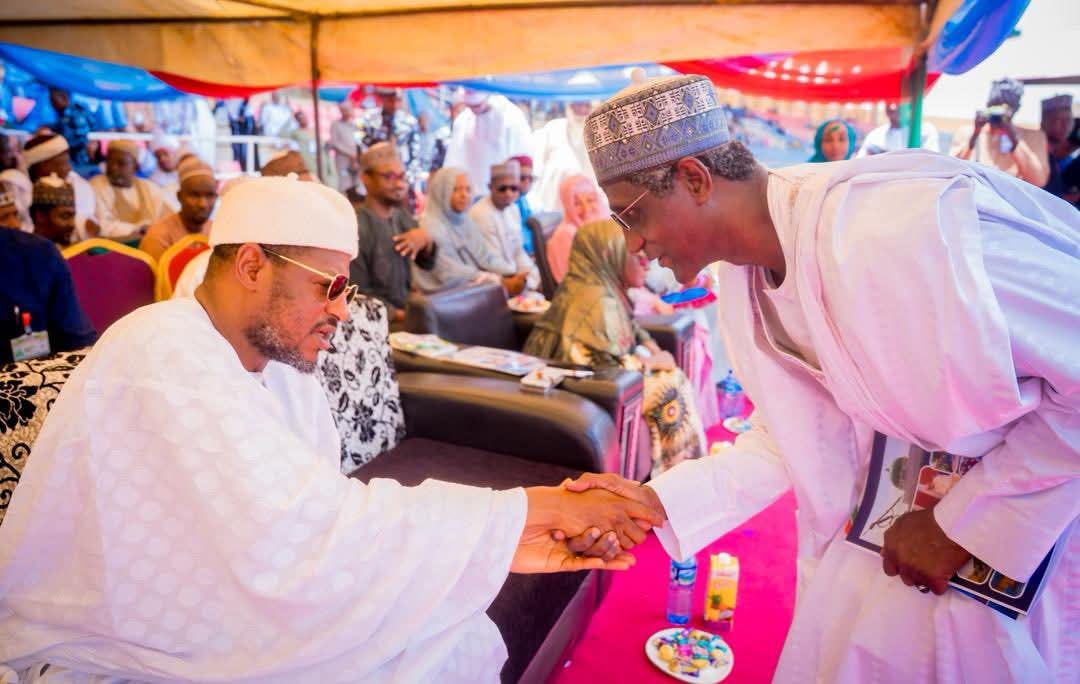

Senator representing Katsina Central Abdul’aziz Musa Yar’adua’s latest empowerment programme has gone beyond routine distribution of items, igniting wider conversations about the intersection of political support, social welfare, and state-led development in northern Nigeria.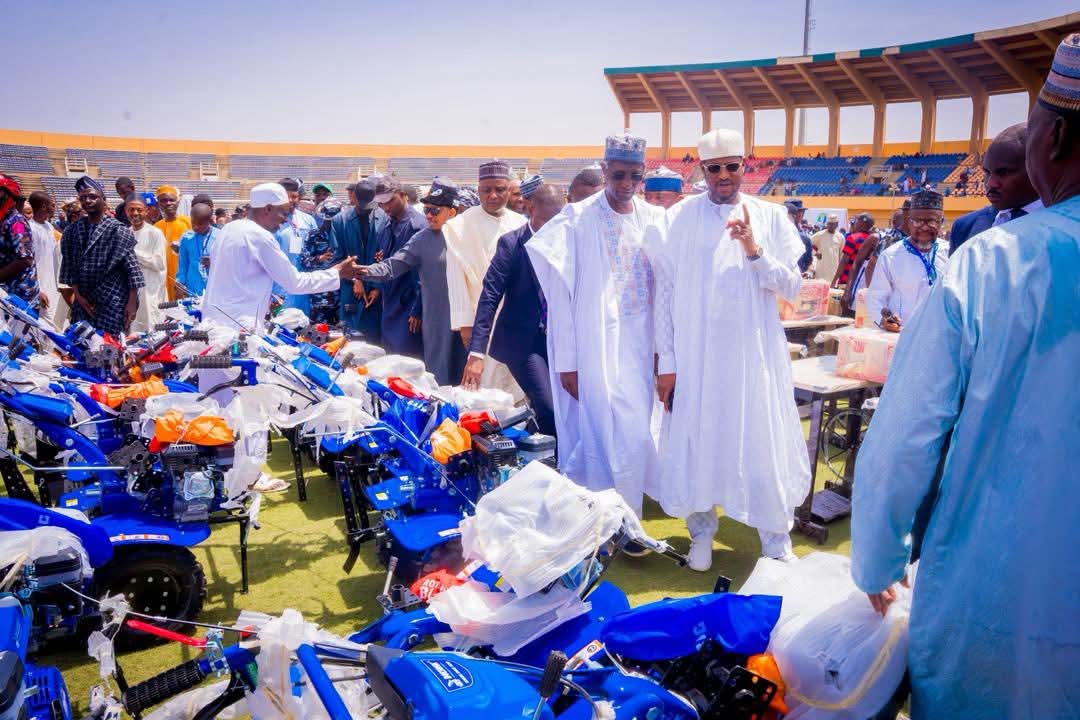
The initiative, valued at N1.59 billion and flagged off on Sunday, May 3, 2026, by Governor Dikko Umaru Radda, is designed as a mix of economic stimulus and humanitarian intervention, reaching thousands of beneficiaries across communities affected by poverty and insecurity.
While the package includes 80 vehicles, five ambulances, N150 million in business grants, motorcycles, and hundreds of vocational tools for women and youth, attention has been particularly drawn to its dual nature—combining grassroots economic support with targeted relief for families impacted by banditry.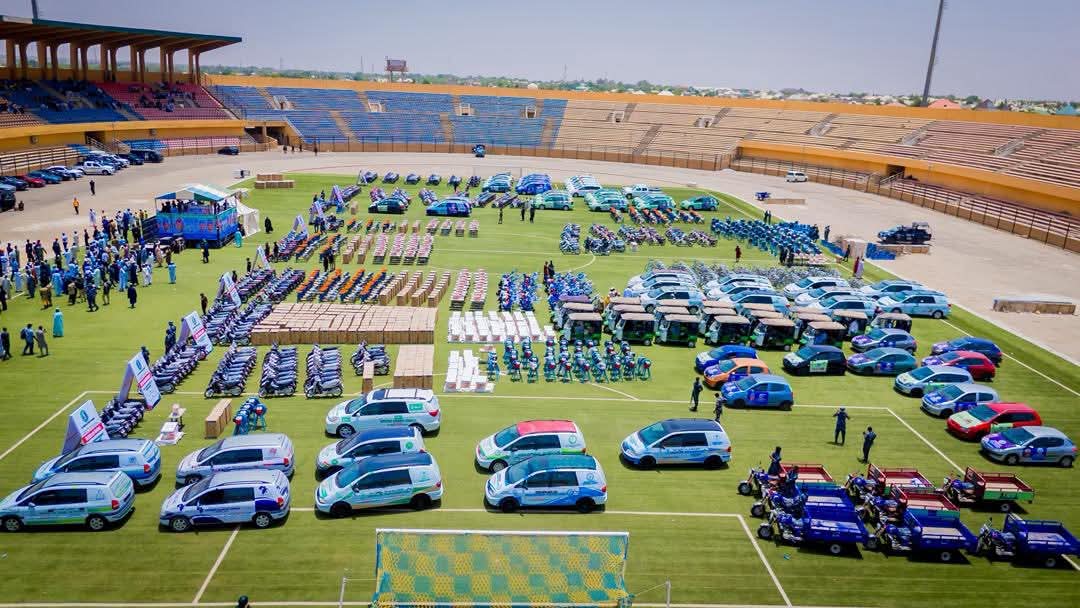
Among the standout components is the N10 million allocation to spouses of slain Community Watch Corps members, a group that has increasingly become central to local security responses in rural Katsina. The gesture underscores the growing reliance on community-based security structures and the human cost attached to it.
The education-focused intervention, which saw 100 bicycles distributed to students in Danmusa LGA, also highlights ongoing infrastructure gaps in rural schooling, where distance and transportation remain persistent barriers to access.
At the flag-off ceremony, Senator Yar’adua framed the intervention as part of a broader responsibility to reduce hardship and expand economic independence. He acknowledged public expectations and hinted at a need for continuous improvement in service delivery, describing the programme as part of a longer-term adjustment in his constituency engagement strategy.
Governor Radda, who officially launched the programme, praised the initiative as complementary to state development efforts, noting that public-private and political collaboration remains crucial in addressing poverty and insecurity.
However, beyond the commendations, the scale and composition of the empowerment package have also revived a familiar national debate: whether large-scale distributions of vehicles, cash, and equipment represent sustainable development or short-term political relief in a state still grappling with structural economic challenges.
The programme’s broad reach across transport, health, education, and small-scale enterprise positions it as one of the more comprehensive constituency interventions in the state in recent times—while also raising questions about the long-term impact of such interventions on systemic development outcomes in Katsina.