
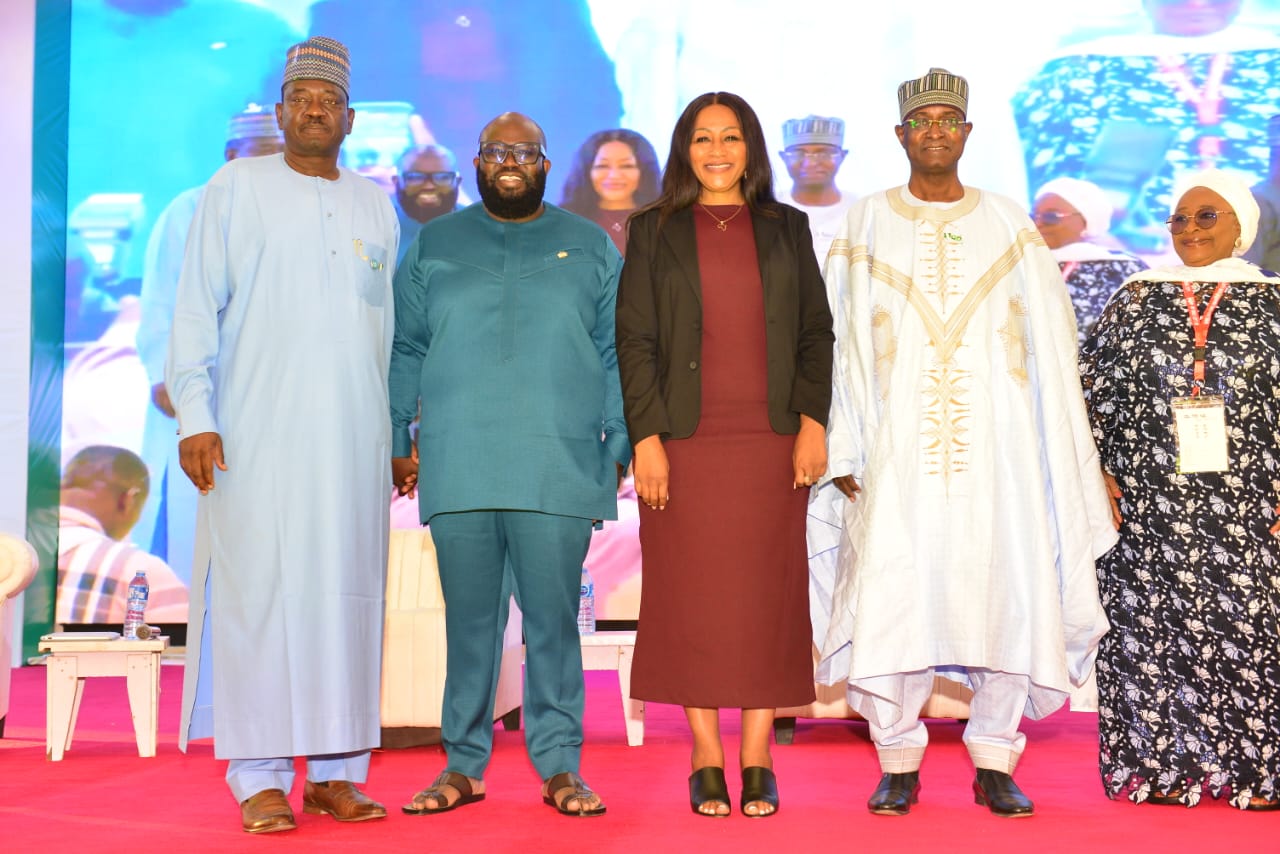


A leading food security scholar, Professor Demo Kalla, has called for a sweeping redefinition of Nigeria’s food system, insisting that the country must begin to treat food security not as a development goal, but as a matter of national survival and security.
Speaking at the Nigerian Institute of Public Relations (NIPR) Week 2026, Kalla warned that Nigeria’s growing exposure to hunger, inflation, climate shocks, and insecurity reflects deeper structural weaknesses in governance and policy execution.
He argued that food insecurity is no longer just an agricultural issue, but a political and security challenge shaped by how resources are managed, how policies are implemented, and how inclusive economic systems are.
“Food insecurity, poverty, and conflict are not separate problems—they are symptoms of how a nation governs access to resources and opportunity,” he said.
Kalla, who heads the TETFund Centre of Excellence on Food Security at Abubakar Tafawa Balewa University, stressed the need for Nigeria to move beyond food security rhetoric toward what he described as “food sovereignty”—a system where nations control what they produce, consume, and distribute.
From Agriculture to National Security
He warned that global crises such as the COVID-19 pandemic and the Russia–Ukraine war have exposed the fragility of food-import dependent economies, urging Nigeria to prioritise domestic production and reduce external dependence.
“Nigeria cannot afford to treat food as something that comes from outside. Food must be treated as a strategic national asset,” he said.
While acknowledging the existence of agricultural policies, Kalla said Nigeria’s core challenge remains execution, not design.
He referenced continental commitments that recommend allocating at least 10% of national budgets to agriculture, noting that implementation gaps continue to limit impact.
According to him, “the issue is not lack of policy, but lack of consistent political will to implement what already exists.”
Security and Youth at the Centre
Kalla also linked rising insecurity to rural neglect, unemployment, and weak agricultural systems, warning that failure to activate the rural economy could deepen instability.
He called for urgent investment in agriculture-driven job creation, especially for young people, across the entire value chain—from production to processing and distribution.
Addressing communication professionals at the forum, Kalla emphasised the role of public relations practitioners in shaping national priorities and public understanding.
“In shaping national narratives, you influence national decisions,” he said, urging stronger communication strategies to reposition agriculture as a viable economic frontier.
Kalla concluded that food security is ultimately a test of governance capacity and political responsibility.
“At the heart of food security is leadership—whether it can translate vision into real nourishment for citizens,” he said.
His remarks resonated strongly at the conference, where policymakers and stakeholders renewed calls for stronger coordination between communication, agriculture, and national development planning.
The message from Kaduna was clear: Nigeria’s food crisis is no longer just about farming—it is about power, policy direction, and national survival.