
A former presidential candidate of the Social Democratic Party (SDP) has initiated a fresh push for a national political reset, rallying key regional power blocs toward a shared ideological framework aimed at redefining governance in Nigeria.
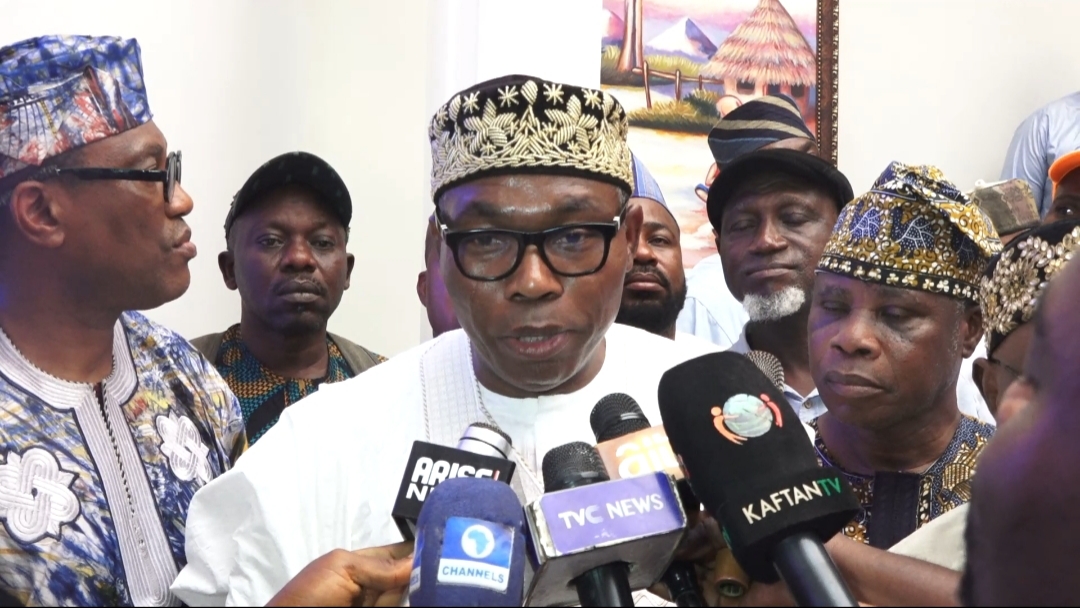
The move came during a strategic meeting in Osun State with influential groups including Afenifere, the Northern Elders Forum (NEF), and the Arewa Consultative Forum (ACF), signaling what observers see as an attempt to rebuild cross-regional political consensus ahead of future elections.
At the heart of the engagement is a call to move Nigerian politics away from personality-driven competition toward a values-based system rooted in social democracy and national development.
“We want to achieve the greatest good for the greatest number of Nigerians, through a government that is the direct opposite of what we have experienced in recent times,” he said.
The SDP figure framed the initiative as more than a party-driven effort, describing it as a convergence of historic political ideals designed to restore clarity of purpose to governance. He argued that Nigeria’s political direction has drifted since the collapse of its early ideological foundations.
“What we have practiced since then are politics influenced by military rule or post-military habits.”
By invoking the legacy of the Lancaster House constitutional talks, he stressed that Nigeria’s founding leaders built consensus across regions—North, East, West, and South—around shared national objectives, a model he believes must be revived.
Unlike previous reform calls, the current effort seeks to align major socio-political blocs around a unified philosophy rather than fragmented political interests. The inclusion of diverse regional voices at the Osun meeting reflects an attempt to rebuild trust and foster a common direction in a deeply divided political landscape.
He pointed to the ideological clarity that once defined parties such as the Action Group, Unity Party of Nigeria (UPN), Northern Elements Progressive Union (NEPU), Northern People’s Congress (NPC), and the National Council of Nigeria and the Cameroons (NCNC), noting that they were driven by policy direction rather than electoral opportunism.
“Governance—good governance—is the purpose of politics.”
He warned that the absence of ideology has turned politics into a transactional enterprise, where power is pursued for personal gain rather than public service.
“Politics is not for selfish leaders or transactional politicians who treat it like a casino.”
Analysts say the engagement could mark the early stages of a broader political realignment, particularly if it evolves into a sustained platform for collaboration among regional stakeholders. With Nigeria facing economic and governance challenges, calls for an ideological reset are gaining traction across political and civil society circles.
For the SDP chieftain, however, the objective is clear: to rebuild a political culture where leadership is guided by principle, accountability, and a clearly defined social contract between the government and the people.
As consultations continue, the Osun meeting may signal the beginning of a wider movement to reshape Nigeria’s political narrative—from one driven by power struggles to one anchored on purpose and national development.