
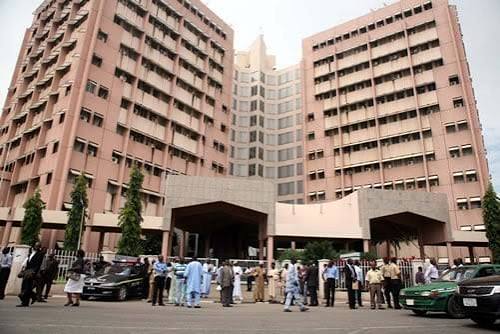

At 5:00 a.m., in a modest rented flat in Abuja, a Level 13 officer in one of Nigeria’s core ministries rises before dawn. Not because he has slept enough, but because sleep has become a luxury rationed by worry. He irons the same carefully preserved shirt, polished shoes standing like weary soldiers by the door. He is an engineer by training, a patriot by conviction, and a civil servant by fate.
He once believed public service was a noble calling — a covenant with the nation. Today, that covenant feels like a poem written in disappearing ink.
When ₦35,000 Was Heavy, Yet Lighter Than Now
Before the minimum wage was increased from ₦35,000 to ₦70,000, life was not comfortable — but it was manageable. The ₦35,000 minimum wage translated to roughly $88 monthly — about $3 per day when the naira stood below ₦400 to $1.
It was not prosperity, but it kept body and soul in reluctant partnership.

Then came the celebrated increment to ₦70,000. On paper, it was a trumpet blast of relief. In reality, it was a candle in a hurricane. As the naira spiralled to nearly ₦1,300 to $1, the daily earning shrank to roughly $1.6 per day — not per hour, but per day.
The arithmetic of survival turned cruel.
The wage rose arithmetically; inflation galloped geometrically.
Prices in the market now stand like mountains mocking the climber without ropes. Rice, bread, transport fares — each has grown wings.
Yes, there is gratitude for the swift economic interventions of President Bola Ahmed Tinubu (PBAT), whose reforms aim to stabilise the economy and tame inflation. But for the civil servant standing at the market stall, reform is still theory; hunger is immediate.
Can a man earning this wage eat comfortably twice a day?
And what of his spouse? His children?
Housing: A Salary That Cannot Rent Shelter
An annual salary of a Salary Grade Level 13 officer cannot conveniently pay annual rent in Lugbe, Kubwa, or other modest districts on the outskirts of Abuja. The houses once provided within the city centre — legacies of the military era — were monetised and sold during democratic reforms. The civil servant was left to search for shelter in the margins of the capital he serves.
At closing hour, colleagues in revenue-generating agencies cross two traffic lights and disappear into comfortable neighbourhoods. The core civil servant continues beyond the streetlights — towards Mararaba, Zuba/Suleja, or Kuje — where traffic holds him hostage and darkness welcomes him home. Electricity is a visitor, not a resident. Bad roads are daily chiropractors. Environmental pollution is an uninvited physician prescribing illness.
The Fuel Irony
Some civil servants who own cars have turned them into unofficial staff buses. They pick colleagues along the way — not purely out of charity, but necessity. One hundred litres of fuel now costs more than the minimum wage itself.
Thus, the officer becomes a public servant twice over:
By profession in the ministry,
By survival on the highway.
Education: The Marketplace of Learning
For those who desire an average standard of education for their children, public schools are no longer a refuge. Private schools charge for nearly everything — academic and non-academic alike. Textbooks are no longer reused; new editions arrive like annual tax demands. Uniforms are designated for each weekday, and parents must procure them without protest.
The civil servant now kneels at the altar of school proprietors.
Healthcare: Waiting for Approval While Illness Advances
The National Health Insurance Scheme — now under National Health Insurance Scheme — was a hopeful innovation. But accessing care can feel like chasing a mirage.
At the hospital, over one hundred cash-paying patients may be attended to while the insured civil servant waits for authorisation codes from his HMO. Time stretches. Illness does not.
Ironically, the health workers attending to him are fellow civil servants — equally strained, equally human.
Retirement: When Service Ends but Struggle Deepens
After 35 years of service or at age 60 (whichever comes first), another chapter begins — often more frightening than the first.
Nigeria’s Contributory Pension Scheme, regulated by the National Pension Commission (PenCom) and managed by private Pension Fund Administrators (PFAs), promises structured retirement.
In principle, it is modern. In practice, it can be merciless.
A retired Level 10 officer, aged 60, reportedly received a lump sum of ₦1.5 million and a monthly pension of ₦15,000.
₦15,000 — at an age when medicines replace meals as priority.
Can ₦15,000 sustain a soul for one month?
Some retirees allege that payments cease when their Retirement Savings Accounts are exhausted — sometimes around ten years post-retirement. It raises painful questions about longevity assumptions and adequacy of pension design.
Meanwhile, the architects of reform — Permanent Secretaries and Chief Executives of MDAs — reportedly opted for different retirement structures. The ladder was lifted after they climbed.
Unionism Without Voice
Yes, labour unions exist — the Nigeria Labour Congress (NLC) and the Trade Union Congress of Nigeria (TUC). They represent Nigerian workers in principle. But many civil servants whisper that union leadership has become entangled with politics. Representation feels distant. Independence feels negotiated.
The very leaders expected to challenge pension regulation sometimes sit within the regulatory architecture.
Who then speaks for the core civil servant?
The Consolidated Illusion
Many Nigerians believe the ₦70,000 minimum wage excludes allowances. It does not. It is “consolidated” — all-inclusive.
The phrase sounds neat.
Its consequences are untidy.
The NNPC Tower Contrast
In the same building — the iconic NNPC Towers — two professionals may share the same academic qualifications: engineer and engineer, accountant and accountant.
One works in the Ministry.
The other works in Nigerian National Petroleum Company Limited or its subsidiary.
Both serve the same government.
At 4:00 p.m., one stands by the roadside negotiating with commercial drivers.
The other drives past in an executive vehicle.
Their difference is not competence.
It is structure.
It is policy.
It is fate written in payroll formats.
A Nation’s Backbone Bending
The core civil servant is like Atlas — carrying the weight of governance quietly, invisibly. Files move because he moves them. Policies breathe because he drafts them. The machinery of state runs because he oils it with patience.
Yet he hangs, as it were, from the rooftop of survival — fingers slipping, dignity tested.
Who will rescue the backbone of governance from the shackle of institutionalised poverty?
The tragedy is not merely economic.
It is psychological.
It is generational.
It is national.
For when a nation underpays its planners, it mortgages its future.
And still, tomorrow at 5:00 a.m., he will rise again — polish his shoes, straighten his tie, and report for duty.
Because beyond the arithmetic of hardship lies a stubborn belief:
That Nigeria, someday, will remember those who kept her engine running when the fuel of fairness ran low.
COPIED