

By Friday Idachaba, Lokoja
The Vice-Chancellor of Prince Abubakar Audu University (PAAU), Anyigba, Prof. Salisu Ogbo Usman, has defended the institution’s school fee review, insisting that the adjustment followed a Kogi State Government directive to harmonise charges across its three state-owned universities.
Usman disclosed that 4,032 students of the university had secured approval for education loans totalling N536.66 million under the Nigerian Education Loan Fund (NELFUND), as the management faced questions over alleged arbitrary increases in school fees.

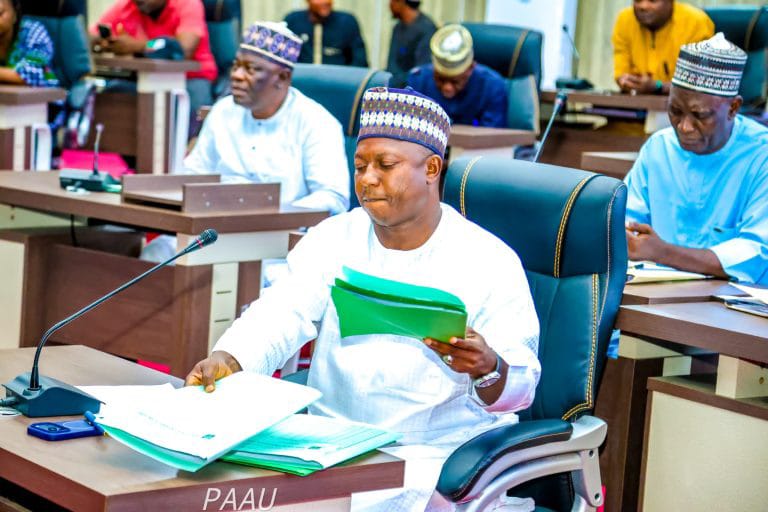
He made the clarification during an investigative hearing organised by the Kogi State House of Assembly following a petition alleging arbitrary fee increases by the managements of PAAU and Kogi State Polytechnic, Lokoja.
The Vice-Chancellor said the review was not an arbitrary decision but part of a unified fee structure approved by the state government in 2024.
He maintained that PAAU’s charges remained comparatively lower than those of some neighbouring states, despite concerns raised over the cost of university education.
Usman explained that much of the controversy centred on medical and other health-related programmes, including Medicine and Surgery (MBBS), Nursing and Medical Laboratory Science, which require substantial investment, particularly during clinical training.
He commended the immediate past Vice-Chancellor, Prof. Marietu Ohunene Tenuche, for restoring medical programmes that had collapsed in 2012.
He also praised former Governor Yahaya Bello for supporting efforts to resolve the challenges facing stranded medical students and Governor Ahmed Usman Ododo for sustaining medical education in the state.
On student financing, Usman said 4,032 students had secured approval for NELFUND loans worth N536,662,680, with the funds expected to be credited to their respective accounts for school fee payments.
He added that another 600 students had submitted applications, expressing optimism that the number of beneficiaries would increase.

The Vice-Chancellor urged students to take advantage of the scheme, which also provides eligible beneficiaries with a monthly upkeep allowance of N20,000.
He explained that loan repayment begins two years after graduation, subject to the beneficiary securing gainful employment.
Earlier, the Commissioner for Education, Mr Wemi Jones, said the state government had established a process for reviewing fees in its tertiary institutions to reflect prevailing economic realities while considering the interests of parents and students.
Jones disclosed that the government issued the fee review directive to PAAU in 2024, but implementation was initially inconsistent across departments and programmes.
He said the university management subsequently moved to enforce the approved structure fully to ensure compliance with government policy.
The commissioner, however, dismissed claims that Kogi State Polytechnic had increased its fees, saying his findings indicated that the institution’s Rector had instead reduced accommodation charges by N5,000.
Chairman of the House Committee on Education, Hon. Idris Aliyu Maikudi, representing Kogi-Koton-Karfe State Constituency, said the investigation followed a petition received by the Assembly.
He explained that the Committees on Education and Public Petitions were mandated to examine the allegations and compare the institutions’ charges with those of similar institutions in neighbouring states.
Contributing, Hon. Bode Ogunmola, representing Ogori-Magongo State Constituency, called for sustained government investment in medical education, citing the shortage of doctors and other health professionals in the state.
He lamented that the only general hospital in his constituency had operated for years without a doctor despite efforts to secure one.
Another committee member, Hon. Jibril Onoru-Oiza Abu, representing Ajaokuta State Constituency, expressed concern over the absence of the petitioner or petitioners at the hearing.
He questioned how the Assembly could properly assess the allegations if those who raised them were unwilling to appear and substantiate their claims.