
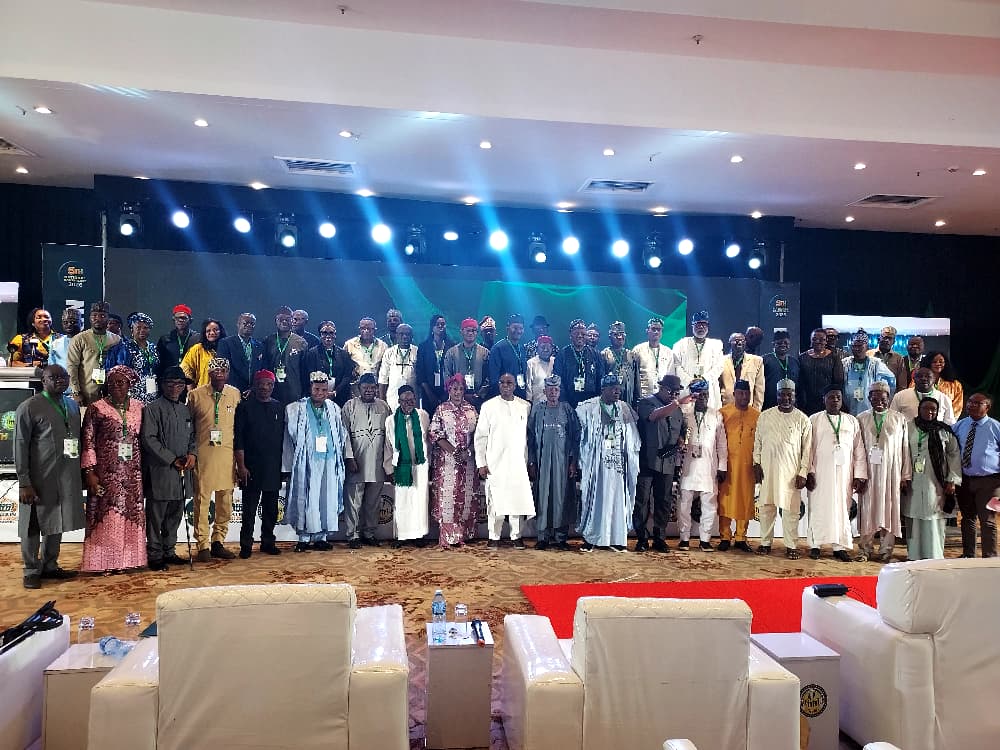


Nigeria’s former deputy governors have challenged the exclusion of women, youths and marginalized minorities from political leadership, calling for reserved positions and reforms to make government more representative and accountable.
The Forum of Former Deputy Governors of Nigeria (FFDGN) said Nigeria’s nation-building efforts would remain weakened unless citizens had greater access to decision-making and public officials became more responsive to the people.
The forum made the call in a 16-point communiqué issued after its fifth national conference, held at the Abuja Continental Hotel from October 20 to 21.

It urged the federal, state and local governments to introduce gender quotas and other measures guaranteeing greater representation for underrepresented groups in executive and legislative offices.
The conference was chaired by former Katsina State Governor Aminu Bello Masari, with former Delta State Governor Ifeanyi Okowa as co-chairman. It was held under the theme, “Rethinking Nation-Building: Bridging the Leadership-Citizen Disconnect Through Orientation, Attitude, Character, Culture and Tradition for Sustainable Development.”
Beyond political inclusion, the former deputy governors called for an overhaul of public service appointments, insisting that competence and character should take precedence in the selection of officials.
They also urged the government to improve public communication by requiring officials to explain policies, achievements and shortcomings honestly.
To bring governance closer to communities, the forum proposed formal ward-level consultative assemblies where residents could regularly question public officeholders and raise concerns about development priorities and service delivery.
It further recommended that government agencies publish service standards, including clear timelines for processing requests and accessible channels for complaints.

The forum also called for constitutional provisions defining the role of traditional rulers in Nigeria’s governance structure.
On the economy, it urged the Federal Government to harness the country’s youthful population, agricultural resources, solid minerals and technological potential to accelerate development.
It called for the completion of the Ajaokuta Steel Complex, greater support for young innovators and a regulatory framework for artificial intelligence. It also advocated sustained investment in security agencies.
The communiqué identified teachers’ welfare as another priority, urging governments to improve remuneration in recognition of their contribution to national development.
The former deputy governors also called for stronger family and community ties, preservation of beneficial cultural traditions and greater mutual respect between leaders and citizens.
They recommended wider public education on Chapter Two of the 1999 Constitution, which outlines the Fundamental Objectives and Directive Principles of State Policy, to improve civic awareness and patriotism.
The forum further urged governments to establish programmes that would help former convicts reintegrate into society.
The communiqué was signed by National Chairman Chris Alozie Akomas, Deputy National Chairman (South) Hazeem Gbolarumi and Deputy National Chairman (North) Mukhtar Ahmed Anka.
The recommendations place political inclusion and public accountability at the centre of the forum’s proposed reforms, alongside measures to strengthen grassroots participation, public services and economic development.