
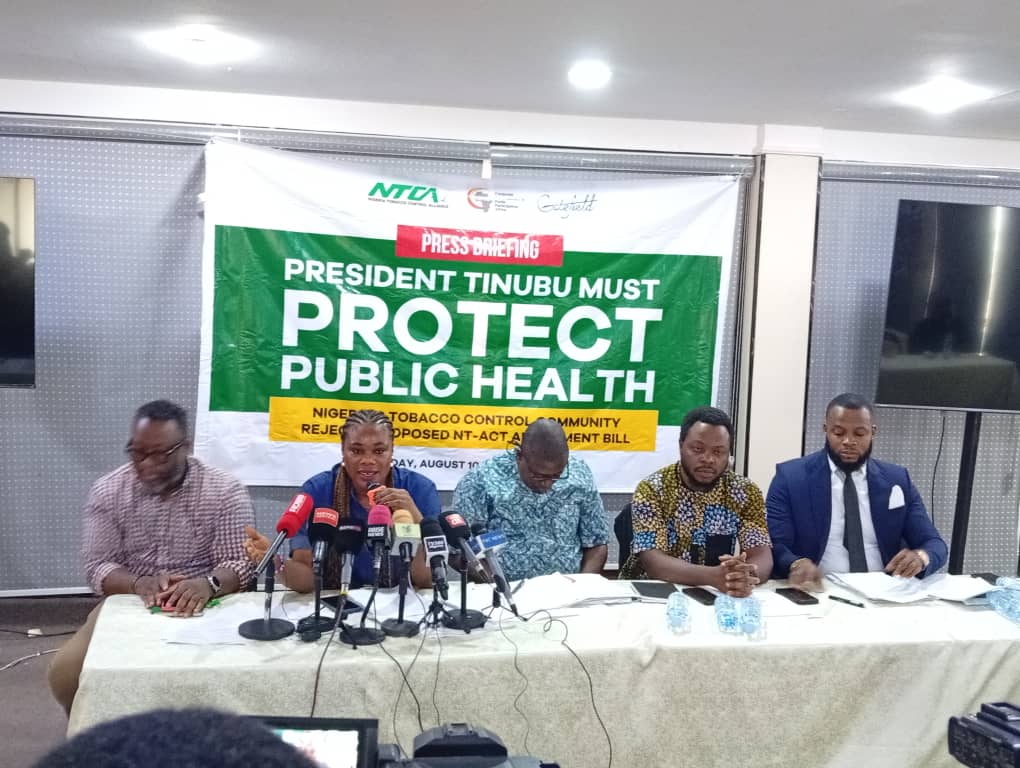

Public health advocates have raised the alarm over proposed amendments to Nigeria’s National Tobacco Control Act, alleging that the bill could weaken existing safeguards and expose more Nigerians, particularly children, to tobacco and nicotine products.
In-Country Coordinator, Campaign for Tobacco-Free Kids, Michael Olaniyan, described the proposed amendment as a reversal of Nigeria’s tobacco-control gains, accusing its promoters of introducing an industry-friendly “harm reduction” objective.
“Harm reduction is not harm reduction. What we want is to eliminate, not to reduce,” Olaniyan said.
He alleged that the proposed 34-page amendment, reportedly expanded from an earlier four-page document, could reopen tobacco advertising and online sales while creating loopholes around indoor use, health warnings and emerging nicotine products.
Olaniyan particularly criticised provisions that could permit online tobacco sales subject to age verification, arguing that simple online declarations of adulthood would not effectively prevent minors from purchasing such products.
He also faulted an alleged exemption for “sampling” tobacco products indoors, warning that the provision could undermine restrictions on smoking and nicotine use in enclosed public spaces.
The activist further opposed replacing minimum health-warning requirements with a maximum threshold, arguing that such a provision could allow manufacturers to drastically reduce warnings.
He also raised concerns over provisions allegedly removing penalties for certain sales violations and granting the Health Minister broad discretion to exempt products from the tobacco-control law.
Another major concern, he said, was the definition of nicotine products, which he alleged could create a loophole for synthetic nicotine to escape regulation.
Olaniyan warned that ambiguous provisions could be exploited by tobacco companies, while adult-only publications and events could provide avenues for young people to encounter tobacco promotion.
He urged the Federal Government and Ministry of Health to reject any provision capable of weakening public-health protections, warning that Nigeria’s healthcare system could struggle with the consequences of increased tobacco and nicotine use.
“This is more than worrisome,” Olaniyan said. “When we say that it is a disaster for public health, we are not exaggerating.”