
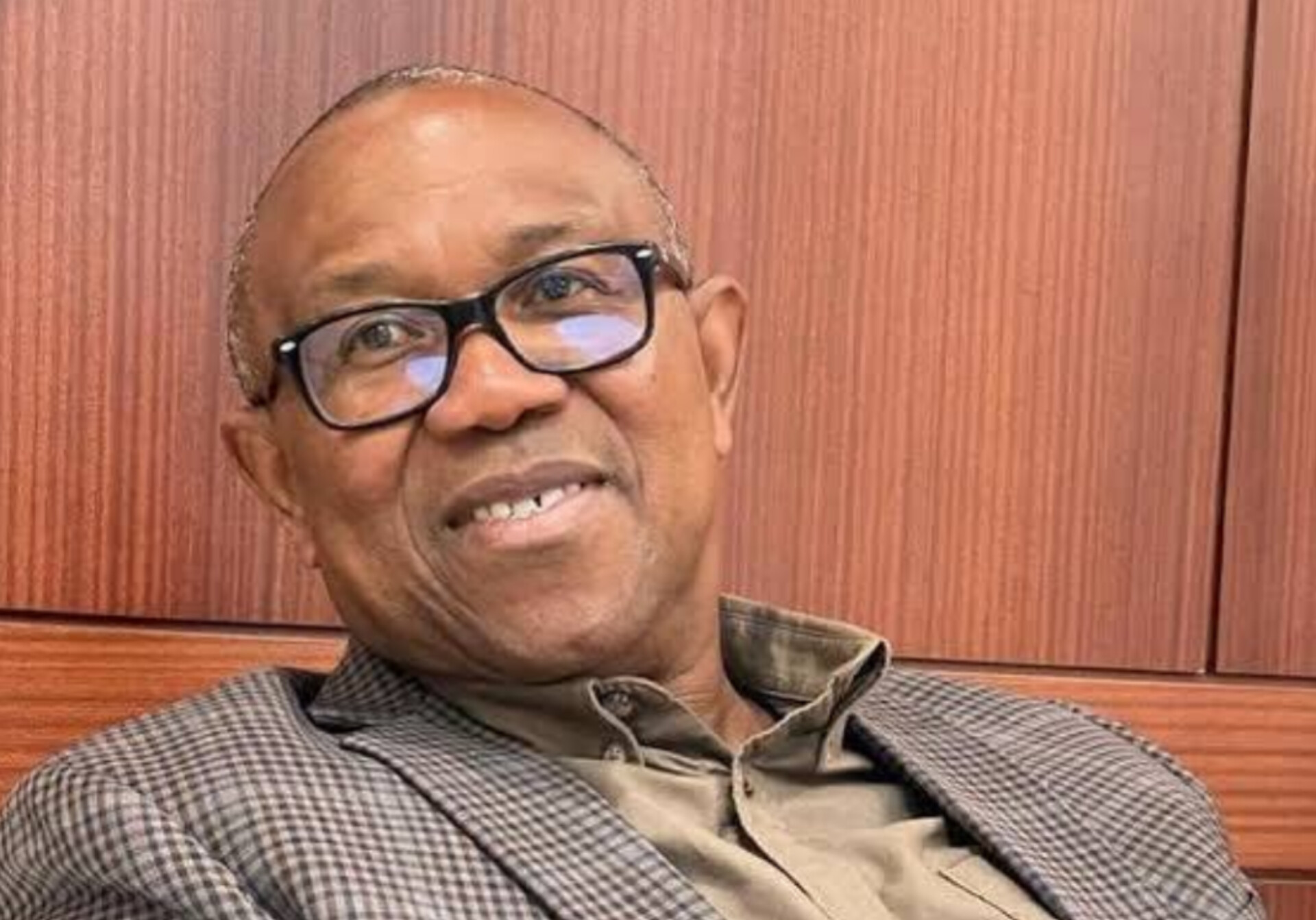
 Peter Obi

Former Labour Party (LP) presidential candidate, Peter Obi, has joined the national conversation over allegations involving Farouk Ahmed, CEO of the Nigerian Midstream and Downstream Petroleum Regulatory Authority (NMDPRA), casting the issue as a matter of public ethics, societal priorities, and the broader responsibilities of Nigeria’s elite.
In a statement posted on his verified X (formerly Twitter) handle on Tuesday, Obi said the issue was not merely about legality or personal choice, but about moral responsibility in a country grappling with deep inequality and one of the world’s highest numbers of out-of-school children.
Obi referenced reports alleging that about $5 million was spent on the foreign education of four children, noting that while every parent has the right to seek the best education for their children, such figures inevitably provoke public concern in a nation where millions lack access to basic schooling.
“If just 2,400 privileged individuals in Nigeria each committed $5 million to education at home, the country would mobilise about $12 billion, or roughly ₦18 trillion,” Obi wrote. “That amount alone could fundamentally change Nigeria’s education and human development outcomes.”
The former Anambra State governor argued that ₦18 trillion exceeds the annual budgets of several states combined and rivals federal capital expenditure in some fiscal years. According to him, if prudently structured and transparently managed, such resources could almost eliminate Nigeria’s out-of-school children crisis.
Using a conservative model, Obi explained that the funds could deliver up to 60,000 school blocks nationwide, with each block educating about 240 pupils annually—translating to roughly 14.4 million children in school every year. He added that the initiative would also generate more than one million teaching jobs, providing stable employment anchored in service delivery rather than patronage.
Beyond education, Obi noted that the wider benefits would include reduced crime, stronger civic participation, higher productivity and less dependence on foreign education and healthcare systems.
“This is not charity,” he stated. “It is nation-building through foresight, discipline and moral clarity.”
Obi was careful to note that the controversy surrounding Farouk Ahmed should not be reduced to personal attacks or legal conclusions, stressing that courts remain the proper forum for determining legality. Instead, he said the public conversation should focus on ethical leadership and the burden of example that comes with public office.
“In societies with weak institutions and extreme inequality, public office carries moral weight,” Obi wrote. “The higher the office, the heavier the responsibility to lead by example.”
He concluded by arguing that Nigeria’s real tragedy is not that some citizens can afford elite education abroad, but that millions of children at home cannot access basic schooling.
“Until we confront this imbalance—beyond laws, and at the level of conscience—these controversies will continue,” Obi said, adding that the debate ultimately reflects a national reckoning over the kind of elite Nigeria wants and the kind of country it hopes to build.
The Farouk Ahmed allegations have continued to generate public debate, with calls from various quarters for transparency and accountability, even as no formal findings have yet been announced by relevant authorities.