
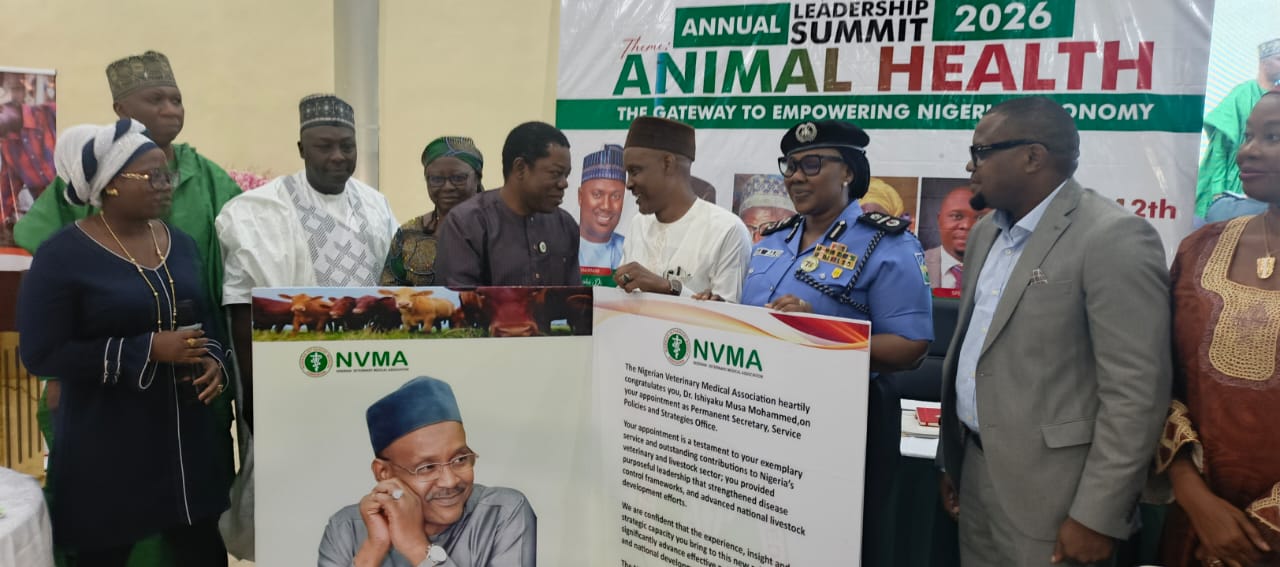

As Nigeria seeks new avenues for economic growth and food security, the country’s veterinary professionals are positioning themselves as key catalysts for change. On Tuesday, veterinarians from across the nation convened in Abuja for the 2026 Veterinary Leadership Summit, a high-level forum aimed at addressing long-standing challenges in livestock production and unlocking the sector’s untapped potential.
The two-day summit, organized by the Nigerian Veterinary Medical Association (NVMA) in partnership with GALVmed, comes at a critical juncture. Rising climate pressures, animal disease outbreaks, weak veterinary service delivery, and insecurity continue to undermine livestock productivity, threatening Nigeria’s ability to meet domestic protein needs and expand agricultural exports.
Opening the summit, Permanent Secretary of Service Policies and Strategies in the Office of the Head of the Civil Service, Ishiyaku Mohammed, stressed that veterinarians are at the frontline of national efforts to strengthen food security, create jobs, and drive wealth generation.
“The responsibility rests squarely on your shoulders,” Mohammed said. “No livestock development initiative can succeed without science-driven interventions and strong veterinary leadership.” He emphasized that the Tinubu administration’s creation of a dedicated Ministry of Livestock Development reflects the government’s recognition of emerging threats—from desertification and flooding to rising temperatures and intensified competition over natural resources—that are transforming production systems.
Mohammed disclosed ambitious targets for the sector, noting the government aims to increase livestock’s contribution to Nigeria’s economy from $32 billion to $74 billion by 2035. However, he cautioned that this growth will remain unattainable unless preventable diseases are controlled and production systems are modernized.
NVMA President Dr. Moses Arokoyo highlighted the summit as an opportunity to reposition the veterinary profession as a strategic player in national development. “This forum is not just about professional advancement,” he said. “It’s about ensuring that veterinary expertise drives tangible outcomes in food security, investment, and economic diversification.” Dr. Arokoyo also stressed inclusivity, empowering women and young professionals to actively contribute to shaping Nigeria’s livestock future.
Despite its potential, the livestock sub-sector faces systemic challenges. Disease outbreaks, climate stress, insecurity, weak service delivery, and unequal access to veterinary care continue to limit productivity and investor confidence. Stakeholders at the summit emphasized that overcoming these obstacles requires collective action from veterinarians, policymakers, and private sector partners.
Representing the Minister of State for Agriculture and Food Security, Dr. Lami Lombin commended Dr. Arokoyo’s leadership and noted efforts to harmonize the Veterinary Surgeons Act with the regulation of para-animal health professionals through proposed legislation. “Unity and collaboration are essential,” Dr. Lombin said. “Veterinarians must support one another and uphold the integrity of the profession during this period of transformative reform.”
International partners echoed the call for collaboration. GALVmed’s Thembinkosi Ramuthivheli, Business Development and Engagement Manager, and Edith Moroti, Associate Director for Outreach and Partnerships, stressed that reducing Nigeria’s animal disease burden would not only secure livelihoods but also attract investment and strengthen the country’s role in global livestock markets.
Professor Matthew Adamu, President of the Veterinary Council of Nigeria, endorsed Dr. Arokoyo’s continued leadership, citing the past two years as transformative for the profession. He urged state chapters to deepen engagement with national leadership to consolidate gains and ensure that reforms translate into practical improvements in veterinary service delivery and livestock productivity.
Observers say the summit represents a shift in how Nigeria approaches livestock development—from reactive crisis management to proactive economic strategy. By placing veterinarians at the center of policy design, implementation, and oversight, the government aims to transform livestock from a vulnerable sub-sector into a resilient engine for economic growth, food security, and national resilience.
As the summit continues, expectations remain high that the deliberations will translate into concrete initiatives: modernized veterinary services, strengthened disease control systems, coordinated climate adaptation strategies, and enhanced investment opportunities. For Nigeria’s livestock sector, the message is clear: veterinarians are no longer just service providers—they are strategic partners in shaping the country’s economic future.