
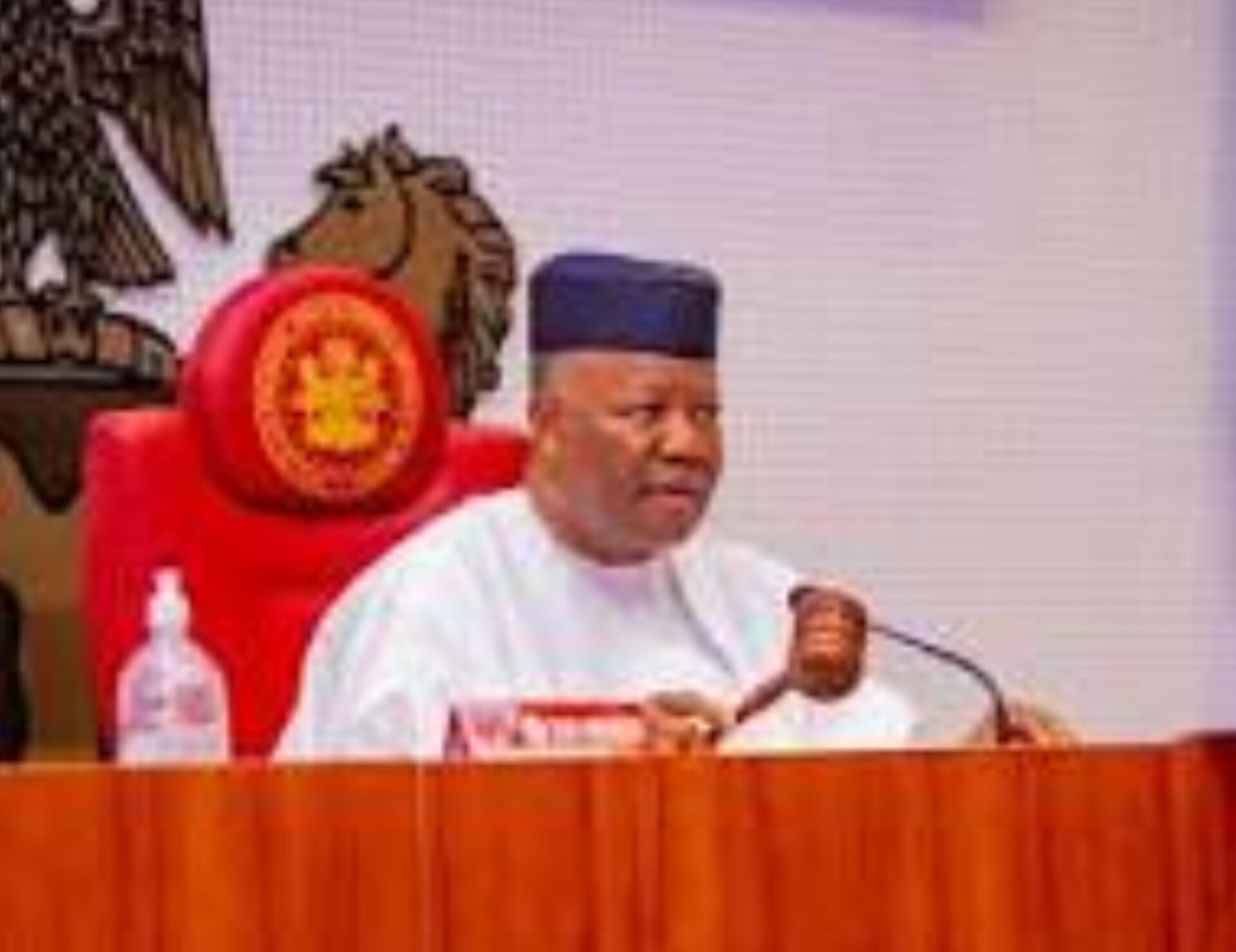

In a decisive week that underscored both urgency and ambition in Nigeria’s fiscal direction, the Senate has approved President Bola Ahmed Tinubu’s sweeping financial proposals—endorsing a ₦68.3 trillion 2026 budget, accommodating an additional ₦9 trillion expansion, and granting approval for fresh external borrowing of up to $6 billion. The approvals, taken together, mark one of the most expansive fiscal frameworks in the nation’s history, signalling a government leaning heavily on a mix of revenue reforms and strategic borrowing to drive its economic agenda.
When lawmakers reconvened in Abuja after a brief Sallah recess, they returned to a packed legislative agenda that demanded swift, almost immediate attention. Waiting for them were critical requests from the presidency—proposals that would not only shape the 2026 fiscal year but also determine whether Nigeria could sustain ongoing infrastructure projects without disruption. At the centre of it all was a carefully constructed financing plan, designed to navigate the country through mounting fiscal pressures while still pushing forward an ambitious development drive.
The Senate wasted no time engaging the requests. Leading the approvals was a $5 billion external financing arrangement structured as a Total Return Swap (TRS), to be executed with First Abu Dhabi Bank. This innovative financial instrument is designed to provide the government with access to liquidity in tranches, easing pressure on Nigeria’s cash flow while managing exposure to its growing debt profile. Rather than a lump-sum disbursement, the phased approach ensures that funds are released gradually, aligning with project milestones and budgetary needs.
According to the proposals presented, the TRS facility will support multiple priorities, including budget implementation, infrastructure development, and the refinancing of existing obligations. It is also intended to provide flexibility in managing urgent financial commitments that may arise during the fiscal year. The arrangement will be backed by naira-denominated Federal Government securities, alongside dollar-based margin requirements under agreed conditions, creating a structured but complex financial framework.
President Tinubu, in forwarding the request, emphasised that the borrowing aligns with the provisions of the Debt Management Office (Establishment) Act, 2003, which requires legislative approval for external loans. He also acknowledged concerns about Nigeria’s rising debt burden, which stood at approximately $110.3 billion as of December 2025. With debt servicing projected to reach ₦20.5 trillion in 2026, the administration is walking a tightrope between funding development and maintaining fiscal sustainability.
Alongside the TRS facility, the Senate also approved a separate $1 billion loan specifically targeted at the rehabilitation of the Apapa and Tin Can Island Port complexes in Lagos—two of Nigeria’s most critical trade gateways. The loan is to be arranged through Citibank London and backed by UK Export Finance, forming part of the benefits derived from President Tinubu’s recent state visit to the United Kingdom.
The port rehabilitation project represents a strategic intervention in Nigeria’s maritime infrastructure, which has long suffered from congestion, inefficiencies, and structural decay. These challenges have not only slowed cargo movement but have also contributed to the diversion of trade to neighbouring countries, particularly Cotonou in Benin Republic, undermining Nigeria’s competitiveness as a regional trade hub.
Under the approved framework, $429.7 million is allocated to the Lagos Port Complex, while $571.1 million is designated for the Tin Can Island Port. The project will be implemented under an Engineering, Procurement, Construction and Finance (EPC+F) model, with a repayment tenor of up to 14 years and a drawdown period of 48 months. Lawmakers described the intervention as essential to modernising Nigeria’s port infrastructure and aligning it with global standards.
However, the approvals did not come in isolation. They were part of a broader fiscal recalibration that also included urgent action to stabilise the nation’s budgetary framework. With the 2025 budget set to expire on March 31 and the 2026 budget not yet fully operational, the Senate moved to extend the validity of the capital components of the outgoing budget until June 30, 2026.
This extension proved crucial in averting what could have been a significant fiscal disruption. Without it, several ongoing capital projects risked being halted, potentially derailing infrastructure plans across the country. The extension ensures continuity, allowing government projects to proceed while the details of the new budget are fine-tuned.
By extending the capital component of the 2025 budget, the Senate effectively created a bridge between two fiscal cycles—preventing gaps in funding while maintaining momentum on critical national projects. It was a move widely seen as pragmatic, especially given the scale of Nigeria’s ongoing infrastructure commitments.
With this breathing space, the Senate turned its attention to President Tinubu’s request for an expanded 2026 budget. Following deliberations, lawmakers approved an additional ₦9 trillion, bringing the total budget size to ₦68.3 trillion—one of the largest fiscal plans in Nigeria’s history.
The increase reflects both ambition and necessity. On one hand, it signals the government’s determination to invest heavily in infrastructure and economic development. On the other, it highlights the financial realities of managing legacy obligations, funding ongoing projects, and addressing emerging national priorities.
Under the revised structure, capital expenditure has been set at ₦32.2 trillion, underscoring the administration’s commitment to infrastructure-led growth. Recurrent expenditure stands at ₦15.9 trillion, covering personnel costs and administrative functions. Debt servicing, a major concern for policymakers, also accounts for ₦15.9 trillion, reflecting the heavy burden of past borrowing. Statutory transfers, which fund constitutionally backed institutions, are allocated ₦4.7 trillion.
The additional ₦9 trillion introduced into the budget is earmarked for a range of strategic interventions. These include legacy capital obligations carried over from the 2025 fiscal cycle, as well as new funding for priority projects across multiple sectors. Among these are light rail systems in Lagos, Kano, Kaduna, and Ogun States, alongside major highway and superhighway projects designed to improve connectivity and stimulate economic activity.
The government also plans to invest in feasibility studies for major transport corridors, including the Calabar–Maiduguri Corridor and the Maiduguri–Sokoto Superhighway. These projects are part of a broader vision to integrate Nigeria’s regions through improved road and rail networks, fostering trade and reducing logistical bottlenecks.
In addition to infrastructure, the fiscal plan extends into the social and institutional sectors. The health sector is set to receive substantial funding through bilateral agreements, with allocations exceeding US$344 million. This funding is expected to support critical interventions aimed at improving healthcare delivery across the country.
The judiciary is also a key beneficiary of the budget expansion. Allocations include ₦98.5 billion for the Court of Appeal, ₦36.7 billion for the Supreme Court, and an additional ₦268.5 billion to strengthen judicial capacity. These funds are expected to support new appointments and enhance the judiciary’s readiness ahead of the 2027 general elections, ensuring institutional stability and efficiency.
To finance the expanded budget, the government has adopted a diversified revenue strategy. External borrowing is projected to contribute ₦6.163 trillion, while an increase in the oil price benchmark by $10 per barrel is expected to generate an additional ₦2.592 trillion. Meanwhile, reforms in the telecommunications sector are projected to yield significant tax revenues, with major operators such as MTN Nigeria and Airtel Nigeria expected to contribute approximately ₦874 billion in corporate income tax.
Despite these measures, concerns about debt sustainability remain a recurring theme in policy discussions. Nigeria’s debt stock, coupled with rising servicing obligations, continues to raise questions about the long-term viability of heavy borrowing. Critics argue that without strong revenue growth and efficient spending, the country risks deepening its fiscal vulnerabilities.
However, proponents of the administration’s strategy argue that the borrowing is both necessary and targeted. They point to the structured nature of the loans, the focus on infrastructure, and the emphasis on economic growth as evidence of a deliberate and forward-looking fiscal plan. The goal, they contend, is to invest now in assets that will generate long-term economic returns.
Following the reading of the requests, Senate President Godswill Akpabio referred both loan proposals to the Senate Committee on Local and Foreign Debts for urgent review. The speed of the Senate’s actions reflected a sense of urgency shared by both the executive and legislative arms of government, particularly in light of Nigeria’s pressing infrastructure needs.
Ultimately, the Senate’s decisions this week paint a picture of a nation at a crossroads—balancing between immediate fiscal realities and long-term development ambitions. The approval of the ₦68.3 trillion budget, the extension of the 2025 fiscal framework, and the endorsement of $6 billion in external financing collectively signal a government determined to push forward, even amid uncertainty.
As the 2026 fiscal year unfolds, the success of these measures will depend on execution, transparency, and economic performance. For Nigeria, the stakes are high. The decisions made in the chambers of the National Assembly will ripple far beyond Abuja, shaping the country’s economic trajectory and determining whether this bold fiscal gamble translates into tangible progress for millions of citizens.