
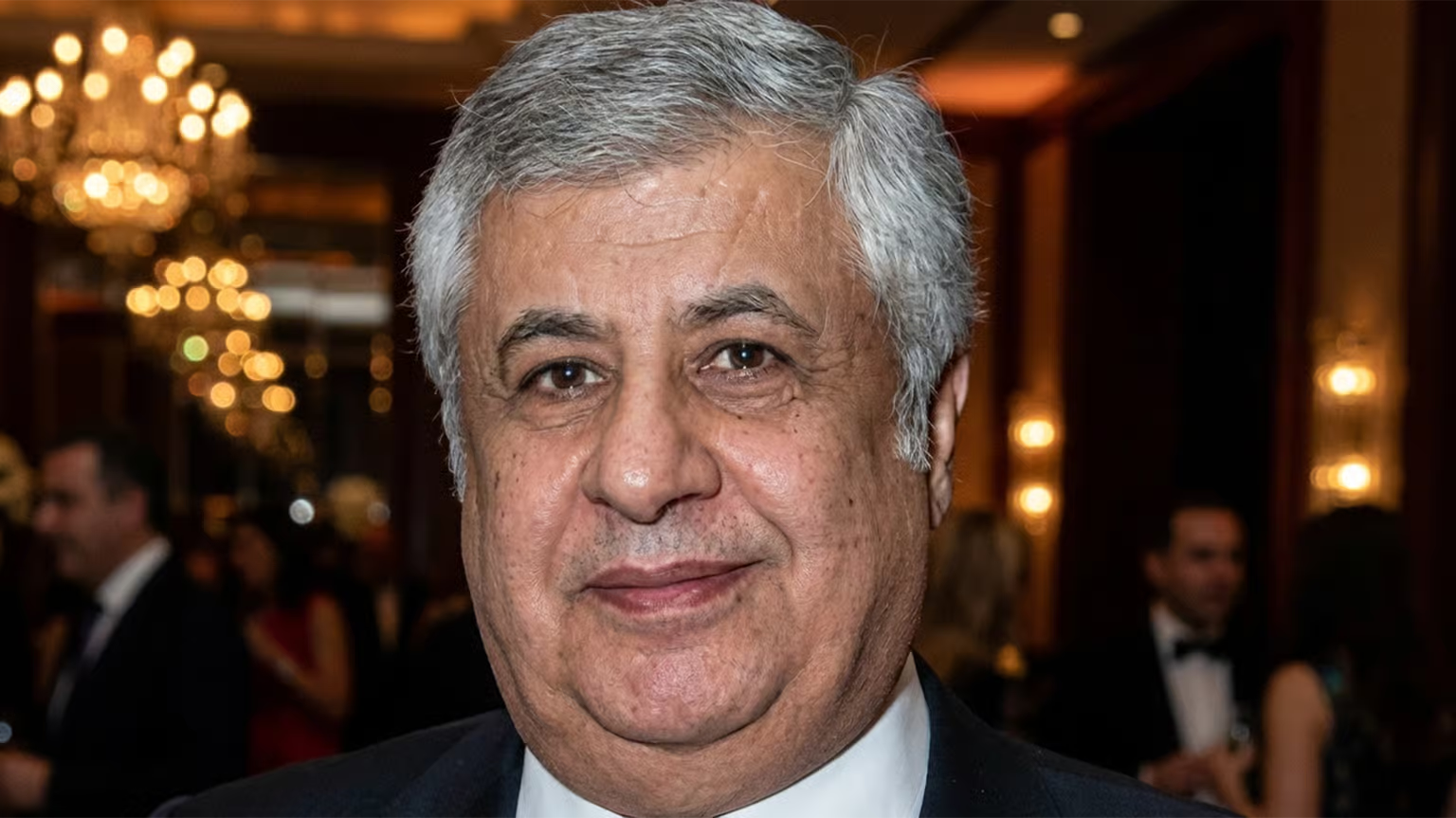

The secret conferment of the Grand Commander of the Order of the Niger (GCON) on businessman Gilbert Chagoury has reopened a broader national debate about the meaning of state honours, public trust, and the values Nigeria chooses to elevate.
Former Deputy National Publicity Secretary of the All Progressives Congress (APC), Timi Frank, raised the concerns in a statement on Tuesday, arguing that national awards should reflect integrity, sacrifice, and unambiguous service to the country.
Frank criticised President Bola Ahmed Tinubu over the decision, which was reportedly approved on January 8 to coincide with Chagoury’s 80th birthday but only became public after billionaire Femi Otedola shared a congratulatory post on social media.
According to Frank, the manner and timing of the award—without prior public disclosure—has deepened concerns about transparency and accountability in the national honours system.
He argued that bestowing one of Nigeria’s highest honours on a figure whose past has been shaped by international court proceedings and unresolved public questions risks weakening the moral authority of such recognitions.
“This is not just about one individual,” Frank said, adding that the award has implications for how Nigerians interpret the government’s commitment to accountability and anti-corruption standards.
Frank referenced documented judicial proceedings in Switzerland linked to money laundering during the regime of late General Sani Abacha, noting that Chagoury was convicted in 2000 and fined, with significant funds returned to Nigeria. He argued that such history warrants public explanation before any national honour is conferred.
Beyond allegations, Frank questioned the criteria used in selecting honourees, calling for clarity on Chagoury’s direct contributions to national development and whether similar recognition has been extended to other Nigerian business leaders.
He also cautioned against the perception of undue foreign influence in strategic sectors of the economy, warning that national honours should never appear to legitimise conflicts of interest or blur the line between public power and private capital.
Chagoury’s business empire, through the Chagoury Group, spans construction, real estate, hospitality, healthcare, telecommunications, and infrastructure, with involvement in high-profile projects such as the Lagos–Calabar coastal highway and the renovation of Tincan and Apapa Ports.
The businessman is widely known to have longstanding personal and business ties with President Tinubu, dating back to Tinubu’s tenure as Governor of Lagos State. Investigative reports have also highlighted corporate links involving members of both families, further intensifying public scrutiny of the award.
While supporters point to Chagoury’s role in Lagos development projects such as Eko Atlantic City and Banana Island, critics argue that national honours demand more than commercial success, insisting they must reflect unquestioned public service and ethical standing.
As of Tuesday, the Presidency has yet to issue an official statement explaining the rationale behind the award, leaving unanswered questions about the process, standards, and symbolism of one of Nigeria’s most prestigious national recognitions.
Analysts say the controversy underscores a deeper issue: whether national honours remain a tool for reinforcing shared values or risk becoming symbols of elite consensus detached from public sentiment.