
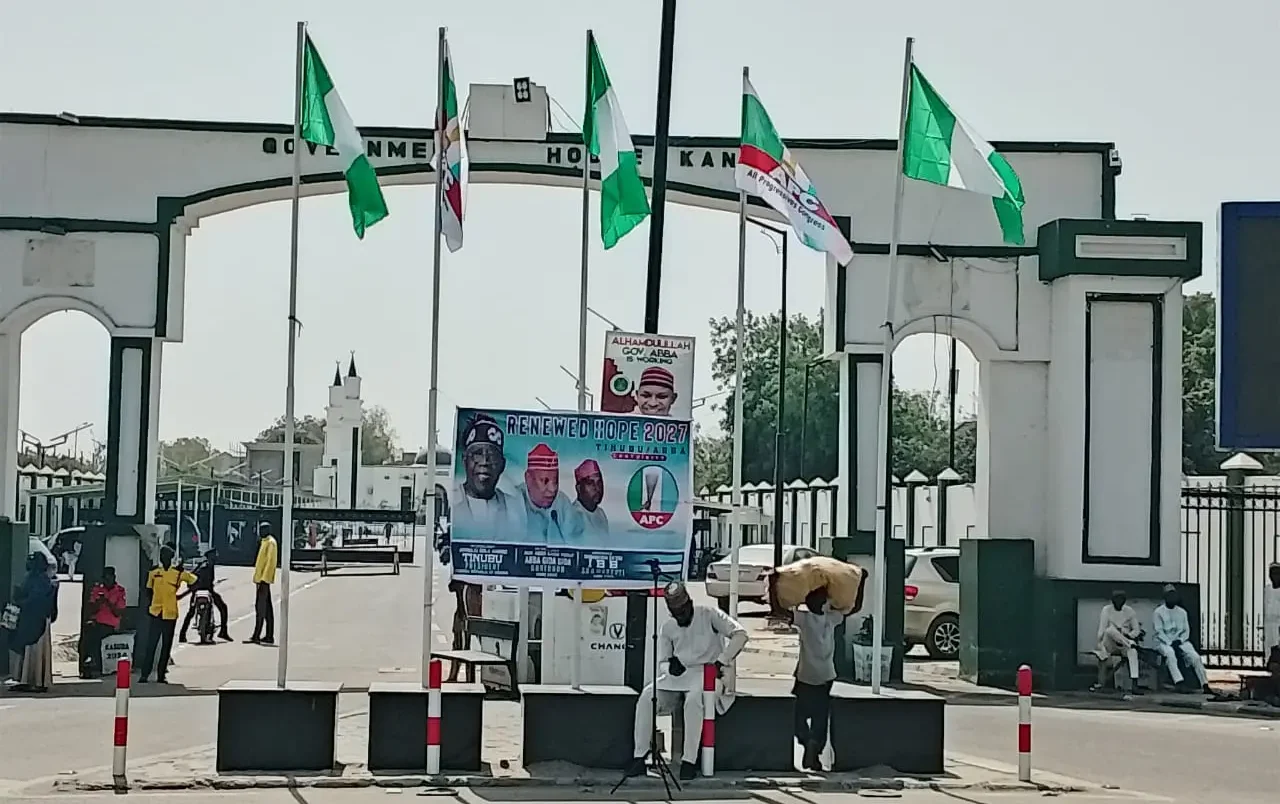

The quiet replacement of NNPP flags with APC colours at the Kano Government House is more than a cosmetic change—it is a powerful signal of shifting loyalties and the re-emergence of entrenched political alliances in one of Nigeria’s most politically strategic states.
Governor Abba Kabir Yusuf’s expected return to the APC underscores the fluid nature of party politics in Kano, where ideology often gives way to political survival, elite consensus, and access to federal influence. The Government House, once branded as the stronghold of the NNPP’s insurgent political wave, now reflects a broader realignment driven by power calculations ahead of future elections.
The return of former governor and ex-APC National Chairman, Dr Abdullahi Umar Ganduje, from London to personally receive Yusuf reinforces the narrative of reconciliation among Kano’s political elite. Once rivals, the two now appear poised to rebuild a working alliance, suggesting that old divisions are being set aside in favour of strategic unity.
Deputy Senate President Barau Jibrin’s visible presence and security engagements in the state further highlight the APC’s determination to consolidate both political and institutional control, particularly in northern Kano where insecurity has become a dominant public concern.
For the NNPP, the development represents a major symbolic setback, raising questions about the party’s staying power beyond charismatic movements and protest votes. For the APC, it signals a reclaiming of lost territory and a renewed push to dominate Kano’s political architecture through grassroots mobilisation and electronic membership registration.
As Kano’s political colours change, the episode reflects a broader national pattern where governance structures increasingly mirror federal power alignment, leaving voters to weigh whether such shifts will translate into improved governance or remain elite-driven political choreography.