

The Human Rights Writers Association of Nigeria (HURIWA) has expressed deep disappointment and outrage over the passage of the Electoral Bill 2026 by the Senate without the inclusion of a mandatory provision compelling the Independent National Electoral Commission (INEC) to transmit election results electronically in real time.
HURIWA described the Senate’s rejection of real-time electronic transmission as a major setback to Nigeria’s democratic development and a troubling signal that entrenched interests are determined to preserve an electoral system vulnerable to manipulation and abuse.
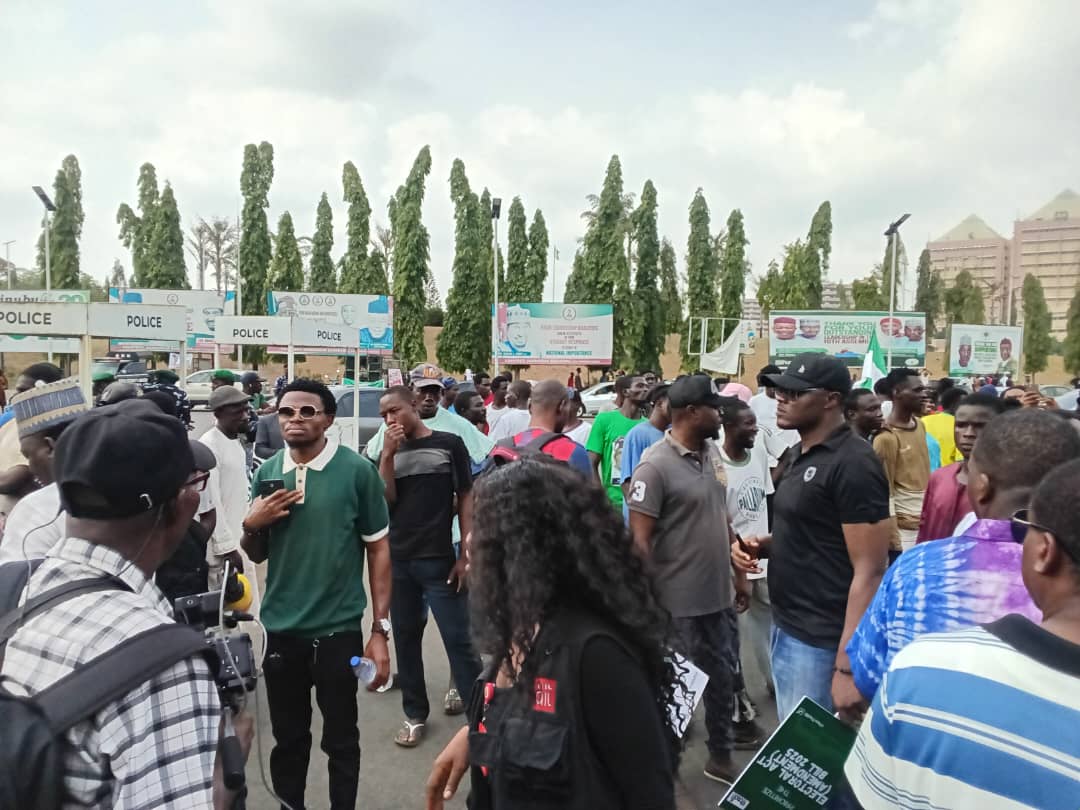
The association has therefore declared its full support for peaceful mass protests demanding the immediate reinstatement of compulsory real-time electronic transmission of results, describing the demonstrations as a legitimate exercise of constitutionally guaranteed rights to peaceful assembly and expression.
HURIWA called on the Nigeria Police Force and other security agencies to refrain from disrupting lawful protests, stressing that peaceful civic engagement is a cornerstone of democracy. Protesters were equally urged to remain calm and orderly at all times.
The group cautioned Senate President Godswill Akpabio against perceiving public opposition to the Senate’s decision as hostility toward the National Assembly. According to HURIWA, the widespread demand for real-time transmission reflects Nigerians’ collective desire for credible elections, not an attempt to intimidate lawmakers.
HURIWA condemned the Senate’s decision to retain provisions that allow election results to be transmitted only after announcement at polling units, arguing that this outdated approach has historically enabled result falsification between polling units and collation centres.
The rights organisation confirmed that civil society groups and concerned citizens are mobilising in Abuja under the “Occupy National Assembly” banner to protest the Senate’s action. It expressed concern over the heavy deployment of security forces around peaceful demonstrators, questioning why agencies tasked with combating insecurity are being used to monitor non-violent civic protests.
HURIWA issued a firm warning that under no circumstances should force be used against peaceful protesters, recalling past incidents where excessive force was deployed against civilians exercising their democratic rights.
The protest follows the Senate’s rejection of a proposed amendment to Clause 60 of the Electoral Amendment Bill, which would have required presiding officers to upload polling unit results to the INEC Result Viewing (IReV) portal in real time immediately after counting.
HURIWA recalled that since Nigeria’s return to civilian rule in 1999, elections have been persistently marred by irregularities, manipulation, and weak enforcement of electoral laws. Reforms to the Electoral Act have traditionally been driven by public outrage over flawed elections, making the Senate’s latest decision particularly troubling.
The association noted that the proposed Electoral Act amendments were expected to correct the shortcomings exposed during previous elections, especially the 2023 general elections, where the failure to transmit presidential results electronically severely undermined public confidence in the process.
HURIWA dismissed claims that poor network coverage makes real-time transmission impractical, describing the argument as outdated and unconvincing. The group warned that refusing to guarantee transparent result transmission would further fuel voter apathy and deepen public distrust in the electoral system.
While acknowledging the Senate’s approval of certain reforms—such as adjustments to the electoral timetable, increased penalties for voter card offences, and the continued use of BVAS—HURIWA criticised the rejection of digital voter identification and compulsory real-time transmission as retrogressive and inconsistent with democratic best practices.
The organisation warned that signing the Electoral Bill 2026 into law without mandatory real-time transmission of results could set the stage for disputed outcomes, endless post-election litigation, and potential instability ahead of the 2027 general elections.
HURIWA reaffirmed that free, fair, and credible elections are the foundation of democracy, insisting that transparent result transmission is non-negotiable if Nigerians are to have faith that their votes truly count.
The association concluded by urging lawmakers to urgently revisit the bill and align Nigeria’s electoral framework with modern democratic standards, warning that failure to do so risks plunging the country into another cycle of electoral distrust and unrest.