
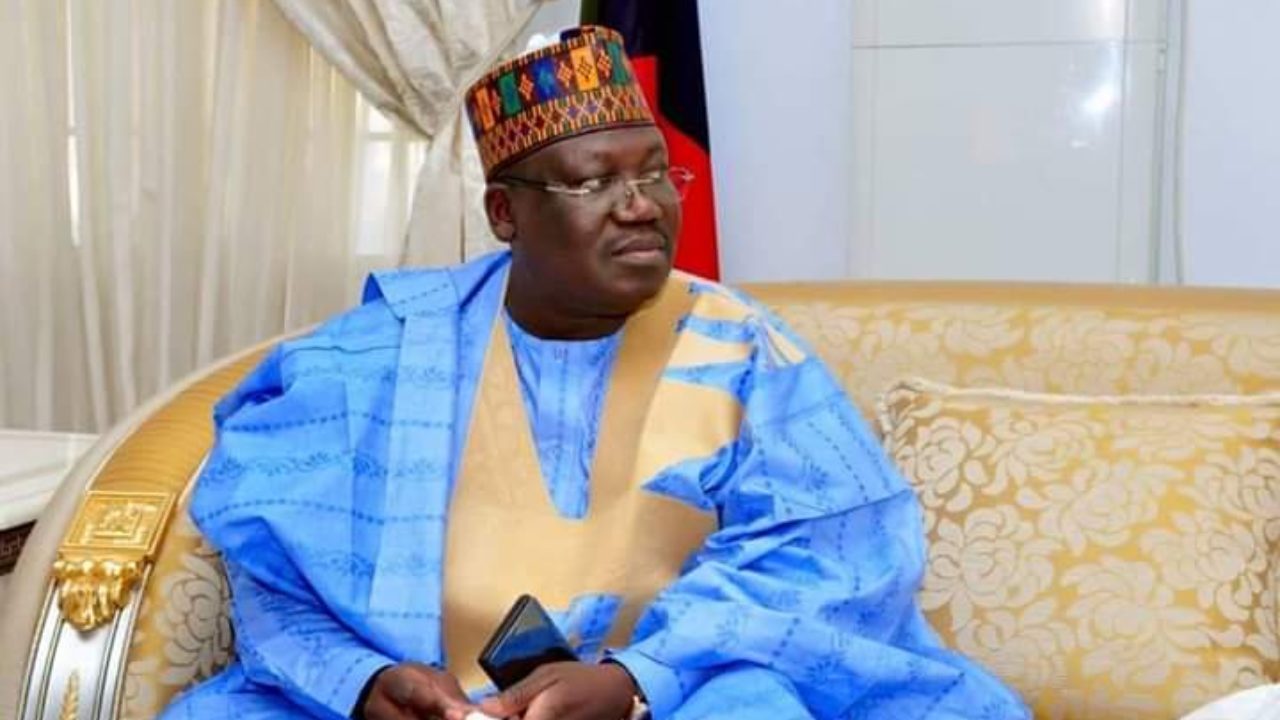

Amid rising public anxiety over insecurity and growing calls for accountability in defence spending, the Northern Senators Forum (NSF) has turned the 67th birthday of Senator Ahmad Ibrahim Lawan, GCON, into a pointed statement about the role of the legislature in Nigeria’s security governance.
In a message released on Monday the chairman of the Forum, Senator Abdulaziz Musa Yaradua portrayed Lawan not simply as a celebrant, but as one of the National Assembly’s most enduring institutional anchors, crediting his 26 uninterrupted years in parliament with helping to steady Nigeria’s democratic framework during periods of political and security turbulence.
The NSF said Lawan’s legislative journey, culminating in his tenure as President of the 9th Senate and his current position as Chairman of the Senate Committee on Defence — reflects a rare continuity of experience in a system often marked by disruption. According to the Forum, that experience has become particularly relevant as Nigeria confronts security threats that demand not only force, but disciplined civilian oversight.
As Defence Committee chairman in the 10th Senate, Lawan has presided over what the Forum described as “one of the most consequential intersections of democracy and national security.” His work, it said, has focused on rigorous scrutiny of defence budgets, sustained engagement with the Armed Forces and security agencies, and policy guidance aimed at improving operational effectiveness while protecting the welfare of service personnel.
The statement stressed that in an era where security failures often provoke emotional responses and politicisation, Lawan’s approach has reinforced the constitutional principle that the use of force must remain accountable to elected representatives. The Forum argued that this balance — between urgency and restraint — is essential to preventing democratic erosion under the pressure of insecurity.
Political analysts say the NSF’s tribute signals a broader recalibration within the Senate, where experience and institutional memory are increasingly valued as tools for stabilising governance. Lawan’s long view of legislative–executive relations, they note, has helped the Senate maintain relevance in security debates traditionally dominated by the executive branch.
Beyond defence matters, the Forum described Lawan as a consensus-builder whose influence transcends party lines, enabling difficult conversations without deepening political fractures. This statesmanlike posture, it said, has allowed the Senate to project unity on core national interests even amid intense partisan competition.
As he marks 67 years, the Northern Senators Forum offered prayers for Lawan’s health and continued service to Yobe State and the nation. But the message carried a sharper subtext: at a moment when Nigeria’s security challenges test the limits of its democracy, steady legislative oversight remains one of the country’s strongest safeguards — and Senator Lawan stands at its centre.