
By Abdulkarim Abdulmalik
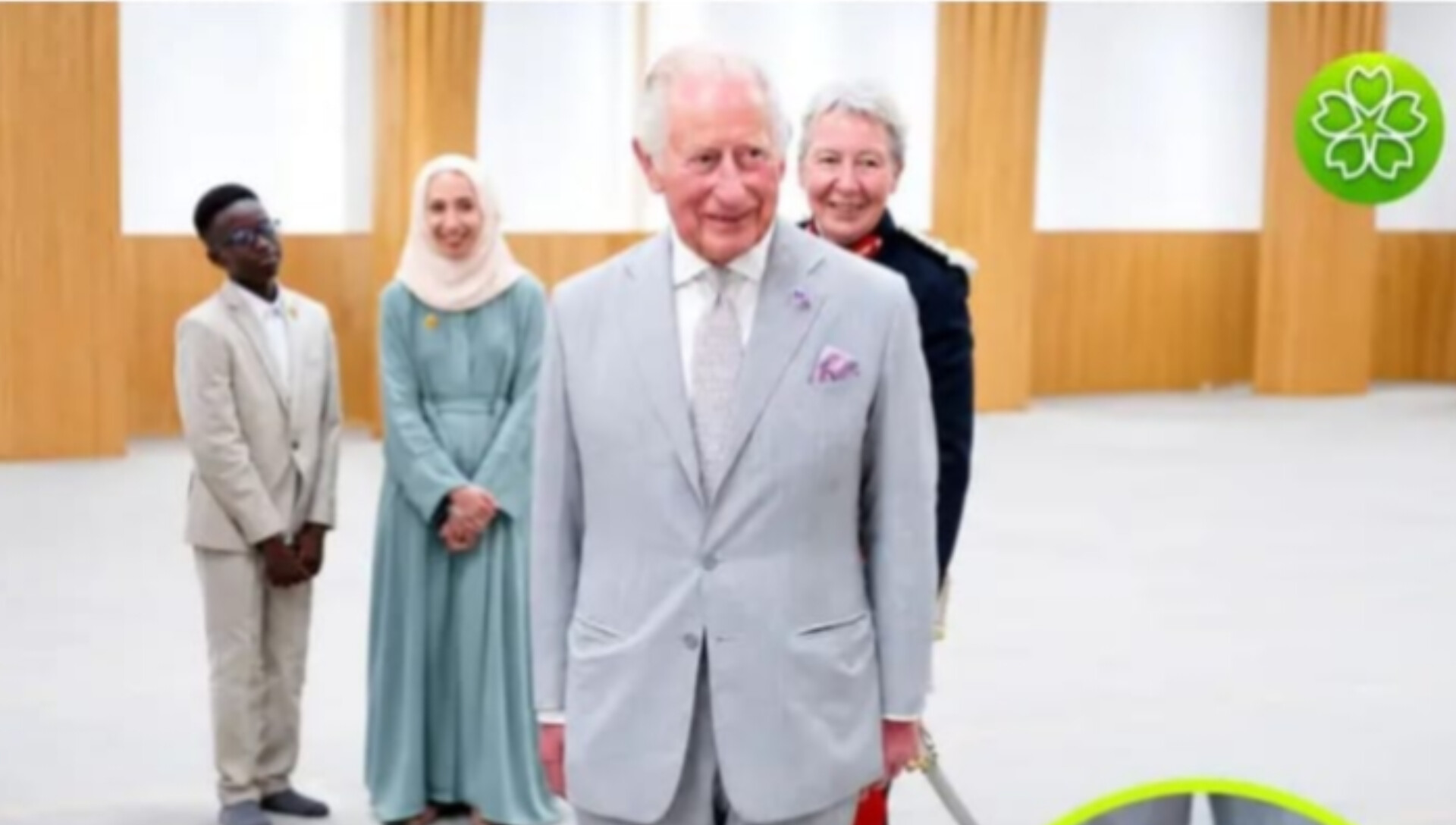
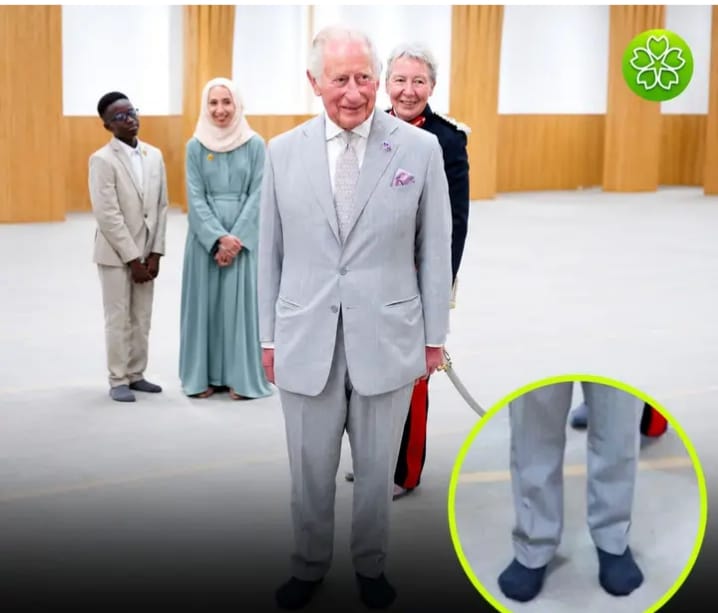
In an age when religious differences are too often manipulated to divide societies, a simple gesture can sometimes communicate more powerfully than a thousand speeches. Such a moment unfolded when King Charles III removed his shoes before entering the prayer hall of Cambridge Central Mosque, Europe’s first Eco-Mosque. Barefoot, respectful, and visibly at ease, the British monarch walked through one of the United Kingdom’s most remarkable Islamic landmarks, exchanged warm conversations with schoolchildren, and praised the mosque’s innovative architecture.
The visit occurred on the same day the King fulfilled one of his most important constitutional responsibilities—accepting Prime Minister Keir Starmer’s resignation and inviting Andy Burnham to form a new government. The coincidence of these two events carried a profound message. While politics may experience rapid transitions, the values of mutual respect, dialogue, and peaceful coexistence remain enduring pillars of stable societies.
For students of diplomacy, the King’s mosque visit offers a compelling lesson in the growing importance of interfaith diplomacy in the twenty-first century.

Interfaith diplomacy extends beyond formal dialogue between religious leaders. It involves using respect for religious traditions, cultures, and beliefs as a bridge for building trust among communities, nations, and civilizations. In today’s interconnected world, where conflicts increasingly carry religious undertones—even when their roots are political or economic—leaders who demonstrate sincere respect for different faiths contribute significantly to peacebuilding.
King Charles has long shown interest in fostering understanding between Christianity, Islam, Judaism, Hinduism, Sikhism, Buddhism, and other faith traditions. Even before ascending the throne, he consistently argued that religious diversity should be viewed as a national strength rather than a social challenge. His visit to Cambridge Central Mosque reflects that long-standing commitment.
The symbolism of removing one’s shoes before entering a mosque should not be underestimated. In Islam, worshippers remove their footwear before entering the prayer area as a sign of cleanliness, humility, and reverence for a sacred space. When a non-Muslim visitor willingly observes this tradition, the gesture communicates something deeper than protocol. It conveys respect without compromising one’s own religious identity.
This distinction is crucial.
Interfaith diplomacy is not about diluting religious convictions or pretending that theological differences do not exist. Genuine dialogue does not require abandoning one’s faith. Rather, it requires recognizing the dignity of others and honouring their right to worship according to their conscience. Respect is not the same as agreement, and peaceful coexistence does not demand religious uniformity.
The Cambridge Central Mosque itself represents another important dimension of modern diplomacy. As Europe’s first Eco-Mosque, the building combines Islamic architectural heritage with environmental sustainability. Powered by renewable technologies and designed with sustainable materials, it reflects the Islamic teaching that humanity serves as stewards of the earth. Environmental responsibility thus becomes common ground where people of different faiths can work together for the common good.
This connection between faith and environmental stewardship illustrates an emerging field of interfaith cooperation. Climate change, poverty, forced migration, public health, and humanitarian crises affect believers and non-believers alike. Religious institutions increasingly recognize that these global challenges require collaboration that transcends doctrinal differences.
King Charles’ appreciation of the mosque’s design therefore acknowledged not only architectural excellence but also the shared responsibility of faith communities to care for creation.
Equally significant was his interaction with schoolchildren during the visit. Young people carefully observe how national leaders relate to religious diversity. When they witness gestures of respect rather than suspicion, curiosity rather than hostility, they receive practical lessons in citizenship and tolerance.
Education remains perhaps the most powerful instrument of interfaith diplomacy. Prejudice often grows from ignorance, while understanding flourishes through encounter. Children who see their leaders engaging confidently with people of different faiths are more likely to reject stereotypes and embrace diversity as a normal part of national life.
The timing of the visit also invites reflection. On the very day political leadership changed in Britain, the monarch’s engagement with a Muslim community highlighted the continuity of constitutional values beyond electoral politics. Governments may change through democratic processes, but national unity depends upon institutions capable of embracing all citizens regardless of religious identity.
This lesson carries particular relevance for multi-religious societies across Africa, Asia, Europe, and beyond.
Nigeria, for example, stands as one of the world’s most religiously diverse nations. Christianity and Islam together shape the lives of millions, while traditional religious communities also contribute to the country’s rich cultural heritage. Yet Nigeria has repeatedly experienced tensions fueled by religious misunderstanding, political manipulation, and misinformation.
The King’s visit offers a simple but powerful model. Interfaith diplomacy does not always begin with international conferences or complex policy documents. Sometimes it begins with leaders visiting one another’s places of worship, listening before speaking, showing courtesy, and demonstrating that mutual respect strengthens rather than weakens national identity.
Faith leaders equally have responsibilities in advancing this vision. Churches, mosques, synagogues, temples, and other religious institutions possess enormous moral influence. Their sermons, educational programmes, and community activities can either reinforce divisions or cultivate reconciliation. When religious leaders openly acknowledge one another’s humanity while remaining faithful to their own beliefs, they become ambassadors of peace.
The media also has an indispensable role. Too often, headlines focus on religious conflict while overlooking stories of cooperation and solidarity. Acts such as King Charles’ mosque visit deserve attention because they remind societies that peaceful coexistence is not merely an aspiration—it is already being practised in many communities around the world. Constructive journalism can inspire imitation by highlighting examples of mutual respect instead of amplifying only controversy.
Ultimately, diplomacy is built as much on symbols as on negotiations. A handshake can open doors. A shared meal can ease suspicion. A respectful visit can soften hardened perceptions. Likewise, a monarch removing his shoes before entering a mosque communicates humility, empathy, and recognition of another community’s sacred values.
These gestures cannot solve every conflict. They cannot eliminate extremism or erase historical grievances overnight. Yet they create the atmosphere in which dialogue becomes possible and trust begins to grow.
History often remembers dramatic speeches and landmark treaties, but it also remembers quiet acts of dignity that changed hearts. King Charles’ barefoot walk through Cambridge Central Mosque belongs to that tradition of symbolic leadership. It reminds us that genuine greatness is demonstrated not by asserting superiority over others but by showing respect for their humanity.
At a time when polarization threatens many societies, the world needs more leaders willing to cross religious boundaries with humility rather than fear. Interfaith diplomacy is not an abstract academic theory; it is a practical pathway toward peaceful coexistence. Whether in royal palaces, village squares, schools, churches, mosques, or community centres, every respectful encounter plants another seed of understanding.
The future of peaceful societies will depend not only on political agreements but also on the everyday willingness of people of different faiths to walk together—sometimes, quite literally, barefoot.
– Abdulkarim Abdulmalik is Chairman, Governing Board, Guild of Interfaith Media Practitioners Nigeria (GIMP-Nigeria). Email: interfaithmediaguild@gmail.com; info@interfaithmediaguild.org