
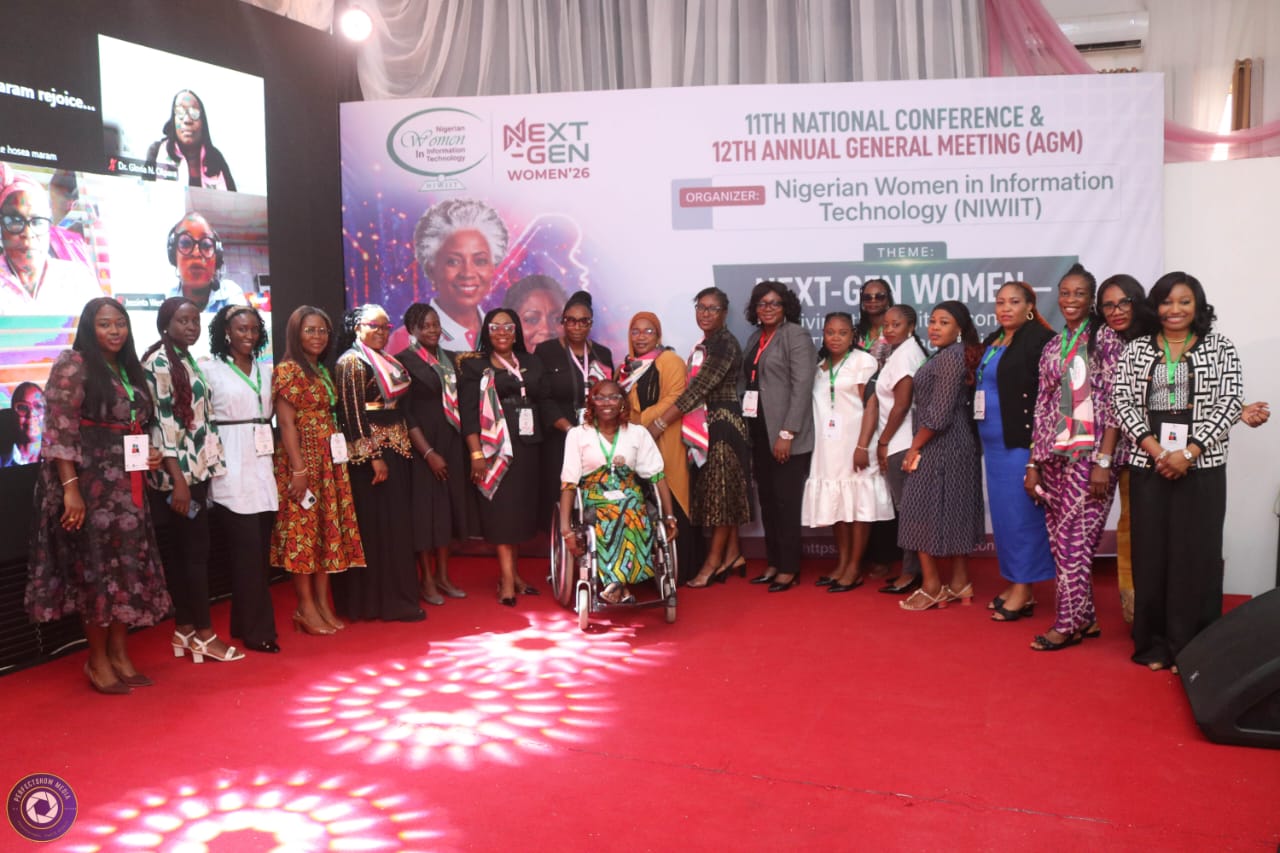


Women leaders in technology, government and the private sector have called for bold policies and sustained investment to increase female participation in Nigeria’s digital economy, arguing that greater inclusion of women is essential to driving innovation, economic growth and national competitiveness.
The call formed the thrust of discussions at the two-day conference of the Nigerian Women in Information Technology (NIWIIT) held in Abuja, where policymakers, technology executives and industry stakeholders examined ways to position more women for leadership in the country’s rapidly evolving digital landscape.
Held under the theme, “Next-Gen Women: Driving the Digital Economy Through Leadership, Innovation and Inclusion,” the conference brought together representatives from MTN Nigeria, Galaxy Backbone, the Nigeria Computer Society, federal agencies and technology organisations.
Speaking at the event, NIWIIT President, Dr. Olukemi Sade Ayodele, said the association was committed to developing a pipeline of female technology leaders through mentorship, capacity building and strategic partnerships.
She noted that empowering women with digital skills and leadership opportunities would strengthen Nigeria’s innovation ecosystem and enable more women to influence technology policy and decision-making.
President of the Nigeria Computer Society, Professor Muhammad Sirajo Aliyu, described women as indispensable drivers of technological advancement, praising initiatives such as Tech Queens and RoboGirls with Allied Boys for inspiring the next generation of innovators.
Delivering the keynote address, Chief Information Officer of MTN Nigeria, Bukola Ajayi, said increasing women’s participation in the digital economy should be viewed as an economic imperative rather than a social obligation.
She urged governments, businesses and educational institutions to move beyond expanding access to technology and instead create pathways that empower women to shape the country’s digital future.
“We don’t just join the future of building this digital infrastructure; we need to design it,” she said.
In a separate keynote, Ada Chukwumere, representing the Director-General of the National Centre for Women Development, Dr. Adedayo Benjamins-Laniyi, challenged women to embrace leadership, innovation and lifelong learning as emerging technologies continue to reshape industries.
She stressed that digital competence, problem-solving skills and responsible technology use would be critical to preparing women for leadership in the future economy.
The conference also featured goodwill messages from representatives of the Nigeria Data Protection Commission, the Economic and Financial Crimes Commission, the Computer Professionals Registration Council of Nigeria and other institutions, who reaffirmed their commitment to promoting diversity and inclusion within Nigeria’s technology sector.
A high-level panel comprising experts from the telecommunications, regulatory and technology industries explored practical strategies for expanding opportunities for women, strengthening digital inclusion and closing the gender gap in the ICT sector.
Participants also took part in technical workshops, research paper presentations and executive mentoring sessions aimed at enhancing professional development and fostering collaboration across the industry.
As part of efforts to encourage early interest in science and technology, schools that participated in the RoboGirls robotics competition received awards and robotic kits to support continued innovation and digital learning.
The conference ended with the induction of new members, the association’s Annual General Meeting and the election of a new National Executive Council, reinforcing NIWIIT’s commitment to advancing women’s leadership in Nigeria’s digital transformation.