
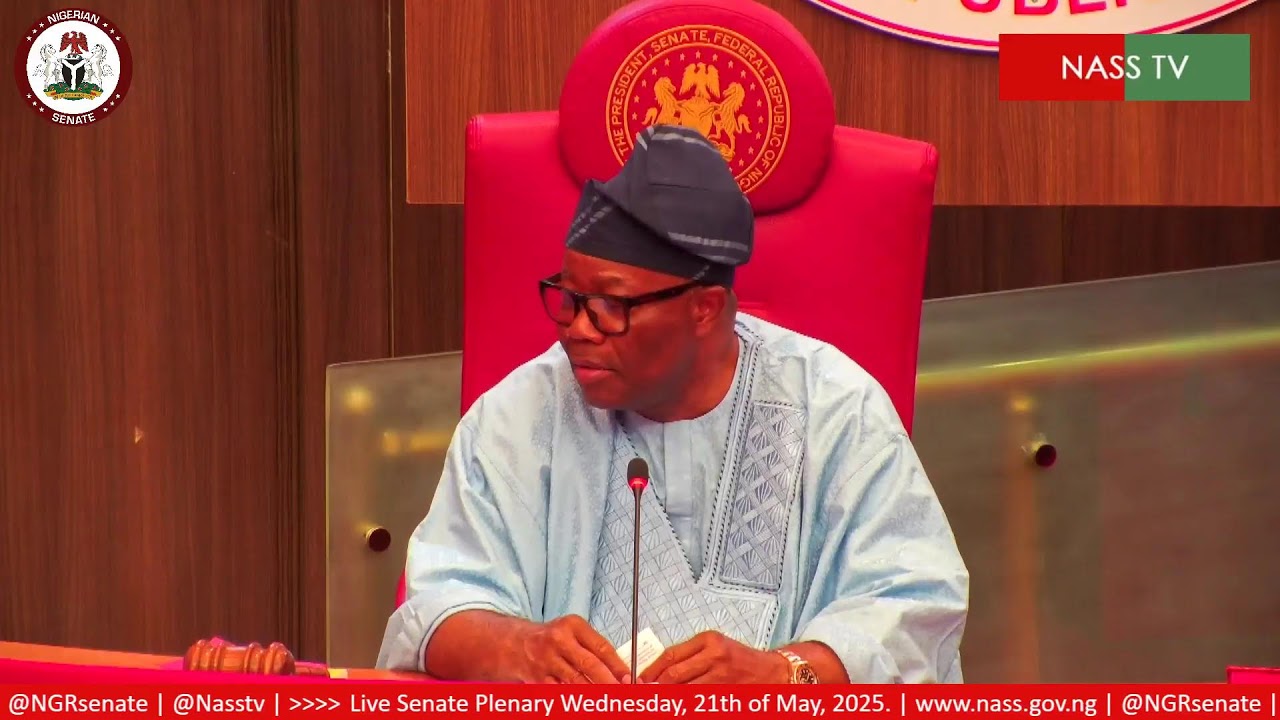
 Senate President Godswill Akpabio


Nigeria’s push to decentralise policing gained renewed momentum on Thursday as the Senate passed the State Police Bill through second reading, amid strong support, cautious warnings, and constitutional objections from lawmakers.
The bill, which seeks to transfer policing powers from the Exclusive Legislative List to the Concurrent Legislative List, was referred to the Senate Ad-hoc Committee on the Review of the 1999 Constitution for further legislative work.
Leading the debate, Senate Leader Senator Opeyemi Bamidele said Nigeria’s long-standing reliance on a single centralised police force has become increasingly unworkable in the face of rising and complex security threats.

He argued that contemporary realities—including terrorism, banditry, kidnappings, cult violence, communal clashes, and cybercrime—have exposed the limitations of a centrally controlled policing system that struggles to respond swiftly to local emergencies.
Bamidele maintained that security is most effective when it is local, stressing that officers who understand the terrain, language, and social environment are better positioned to gather actionable intelligence and prevent crimes before they escalate.
He further explained that state police would ensure faster response to emergencies within jurisdictions, reduce pressure on the overstretched Nigeria Police Force, and strengthen Nigeria’s federal structure by making governance more efficient and responsive.
Citing global practice, he noted that several federal systems—including the United States, Canada, Australia, and Germany—operate layered policing structures, insisting that Nigeria should not remain an exception.

Addressing concerns over potential abuse, Bamidele outlined safeguards built into the bill, including the establishment of state police commissions, federal oversight mechanisms, uniform national policing standards, strict constitutional procedures for removal of state police leadership, and federal intervention powers in cases of total breakdown of law and order.
In his contribution, Senate Chief Whip Senator Tahir Monguno strongly backed the proposal, saying it is “long overdue” and reflects existing realities on the ground.
He noted that groups such as Amotekun and Civilian JTF already represent informal versions of state policing, adding that the bill would finally provide them with legal backing and structure, allowing them to “bark and bite” within a regulated framework.
Monguno added that involving locals in security operations would improve effectiveness, deepen trust, and strengthen intelligence gathering at the community level.
However, Senator Aliero raised a constitutional point of order, warning that any reform must strictly comply with constitutional provisions to avoid legal invalidation.
He also argued that Nigeria’s challenge may not be structure alone, noting that with fewer than 400,000 police officers nationwide, the country may need a significant expansion of manpower rather than a structural overhaul.
Deputy Senate President Barau Jibrin added a brief clarification, noting that the bill is already before the Senate and that the lead debate was primarily to “amplify” its importance and necessity.
With strong arguments on all sides, the bill now moves to committee-level scrutiny, where its constitutional, operational, and security implications will be further examined before returning for the next stage of legislative consideration.